Catching dental problems that need attention early can save you from pain, complex procedures, and serious health risks later. Many issues start with subtle changes in your mouth, and by the time you feel strong pain, the problem is often already advanced. Recognizing early symptoms and knowing when to seek care helps protect both your oral health and your overall health.
This guide walks you through 10 common dental problems that need attention before they worsen, what to watch for, and when you should contact a dentist.
1. Early tooth decay and small cavities
Tooth decay often starts quietly. You may not feel pain until a cavity is deep, but there are earlier signs you can spot.
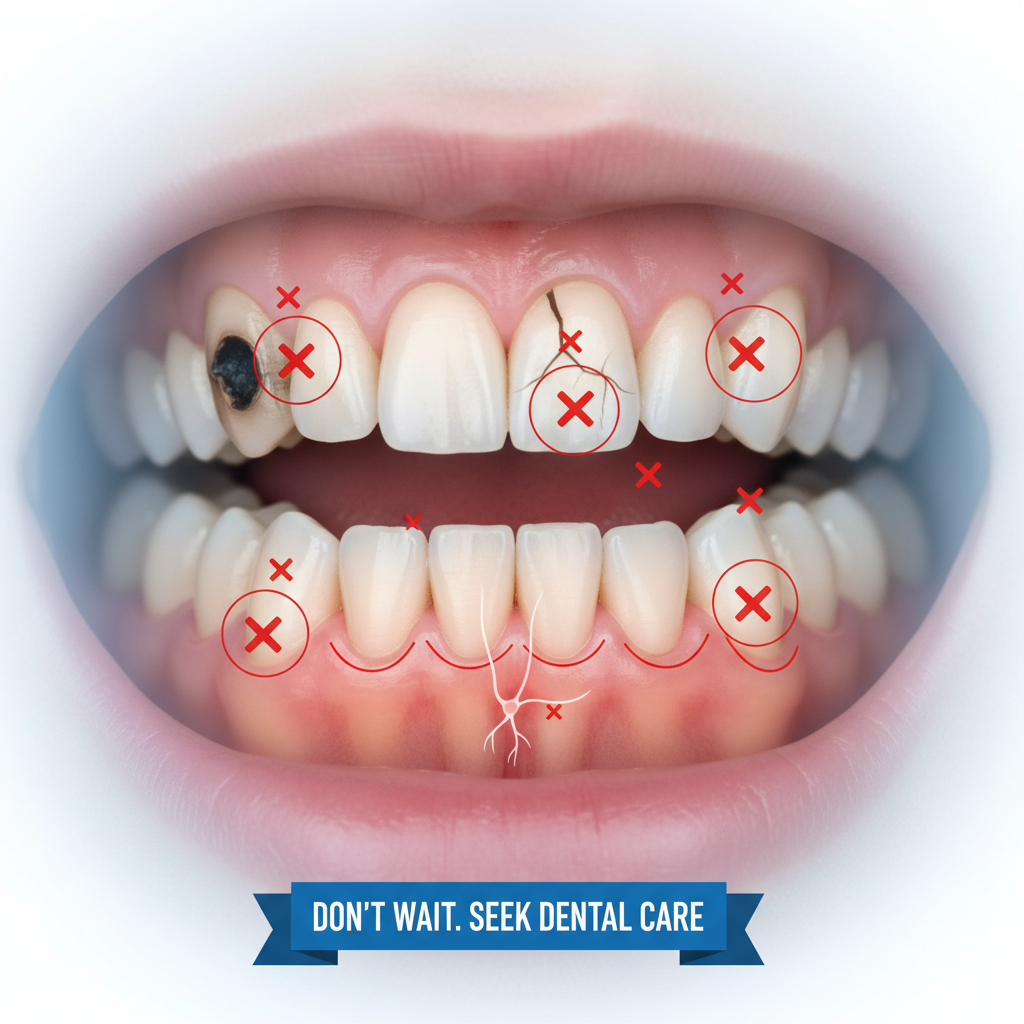
In the beginning, decay may appear as white or light brown spots on the enamel. You might notice mild discomfort when you eat sweets or very hot or cold foods. These can be some of the early signs of tooth decay that suggest cavities are forming.
As decay progresses, you might see a visible hole or dark spot and feel sharp pain when you bite down. At that point, the damage has usually moved past the enamel into deeper layers of the tooth.
Untreated cavities result from plaque acids eroding enamel over time, which is why good daily care and regular cleanings are so important. Plaque buildup destroys enamel and leads to full cavities if you do not address it early [1].
You can learn more about how this happens in detail at what causes cavities in adults and how to tell if you have a cavity.
You should see a dentist promptly if you notice:
- New spots, pits, or dark areas on a tooth
- Pain when chewing on a particular tooth
- Sensitivity to sweets on one specific area
A small cavity can usually be fixed with a simple filling. If you wait, you may end up needing a crown or even a root canal.
2. Sensitive teeth and enamel erosion
Tooth sensitivity is a common complaint. A quick sting when you sip hot coffee or cold water often points to enamel wear or exposed root surfaces. According to dental guidance, sensitivity like this is usually not a true emergency, and it can often be managed with desensitizing toothpaste and other conservative measures [2].
However, sensitivity is still one of the dental problems that need attention because it is often a sign of underlying issues, such as enamel erosion, gum recession, microcracks in teeth, or early decay. Over time, these can turn into more serious conditions if neglected.
You can explore the underlying reasons in more depth at tooth sensitivity causes explained, why teeth become sensitive over time, and what causes enamel erosion.
Pay attention if you:
- Avoid hot, cold, or sweet foods on one side of your mouth
- Feel a lingering zing after temperature changes
- Notice worn, flattened, or thinning edges of your teeth
If sensitivity is new, getting worse, or focused in one or two teeth, schedule a dental visit. Your dentist can determine whether the cause is surface level or something deeper, then recommend treatment before you develop a fracture, large cavity, or nerve damage.
3. Gum inflammation and early gum disease
Your gums are as important as your teeth. Early gum problems are easy to miss, but they are some of the most critical dental problems that need attention before they worsen.
Gum disease begins when plaque builds up along and below the gumline and triggers inflammation. In the beginning, this is called gingivitis. It can show up as:
- Red, swollen, or puffy gums
- Tenderness when you brush or floss
- Occasional bleeding when you clean your teeth
Plaque below the gumline can lead to bleeding, tenderness, and, if ignored, bone loss and loose teeth [1]. Over time this can progress into periodontal disease, which causes infection, receding gums, and eventually tooth loss [3].
You can learn more about early clues at signs of gum disease early stage, what causes gum inflammation, and how oral health problems develop.
Bleeding gums are a warning sign, not something you should ignore. If you are asking yourself why do my gums bleed when brushing, it is worth scheduling an exam. Professional cleanings and improved home care can reverse early disease. Waiting can mean dealing with deep cleanings, surgery, and ultimately tooth loss.
4. Persistent toothache or throbbing pain
Occasional twinges can happen, but a lingering or throbbing toothache is rarely harmless. Persistent pain often signals deeper dental problems that need attention, especially if you notice:
- Pain that lasts more than a day or two
- A throbbing or pulsing feeling in a tooth
- Pain that gets worse when you lie down or bend over
Persistent or worsening tooth pain, especially with pain when biting, may indicate serious issues like decay into the nerve, inflammation, or an inflamed pulp that can become an emergency if you do not treat it [4]. A toothache that does not respond to over the counter pain relief may mean infection or an abscess that needs immediate care and will not resolve on its own [2].
Tooth pain is one of the clearest dental problems that need attention now. It can come from:
- Deep cavities
- Cracks that reach the nerve
- Gum or bone infections
- High fillings or bite problems
To understand the early stages that can lead to this, you can review how to recognize dental problems early and how to identify oral health issues.
You should call a dentist promptly if tooth pain:
- Lasts more than 24 to 48 hours
- Wakes you from sleep
- Spreads to your jaw, ear, or head
- Comes with fever, swelling, or bad taste
Severe, sudden tooth pain with swelling and fever can become life threatening if infection spreads. Delaying treatment of a severe toothache or oral infection can lead to cellulitis, Ludwig’s angina, or sepsis if an abscess spreads [5].
5. Cracked, chipped, or broken teeth
Even a small chip in a tooth should not be ignored. A crack or fracture can open a pathway for bacteria to reach the inner tooth, which increases the risk of decay, infection, or eventual tooth loss.
Cracked, broken, or chipped teeth may not always hurt right away, but they weaken the tooth and allow bacteria to enter if they are left untreated [4]. If the crack exposes the pulp, you may feel sharp pain with temperature or pressure, which often signals a need for urgent treatment options like bonding, crowns, or root canal therapy to prevent infection and preserve the tooth [5].
You should contact a dentist soon if you:
- Notice a new chip or rough edge on a tooth
- Feel pain when you bite on a specific spot
- See a visible crack line or broken part of a tooth
You should seek same day or emergency care if:
- A large piece of tooth breaks off
- You can see a red or dark area in the center of the tooth
- Pain is severe or constant, especially with swelling
Prompt repair stabilizes the tooth and seals out bacteria so you are less likely to need more invasive treatment later.
6. Gum recession and exposed roots
Gums that are slowly pulling away from your teeth are another subtle but serious problem. Gum recession exposes the root surface, which is not protected by enamel. This makes you prone to sensitivity, decay on the root, and eventual loosening of the tooth if bone is also lost.
You might notice:
- Teeth that look longer than they used to
- Notches or grooves near the gumline
- Increased sensitivity near the gum edge
Recession is often related to gum disease, aggressive brushing, grinding, or misaligned teeth. It can also be connected to age, but it is not something you should accept as normal or untreatable.
For a deeper breakdown of what to look for, you can review gum recession symptoms explained.
If you notice your gums receding, schedule an evaluation. Early changes can sometimes be slowed or stabilized with improved cleaning, bite adjustments, or a nightguard. If recession is severe, you may need more advanced treatment to protect the roots and support the teeth.
7. Swelling, abscesses, and signs of infection
Swelling anywhere in your mouth or face is a red flag. Infection in a tooth or gums can spread quickly and become serious, even life threatening, if you do not treat it.
Warning signs include:
- Swelling in your gums, jaw, or face
- A pimple like bump on the gums that may drain pus
- Fever, feeling unwell, or swollen lymph nodes
- Severe, throbbing tooth pain
Swelling in the gums, jaw, or face, especially with warmth, tenderness, fever, or general discomfort, is a major sign of dental infection and requires prompt evaluation to prevent complications [4]. A toothache with swelling, pus, or fever often indicates an abscess that needs immediate dental care and possibly antibiotics [6].
These are some of the clearest early symptoms of dental infection. An untreated abscess can spread to your jaw, neck, or bloodstream. Delaying care can lead to conditions like cellulitis, Ludwig’s angina, or sepsis, which are medical emergencies [5].
You should seek same day dental care for:
- Visible swelling plus tooth pain
- A gum bump with bad taste or pus
- Fever with mouth pain
You should go to the emergency room instead of a dental office if you have:
- Difficulty breathing or swallowing
- Rapidly spreading facial or neck swelling
- High fever and chills with mouth swelling
Life threatening dental emergencies like uncontrolled bleeding, high fever, or swelling that affects breathing need immediate hospital care, not routine dental treatment [5].
8. Knocked out, loose, or shifting teeth
Dental trauma and unexplained looseness are urgent problems that always deserve quick action.
If a permanent tooth is knocked out, time is critical. A knocked out tooth must be kept moist in milk and treated by a dentist within 30 to 60 minutes to give you the best chance of successful reimplantation [5]. This situation requires emergency dental care and cannot wait days.
Other serious concerns include:
- A tooth that suddenly becomes loose in an adult
- Teeth that start shifting position without orthodontic treatment
- Bite changes that make your teeth not fit together as they used to
These signs can point to advanced gum disease, trauma, or bone loss. Gum disease that is left untreated can lead to loose teeth and eventual tooth loss [3].
If you notice movement or new spacing, or if your teeth do not meet the way they used to, schedule an exam soon. Addressing the cause early may let you save teeth that would otherwise be lost.
9. Ongoing bad breath and taste changes
Everyone has bad breath occasionally, but chronic halitosis is another example of dental problems that need attention. Persistent bad breath or a constant bad taste can signal:
- Gum disease or infection
- Tooth decay or trapped food debris
- Dry mouth from medications or illness
- Tonsil or sinus issues
- Smoking or other lifestyle factors
Bad breath is often linked to poor oral hygiene, gum disease, dry mouth, or other medical conditions. It usually improves with thorough brushing and flossing, tongue cleaning, hydration, and avoiding tobacco. If it persists despite good habits, it is important to see a dentist to rule out deeper problems [3].
You can explore this further at bad breath causes dental issues.
Because gum disease and infections are common causes, ignoring chronic bad breath can mean overlooking active disease in your mouth. It is better to get an evaluation and cleaning early than to wait until you notice pain or tooth mobility.
10. Changes in color, spots, or patches
Not all dental problems show up as pain. Visual changes in your teeth and soft tissues often provide your earliest warning signs.
You should pay attention to:
- New white, brown, or black spots on teeth
- General yellowing or darkening that happens quickly
- White, red, or mixed patches on your gums, tongue, or cheeks
- Sores that do not heal within two weeks
Discoloration can come from staining, enamel erosion, cavities, trauma, or even systemic conditions. You can read more about this at what causes tooth discoloration.
Soft tissue patches or persistent sores can sometimes signal infections or, less commonly, oral cancer. Oral cancer risk factors include tobacco use, heavy alcohol use, sun exposure to the lips, family history, and HPV infection. Prevention includes avoiding tobacco, limiting alcohol, protecting your lips from the sun, receiving recommended vaccines, and getting regular dental screenings for early detection [3].
You should see a dentist soon if:
- A spot on a tooth appears or changes quickly
- You see white or red patches in your mouth that do not wipe off
- Any sore or ulcer lasts longer than 10 to 14 days
Early evaluation allows your dentist to distinguish between simple staining or irritation and more serious conditions that require treatment.
If you are ever unsure whether a symptom is serious, it is safer to schedule an exam or at least call your dental office for advice than to assume it will pass on its own.
Why early attention to dental problems matters
Many people delay seeing a dentist due to cost, fear, or busy schedules. However, small dental problems that need attention early can quickly grow into complex issues affecting your whole body.
Key reasons not to ignore symptoms include:
Preventing pain and emergencies
Early treatment of cavities, gum disease, and minor infections helps you avoid severe toothaches, abscesses, and middle of the night emergencies.Protecting overall health
Poor oral health, especially gum disease and chronic infection, has been linked with increased risks of cardiovascular disease, diabetes complications, respiratory infections, and pregnancy problems [7]. Bacteria from gum infections can enter your bloodstream and contribute to artery inflammation, which may raise your risk of stroke or heart attack [8].Avoiding tooth loss
Untreated gum disease is a leading cause of tooth loss. Once bone supporting your teeth is gone, it is difficult or impossible to restore fully.Lowering long term costs
Regular checkups catch problems early when they can often be treated with simpler, less expensive procedures. Emergency visits, extractions, and complex restorative work are typically more costly than preventive care [9].
You can see how issues develop over time at how oral health problems develop and common dental issues in adults.
When to see a dentist for symptoms
Knowing when to watch and when to call can reduce anxiety and help you act appropriately. In general, you should schedule a dental visit soon if you notice:
- New or increasing tooth sensitivity, especially in one area
- Bleeding gums, redness, or puffiness that lasts more than a week
- A chipped, cracked, or broken tooth
- A cavity you can see or feel with your tongue
- Persistent bad breath or bad taste
- Spots, patches, or sores that do not resolve in two weeks
You should seek same day or emergency care if you have:
- Severe tooth pain that does not improve with medication
- Swelling in your face or gums, especially with fever
- A knocked out, significantly broken, or displaced tooth
- Uncontrolled bleeding in your mouth for more than 10 minutes
- Difficulty breathing or swallowing associated with dental pain
If you are unsure, resources like when to see a dentist for symptoms can help you decide, or you can call a dental office and describe what you are experiencing.
Taking the next step
The most important takeaway is simple. Do not ignore early signs. Tooth pain, bleeding gums, sensitivity, chips, swelling, and color changes are all dental problems that need attention before they become emergencies.
If you notice any of the issues described here:
- Make a list of your symptoms and how long they have been present
- Review guides like how to recognize dental problems early
- Call your dentist to schedule an evaluation, even if the symptoms seem mild
Acting early usually means simpler treatment, less discomfort, and better overall health. Your mouth often gives you quiet warnings long before a crisis. Listening to those signals and seeking timely care is one of the best investments you can make in your long term well being.