Dental phobia causes and effects touch millions of adults who know they need care but find themselves genuinely unable to walk through a dental office door. This is not stubbornness or laziness. It is a recognized psychological condition with real neurological roots, measurable health consequences, and evidence-based paths out. Understanding what is actually happening, inside the brain and inside the body, is the first step toward changing it.
What Is Dental Phobia (And How Is It Different From Anxiety)?
Dental phobia is a persistent, irrational, and overwhelming fear of dental situations that is intense enough to cause active avoidance of care, regardless of the health consequences. It meets the clinical criteria for a specific phobia under the DSM-5: the fear is disproportionate to the actual threat, it has lasted six months or longer, and it causes significant disruption to normal functioning.
Dental anxiety is related but distinct. Anxiety is anticipatory dread, the nervousness you feel the night before an appointment, the racing heart while sitting in a waiting room. Anxiety is uncomfortable, but it does not typically stop someone from showing up. Phobia does. People with dental phobia often cancel at the last minute, refuse to schedule at all, or leave mid-appointment in genuine panic. The distinction matters because the difference between anxiety and phobia determines which interventions are appropriate and how urgently treatment needs to be addressed.
General nervousness about the dentist is almost universal. Dental phobia is a clinical condition that affects a smaller but still significant portion of the population. The line between them is crossed when fear controls behavior rather than the other way around.
How Common Is Dental Phobia?
A 2017 systematic review published in the Journal of Dental Research, covering data from 35 countries and more than 100,000 participants, found that approximately 15 to 20 percent of adults avoid the dentist entirely due to fear. A further 36 percent report moderate dental anxiety that disrupts their care. That means more than half of adults globally are not receiving dentistry on anything close to a normal schedule because of fear.
In the United States, the American Dental Association’s 2022 Health Policy Institute survey found that cost was the most commonly cited barrier to dental care, but fear ranked second among adults who reported they “never” visit the dentist, ahead of transportation and access issues. The people at the bottom of avoidance statistics, the ones who genuinely never go, are disproportionately driven by phobia rather than logistics.
The real-world consequence is postponed care compounding into crisis. Patients who avoid routine visits for two or more years tend to present with conditions that require significantly more invasive, expensive, and anxiety-producing treatment, which deepens the fear and shortens the odds of them returning.
The Root Causes of Dental Phobia
Traumatic or Negative Past Experiences
A 2014 study published in the European Journal of Oral Sciences, surveying 1,013 adults, found that 86 percent of dentally phobic patients could trace their fear to a specific negative dental experience, and for the majority, that experience occurred before the age of twelve. A single visit where a child felt pain, was dismissed when expressing distress, or was restrained can be enough to wire a lasting fear response into the nervous system.
The mechanism is classical conditioning. The brain links a neutral stimulus (the dental chair, the smell of the office, the sound of the drill) with pain or fear, and from that point forward, the stimulus alone triggers the fear response, independent of whether any actual danger is present. This is not a choice or an overreaction. It is how the brain is designed to protect itself, applied in a context where protection is no longer needed.
The practical implication is that for many adults carrying dental phobia, the source of the fear is a child’s experience that has never been updated with adult information. The dentistry of 1985 or 1995, with less numbing technology and less patient-centered communication, is genuinely different from what is available now. But the brain does not revise its threat assessments automatically. That revision has to be deliberately created.
Fear of Pain and Loss of Control
According to a 2019 study in the Journal of Dental Research involving 1,700 adult patients, fear of pain is the most commonly reported trigger of dental phobia, cited by 62 percent of dentally anxious adults. But the study also found that pain expectation was consistently higher than pain actually experienced. Phobic patients anticipated procedures as significantly more painful than non-phobic patients, and that anticipatory fear was itself a major driver of avoidance.
The second layer is the perceived loss of control. Lying flat in a chair with instruments in your mouth, unable to speak or move freely, while someone performs a procedure on your body is an objectively vulnerable position. For patients who have experienced trauma, medical or otherwise, this helplessness can activate a threat response that has nothing to do with the specific dental procedure. The brain reads the situation as dangerous because the body cannot escape it.
The combination of anticipated pain and perceived helplessness creates a threat level that feels far larger than the reality, and that gap between perception and reality is exactly where evidence-based treatment intervenes.
Embarrassment and Dental Shame
Shame is one of the least-discussed but most clinically significant drivers of dental avoidance. A 2016 study in the Community Dentistry and Oral Epidemiology journal found that fear of being judged for the condition of their teeth was a primary avoidance factor for 42 percent of adults who had not seen a dentist in more than three years. The longer avoidance continues, the worse the visible damage becomes, and the more shame accumulates around the idea of finally going.
This creates a compounding barrier. Someone avoids the dentist because they are embarrassed about their teeth. Their teeth deteriorate further because of the avoidance. Now they are more embarrassed, so the fear of judgment intensifies, and returning feels even less possible. The shame spiral is self-reinforcing in a way that purely pain-based fear is not.
What matters to understand here is that dental providers who work with phobic patients are not surprised or judgmental about the state of someone’s mouth after years of avoidance. The clinical reality is that a dentist who specializes in anxious patients has seen this pattern hundreds of times. The judgment the patient imagines is almost never the judgment they receive.
Anxiety Disorders and the Biological Link
A 2018 meta-analysis published in Psychological Medicine, analyzing data from 19 studies and more than 24,000 participants, found that adults diagnosed with generalized anxiety disorder were 2.5 times more likely to meet clinical criteria for dental phobia than adults without anxiety disorders. PTSD was associated with a 3.1-fold increase in risk. Panic disorder and OCD showed similarly elevated comorbidity rates.
The neurological mechanism is hypervigilance. The brain of someone with an anxiety disorder is chronically scanning for threats and is more sensitive to signals it interprets as dangerous. The dental environment, with its sounds, smells, vulnerability, and loss of control, is an efficient trigger for a brain already primed to react. This is not a character flaw. It is a nervous system operating outside its optimal range in a specific environment.
For anyone managing an anxiety disorder alongside dental phobia, the path forward typically requires addressing both simultaneously. Treating one without accounting for the other limits results.
Learned and Vicarious Fear
Fear of the dentist does not require a personal traumatic experience to take hold. A 2015 study in the International Journal of Paediatric Dentistry, following 932 children aged 8 to 12, found that parental dental anxiety was the single strongest predictor of child dental anxiety, stronger than the child’s own dental history. Children whose parents expressed fear about dental visits were significantly more likely to develop avoidance behavior before they had any painful experiences of their own.
The same transmission happens between peers and through media. Hearing a friend’s account of a terrible dental experience, watching exaggerated portrayals of dental treatment in film or television, absorbing cultural messaging that dental work is inherently painful, these inputs are enough to generate genuine fear responses in people who have never personally experienced the situation being described. The brain does not require first-hand evidence. A believable vicarious account is sufficient.
This is relevant for parents in particular. Children who grow up in households where dental fear is normalized or frequently expressed are absorbing a fear template before their first appointment. The framing adults use around dental care is not neutral.
Sensory Triggers: Sounds, Smells, and Needles
A 2020 study in the European Journal of Oral Sciences surveying 2,104 adults identified specific sensory cues as standalone phobia triggers: the sound of the dental drill, the smell of the antiseptic, the sight or feel of the injection needle, and the sensation of vibration. These stimuli function as conditioned fear cues, meaning the brain has linked them to prior distress and now generates a fear response the moment they are detected, before any pain occurs.
Needle phobia deserves specific mention because it operates as a distinct clinical driver. According to a 2021 review in the Journal of Pain Research, approximately 25 percent of adults report moderate to severe fear of needles, and for a significant subset, this fear alone is sufficient to cause complete avoidance of dental care. The challenge is that local anesthetic injection is a gateway to pain-free treatment, so fear of the needle blocks the very intervention that would address fear of pain.
Modern delivery techniques, including topical anesthetic applied before injection, slow-delivery systems, and computer-controlled injection devices, have reduced both the sensation and the predictability of dental injections substantially. But many phobic patients do not know this because avoidance has prevented them from experiencing it.
The Psychological Mechanisms Behind Dental Phobia
How the Fear Response Gets Wired In
Classical conditioning, in the context of dental phobia, works like this: a patient has a painful or frightening dental experience. The brain takes note of every sensory detail present during that experience, the smell, the sound, the chair, the light overhead, and tags all of them as danger signals. On the next visit, those sensory cues trigger the fear response before anything has happened. The conditioned association means the brain does not wait for evidence. It acts on pattern recognition.
This is why dental phobia can feel completely irrational to the person experiencing it. At a conscious level, you may know that the current dentist is different, the technology has improved, and today’s appointment is a simple cleaning. But the limbic system, which processes threat, is not listening to the rational explanation. It has already identified the environment as dangerous and is running a fear response that overrides conscious reassurance.
That gap between knowing and feeling is not a sign of weakness. It is how conditioning works. The only way to update the threat assessment is through repeated exposure that does not result in harm, which is exactly the mechanism behind the evidence-based treatments discussed later in this article.
The Avoidance Cycle and Why It Makes Things Worse
A 2019 longitudinal study in the British Dental Journal, tracking 840 adults over five years, documented the avoidance cycle in quantitative terms. Adults who avoided dental care due to fear presented with significantly worse oral health at each follow-up interval and required more invasive treatment when they finally did seek care. The more invasive the treatment required, the higher their self-reported fear scores rose, and the longer the interval became before their next appointment.
The mechanism is straightforward. Avoidance produces short-term relief from anxiety, which reinforces the avoidance behavior as effective. But the oral health problems that prompted the need for care do not resolve themselves. They advance. A cavity that needed a filling one year ago needs a root canal two years later and may need extraction and replacement three years after that. Each escalation raises the stakes and, for a phobic patient, confirms the belief that dental treatment is dangerous and painful. The cycle is self-fulfilling.
Understanding the avoidance cycle is one of the most motivating pieces of information for many phobic patients, because it makes clear that waiting for the fear to go away before seeking care produces the opposite of the desired result. For a practical roadmap out of avoidance, a structured approach to breaking the dental avoidance pattern gives a clear starting point.
The Effects of Dental Phobia on Oral Health
Tooth Decay, Gum Disease, and Delayed Treatment
A 2020 epidemiological study published in the Journal of Clinical Periodontology, examining oral health data from 4,700 adults across three European countries, found that dentally phobic adults were 2.8 times more likely to have untreated tooth decay and 3.4 times more likely to have moderate-to-severe gum disease than non-phobic adults in the same age cohorts, controlling for income, education, and access to care. Fear, independent of all other variables, was a primary driver of oral health disparity.
The clinical picture is consistent. A phobic patient who has not had a professional cleaning in five years is not presenting with the same conditions they would have had at year one. Plaque calcifies into tartar that cannot be removed at home. Gum disease progresses from gingivitis, which is fully reversible, into periodontitis, which causes permanent bone loss. Untreated cavities advance into the pulp of the tooth, turning a straightforward filling into a root canal or extraction. Every month of avoidance represents real, measurable, often irreversible damage.
The Emergency Room Trap
The American Dental Association’s 2021 analysis of emergency department data found that dental conditions account for approximately 2.1 million ER visits annually in the United States, and that the majority of these visits are driven by pain from untreated dental disease rather than acute injury. A disproportionate share of these patients report no routine dental care for two or more years, consistent with the dental avoidance profile.
The emergency room is the worst possible environment for dental phobia management. ER physicians can prescribe antibiotics and pain medication, but they cannot treat the underlying dental condition. The patient leaves with temporary relief and no resolution, the same infection or decay still present, and typically no follow-up plan in place. For many phobic patients, this cycle, ER visit, temporary relief, return of pain, repeat, continues for years at significant cost and with progressive deterioration of their oral health.
The Effects of Dental Phobia Beyond the Mouth
Impact on General Health
A 2018 study published in the British Medical Journal Open, drawing on data from 64,000 adults in the UK Biobank cohort, found that adults who rarely or never visited the dentist had a 14 percent higher risk of cardiovascular disease and significantly higher rates of poorly controlled diabetes, compared to adults who received routine preventive dental care. The connection is not coincidental.
The biological mechanism runs through systemic inflammation. Periodontal disease, a direct consequence of avoidance-driven oral neglect, involves chronic bacterial infection in the gum tissue. That bacterial load and the inflammatory response it triggers enter the bloodstream, where they contribute to arterial inflammation, insulin resistance, and increased susceptibility to respiratory infection. The mouth is not isolated from the rest of the body. Untreated dental disease is untreated systemic inflammation.
For patients managing chronic conditions like diabetes or heart disease, this connection is not academic. Uncontrolled gum disease measurably impairs blood sugar regulation and has been documented as an independent risk factor for adverse cardiovascular events.
Social and Psychological Effects
A 2017 study in the Journal of Dental Research, using validated quality-of-life measures with 1,540 adults, found that dentally phobic adults scored significantly lower on measures of social confidence, self-esteem, and daily functioning than matched controls. The study found that visible dental deterioration, specifically tooth discoloration, tooth loss, and visible decay, was the primary mediating factor. The fear of the dentist produces the conditions that amplify the social consequences of the original fear.
Adults with significant visible dental damage from avoidance frequently report withdrawing from social situations, avoiding photographs, smiling less, and limiting professional opportunities. The shame associated with visible dental problems often becomes the dominant psychological burden, displacing even the original fear of dental procedures. And because that shame reinforces avoidance, the physical deterioration continues. Understanding how fear and shame interact as twin drivers of dental avoidance helps explain why the social effects are so often underestimated.
Financial Cost of Avoidance
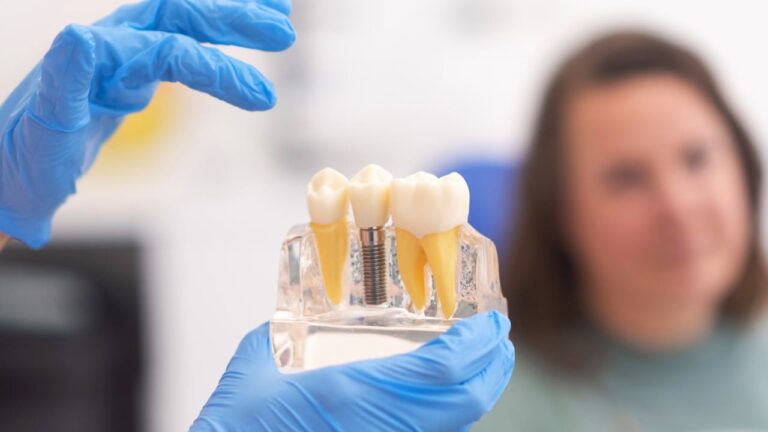
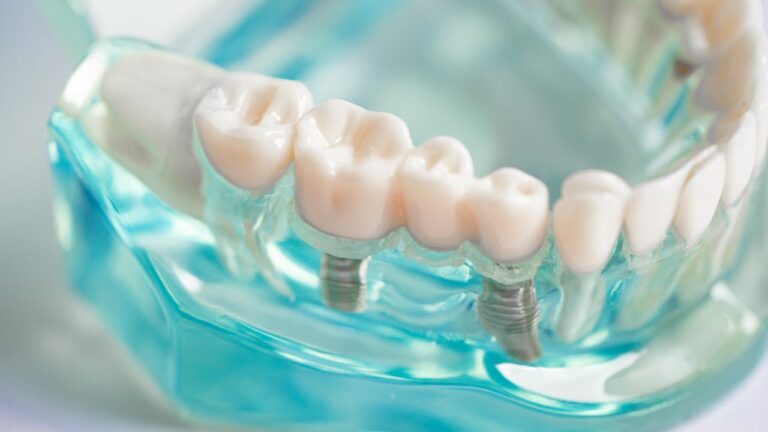
The financial arithmetic of dental phobia is rarely discussed, but it is one of the most concrete arguments for interrupting avoidance early. A routine dental exam with X-rays and a cleaning typically costs between $150 and $300 without insurance. A composite filling for a small cavity averages $150 to $300 per tooth. A root canal on a molar runs $900 to $1,500. A dental extraction followed by an implant, crown, and abutment, the standard of care for replacing a missing tooth, totals $3,000 to $5,000 per tooth.
Every stage of that progression represents a point at which a patient who had come in earlier could have stopped the escalation at a fraction of the cost. Avoidance does not defer the expense. It multiplies it. For patients who cite cost as a reason not to seek care, the financial reality of untreated disease makes routine prevention the significantly more affordable path.
Who Is Most at Risk for Dental Phobia?
A 2016 systematic review in BMC Oral Health, analyzing risk data from 24 studies, identified several consistently elevated risk groups. Children who experienced painful or poorly managed dental procedures before age ten showed higher rates of adult dental phobia regardless of later dental history. Adults diagnosed with anxiety disorders, PTSD, or panic disorder carry substantially elevated risk due to the neurological overlap described earlier.
Women report dental phobia at higher rates than men in survey data, though researchers note this likely reflects reporting differences rather than true prevalence differences. Adults with lower dental health literacy, meaning those who have less understanding of what dental procedures involve and why, show higher fear levels, suggesting that information is a genuine protective factor. People who experienced traumatic medical procedures outside of dentistry, including surgical or invasive diagnostic procedures, also show elevated risk, consistent with the general trauma and hypervigilance connection.
Income and access play a role as well. Adults who delayed early care due to cost often had their first dental experiences as emergencies, which are more painful and more psychologically distressing than routine visits. That first experience as crisis rather than prevention sets a fear template that persists long after financial circumstances improve.
How Dental Phobia Is Diagnosed
The most widely used clinical screening tool is the Modified Dental Anxiety Scale (MDAS), a five-item questionnaire that asks patients to rate their anticipated anxiety for specific dental scenarios. Scores of 19 or above out of 25 indicate high dental anxiety consistent with phobia. The Dental Fear Survey is a longer instrument that assesses both anxiety levels and specific avoidance behaviors, giving clinicians more granular information about triggers and severity.
Clinical diagnosis, as opposed to self-report, requires that the fear meet DSM-5 specific phobia criteria: it must be persistent, cause significant avoidance behavior, and produce distress disproportionate to the actual risk. A patient who reports nervousness before appointments but attends regularly and manages their care does not meet the clinical threshold for phobia. A patient who has not been to a dentist in four years specifically because of fear, and who experiences panic symptoms when attempting to book an appointment, does.
Self-identifying as phobic is a meaningful and useful first step even without formal assessment, because it accurately signals to a dental provider what level of accommodation and communication will be required. Naming the fear precisely changes how an appointment is structured.
How to Overcome Dental Phobia: Evidence-Based Approaches
Cognitive Behavioral Therapy (CBT)
A 2019 Cochrane review of CBT interventions for dental phobia, analyzing 27 randomized controlled trials with a combined sample of 3,400 participants, found that CBT produced clinically significant reductions in dental anxiety in 70 to 80 percent of treated patients, with effects maintained at one-year follow-up. Among patients who completed a full CBT protocol, the majority were able to undergo routine dental procedures without sedation within six months.
CBT addresses dental phobia by targeting the thought patterns that fuel avoidance and the behavioral habits that reinforce fear. Cognitive restructuring challenges catastrophic interpretations (“this will be unbearable”) and replaces them with accurate assessments (“I have managed difficult situations before and this one is finite”). Exposure therapy gradually introduces dental stimuli, starting with low-anxiety scenarios like watching a video of a dental cleaning, and incrementally working toward in-chair treatment. The exposure is always paced to the patient’s tolerance, and the goal is to repeatedly present the feared stimulus in conditions where no harm occurs, which allows the brain to update its threat assessment.
A referral from a dentist to a clinical psychologist with experience in specific phobias is the standard pathway. Some dental practices in larger markets also partner with psychologists who specialize in dental phobia and can coordinate care directly. Treatment timelines typically run eight to sixteen weekly sessions for a full course.
Sedation and Comfort Options at the Dentist
Sedation dentistry is not a single option but a spectrum, and the appropriate level depends on the severity of phobia, the complexity of treatment needed, and the patient’s medical history. Nitrous oxide, administered through a nasal mask during treatment, produces mild relaxation and is easily reversed after the appointment. Oral sedation, typically a benzodiazepine taken an hour before the appointment, produces deeper relaxation but does not render the patient unconscious. IV sedation, administered and monitored by a trained provider, produces a deeply relaxed state and often results in little to no memory of the procedure.
For the most severe cases, general anesthesia administered in a hospital setting allows necessary treatment to be completed while the patient is fully unconscious. This is typically reserved for patients with profound phobia requiring extensive treatment who cannot tolerate any lesser intervention.
The strategic value of sedation for phobic patients is not simply comfort during the appointment. It is the opportunity to have a dental experience that is not traumatic, which breaks the conditioning that links dental visits with fear. A patient who comes in for a sedated cleaning, has a positive experience, and returns for a follow-up has begun to update the threat assessment their nervous system has been operating from. That first positive experience is the hinge point.
Communication Strategies That Work
A 2017 study published in the Journal of Pain Research, involving 420 patients undergoing dental procedures, found that patients who had an agreed-upon stop signal with their dentist before the procedure began reported significantly lower pain scores and significantly lower anxiety scores during treatment than patients who had no such agreement. The mechanism is patient control. When patients know they can pause the procedure at any moment, the perceived helplessness that amplifies fear is directly reduced.
The stop signal, typically a raised hand or a specific word, takes thirty seconds to establish and measurably changes the experience. Ask for it before the appointment begins. Similarly, asking your provider to narrate what they are about to do before doing it, a practice known as tell-show-do, reduces the startle response and maintains a sense of control. Practical communication techniques for managing fear during treatment can help you prepare specific language for these conversations.
Pre-appointment consultations, separate from the treatment appointment, are another tool with documented benefit. Coming in simply to meet the provider, see the environment, and talk through concerns without any instruments involved gives the brain a low-threat dental experience to reference. That reference changes the threat assessment before treatment begins.
Finding the Right Dental Practice
Not every dental practice is equipped to work with phobic patients, and the difference is not primarily about equipment. It is about communication style, pacing, and willingness to make the patient’s emotional experience a clinical priority alongside the technical work. A practice that is right for a phobic patient explains each step before performing it, does not express impatience when a patient needs to stop, offers sedation options without making the patient feel dramatic for asking, and conducts the first appointment as a consultation rather than a procedure.
Questions worth asking before booking: Do you see patients with dental phobia regularly? Can the first appointment be a consultation with no treatment? Do you offer nitrous oxide or oral sedation? What is your approach if a patient needs to pause mid-procedure?
For patients in the Belmont, NC area, identifying a dental provider who is experienced with anxious patients is a concrete first step, and the right practice will make it clear from the initial conversation that naming your fear is welcome and useful, not an inconvenience. Practices that specialize in this approach understand that a patient who feels heard at the first call is significantly more likely to keep that appointment and build from there.
What to Try This Week
Call a dental office before you book. Not during booking, before it. Explain that you have dental phobia and ask how the practice handles anxious patients. That one phone call does several things at once: it tells you whether this is a practice that will take your fear seriously, it establishes your needs before you are sitting in a chair without leverage, and it begins reframing dental care as something that happens on your terms rather than something done to you.
Knowing how to communicate your fear to a provider before and during an appointment changes the entire dynamic of the visit. Providers who work with phobic patients consistently report that the patients who disclose their fear upfront are easier to help and more likely to have successful appointments than those who say nothing and white-knuckle through.
Naming the fear is not weakness. It is the clinical information your provider needs to actually do their job well. Make that call this week. You do not have to schedule anything. Just make the call and see how they respond. Their answer tells you everything you need to know about whether that practice is the right environment for you to begin rebuilding trust in dental care.