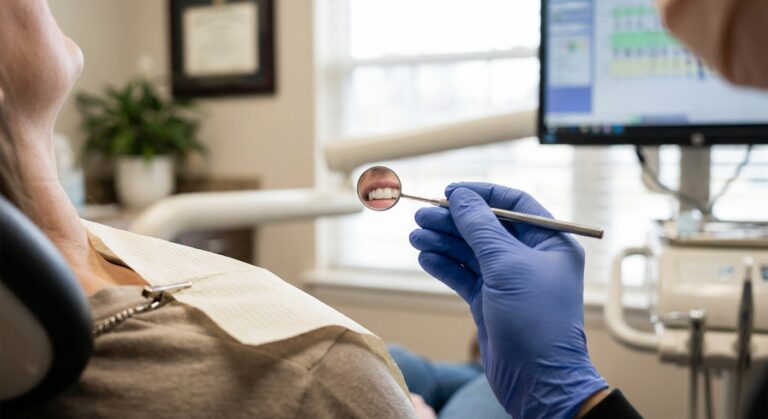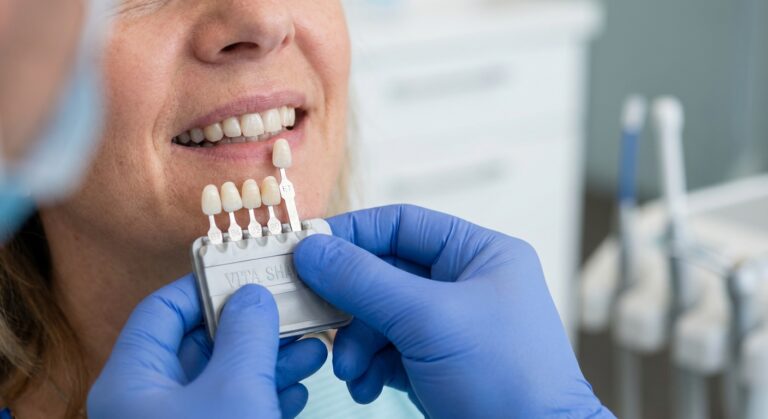
Roughly 36% of adults in the United States experience significant dental anxiety, and according to a 2022 NIH report, about 16% meet the criteria for dental phobia severe enough to cause complete avoidance. If you’ve been putting off care for months or years, you’re not weak or irrational. You’re part of a documented clinical pattern, and finding the right dentist for anxious patients near you is the move that actually breaks the cycle.
Why Dental Anxiety Is More Common Than You Think
A 2023 study published in the Journal of Dental Research, drawing on data from over 15,000 adults across 14 countries, found that dental fear is the fourth most common specific fear in the general population. More telling: patients who identified as highly anxious were three times more likely to have untreated decay and two to four times more likely to have missing teeth than low-anxiety patients. Avoidance doesn’t preserve your oral health. It compounds the problems that made you anxious in the first place.
What this means in practice is that fear is not a personality flaw. It’s a feedback loop. A difficult experience leads to avoidance, avoidance leads to worse oral health, worse oral health leads to more complex (and potentially more uncomfortable) treatment, which reinforces the fear. The right dental practice understands this loop and is built to interrupt it, not ignore it. Understanding what drives dental fear in the first place helps clarify why the practice environment matters so much.
What “Anxiety-Friendly” Actually Means in a Dental Practice
A 2022 study in the Journal of Dental Research tracked 320 anxious patients across 40 practices and found that patient-centered communication, specifically the use of clear explanations, defined stop signals, and unhurried pacing, reduced self-reported anxiety scores by an average of 31% compared to standard care. The conclusion isn’t surprising. What is surprising is how few practices actually operationalize it.
An anxiety-friendly practice has specific, visible systems in place, not just a warm waiting room. Look for a stated stop signal (a raised hand, a tapping gesture) that the team acknowledges before treatment begins. Look for a no-rush consultation policy where the first visit is structured around conversation, not a full exam with surprise X-rays. Look for staff trained in trauma-informed care, which means they ask about your history rather than assuming your chart tells the whole story.
When you call a practice for the first time, ask this single question: “What do you do when a patient needs to pause mid-treatment?” A practice that has a real answer, specific and immediate, is worth your time. A practice that fumbles or pivots to generic reassurance is telling you something important.
Sedation Options and What They’re Actually For
A 2023 American Dental Association report on sedation use found that among patients with documented dental anxiety, nitrous oxide remains the most common first-line option, used in approximately 58% of anxiety-related cases, followed by oral sedation at around 27%, and IV sedation for the most severe presentations. These aren’t tiers of escalating desperation. They’re tools, and the right practice matches the tool to the patient.
Nitrous oxide (laughing gas) takes effect in minutes, wears off quickly enough to drive home, and creates a relaxed, slightly dissociated state without putting you to sleep. Oral sedation involves taking a prescribed pill before your appointment; you stay conscious but feel deeply calm. IV sedation produces a deeper state and is typically reserved for longer procedures or patients with severe phobia. Ask any candidate practice which of these they offer in-house versus by referral. A practice that only offers nitrous in-house may refer you elsewhere for more intensive procedures, which is fine as long as they’re transparent about it upfront.
The Consultation Before the Chair
A 2021 University of Copenhagen study following 214 dental-avoidant patients found that offering a pre-treatment consultation with no clinical procedures reduced no-show rates by 44% and lowered pre-appointment anxiety scores significantly. The mechanism is straightforward: uncertainty drives anticipatory anxiety. Remove the uncertainty and you reduce the fear before treatment even begins.
The consultation-only appointment is the clearest test of whether a practice is genuinely anxiety-focused. It’s a visit where you meet the dentist, ask questions, see the space, and establish trust without anyone reaching for an instrument. If a practice won’t offer this, and some won’t, that answer tells you everything. Book a consultation-only appointment before you commit to any practice. This single step does more for breaking the pattern of avoiding dental care than any amount of online research.
How to Find Anxiety-Friendly Dentists Near You
A 2024 Healthgrades report analyzing 2.1 million provider reviews found that 74% of patients selecting a new healthcare provider read online reviews before booking, and reviews mentioning emotional experience (feeling heard, unhurried, respected) were weighted more heavily than clinical outcome mentions. You can use this directly.
Search “dentist for anxious patients near me” or “[your city] dentist for anxious patients” and open the top three to five results. Then read the reviews with a specific filter: look for words like “patient,” “gentle,” “no judgment,” “took their time,” “explained everything,” and “didn’t rush.” These phrases indicate a documented patient experience, not just a marketing claim. Also check the practice website for a dedicated anxiety page, a listed sedation menu, and photos of the actual office environment. A practice serious about anxious patients will have built this content deliberately, not buried a single line about “comfortable care” at the bottom of a services page.
Questions to Ask Before You Book
A 2023 Picker Institute study on pre-visit communication across 180 primary and dental care practices found that patients who received specific procedural information before arriving reported 38% lower treatment-day anxiety than patients who received only standard appointment confirmations. The information itself reduces the fear.
Four questions cut through the marketing and show you how a practice actually operates. First: “What do you do when a patient needs to stop mid-procedure?” A good answer names the specific signal system and confirms the patient controls the pace. Second: “Do you offer a pre-visit tour of the office?” A yes here indicates they understand environmental anxiety, not just procedural anxiety. Third: “How do you approach treatment planning for patients who haven’t been in for a few years?” A good answer is non-judgmental and focused on starting where you are. Fourth: “Do you provide a written cost estimate before starting any work?” Transparency on cost is a direct signal of transparency in general. Knowing how to communicate your anxiety clearly to a provider before your first visit makes these conversations significantly more productive.
What to Expect on Your First Visit
A 2022 study in the Health Environments Research and Design Journal examining 60 dental offices found that practices with lower ambient noise, natural light, and visible clutter reduction produced measurably lower cortisol levels in anxious patients before treatment began. The physical environment is not cosmetic. It’s clinical.
On a well-run first visit, the waiting area is calm and the front desk interaction is unhurried. The intake process involves the team asking about your anxiety history directly, not just handing you a form. A good exam is thorough and narrated: the dentist explains each step before performing it and checks in throughout rather than working in silence. There are no surprise procedures. Before you go, write down the two things that worry you most and bring that list. Prepared patients give their dentist the specific information needed to actually help. If you want a practical framework for arriving at that first appointment feeling grounded, building that list the night before is the simplest starting point.
Insurance, Cost, and Removing the Financial Layer of Anxiety
A 2023 KFF Health Tracking Poll of 3,605 adults found that 38% of respondents who delayed or skipped dental care in the past year cited cost as the primary reason. For anxious patients, financial uncertainty stacks on top of procedural fear and makes the combined barrier nearly impossible to overcome alone.
Ask any practice these questions before you book: Do you accept my insurance? Do you offer payment plans for patients without coverage? Is there a sliding-scale fee structure? Will you provide a written estimate for a new-patient exam and X-rays before I arrive? A transparent practice gives you a number, not a vague range and not a suggestion to “call your insurance.” Cost clarity removes one layer of anxiety before you ever walk through the door.
What to Try This Week
Call one practice. Ask them: “What do you do when a patient needs to pause mid-treatment?” Listen to the answer. If it’s specific and unhurried, book a consultation-only appointment. No treatment required, no commitment beyond showing up. That one call, made this week, is the action that ends the avoidance cycle. Everything else follows from it.