Expertise provided by Dr. Greg Cook, Owner
You’ve tried whitening strips twice and bought the peroxide rinse your hygienist mentioned, yet you still see the same yellow tone every time you smile in a mirror. Now you’re wondering whether professional whitening will work, or whether your teeth just won’t respond. If you are researching teeth whitening in Belmont, NC, you deserve a straight answer before you spend another dollar. This guide from Belmont Dental gives you one.
Here is the short version. Belmont Dental offers in-office teeth whitening. Your starting and ending shades are documented, so you can see exactly what changed. In one documented whitening session at Belmont Dental, a single patient left about 3 to 4 shades whiter, an individual case and not a typical result, though your result depends on your starting shade and the type of staining you have. You receive the current fee, and any membership discount you qualify for, before treatment begins. This guide also covers what most whitening pages leave out: who whitening does not help, how long results may last, and what to do when whitening is not the right answer for your smile.
What Is Professional Teeth Whitening, and Why Does It Work When Drugstore Kits Stall?
Professional teeth whitening is a dentist-supervised bleaching treatment. A stronger peroxide gel is applied to your enamel in a controlled setting while your gums are protected. At Belmont Dental, that treatment is performed in the office.
To see why this works when strips stall, picture your enamel as a tightly woven fabric. Every cup of coffee, glass of red wine, and mug of sweet tea leaves pigment caught in the weave. Over the years, those pigments build up and give teeth a yellow or brown cast. Peroxide gel seeps into the weave and breaks those pigment molecules into smaller pieces that absorb less light, so your teeth look lighter. A drugstore strip is a bit like dabbing a stain with a damp napkin, while a professional treatment is more like using the right stain remover, applied evenly, for the right amount of time.
Clinical research on in-office bleaching focuses on higher-concentration hydrogen peroxide gels used under professional control. An umbrella review of in-office tooth bleaching protocols gathers the published evidence on how these gels are applied, how long they stay on the teeth, and what side effects patients report. That body of research exists because professional whitening is a clinical procedure, not a cosmetic product you pick off a shelf.
Gel strength is only part of the reason home kits disappoint. Strips are one-size-fits-all, so they slide around, miss the curves between teeth, and cannot tell you whether the yellow you see is surface stain at all. Sometimes the color comes from thinning enamel that lets the darker layer underneath show through. Other times it comes from a filling or crown that will never change color. If you have used two boxes of strips with little change, one of those reasons may be the culprit, and a professional exam can answer that question before you spend more.
What Actually Happens During an In-Office Whitening Appointment?
At Belmont Dental, an in-office whitening appointment covers setup, isolation of your soft tissues, active whitening, and a post-treatment evaluation. You walk in with a documented starting shade and leave with a documented ending shade.
Many people worry the visit will be uncomfortable or confusing, so it helps to know what to expect. Here is the sequence Belmont Dental follows:
- Goals and history. Your dentist talks with you about what you want, how quickly you want results, and whether you have had tooth sensitivity before. Belmont Dental bases its whitening recommendation on four things: your goals, your starting shade, your sensitivity, and how fast you want to see a change.
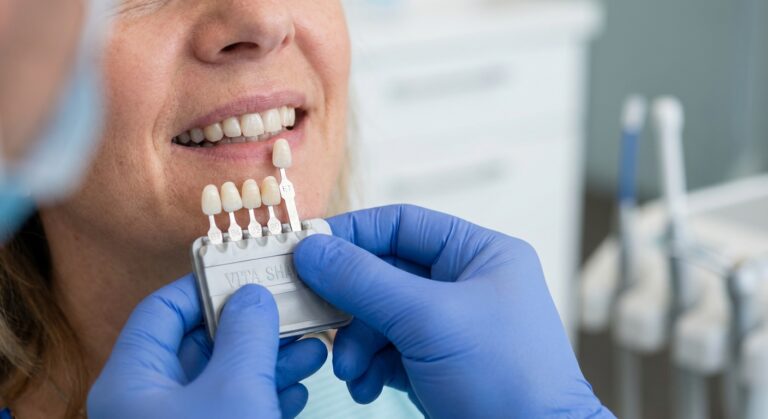
- Starting shade documented. Before any gel is applied, the team records your current shade. This becomes your personal “before” picture.
- Soft tissues prepared and protected. Your gums and lips are isolated and shielded so the whitening gel stays on your teeth, where it belongs.
- Whitening gel applied. The whitening gel goes on your teeth.
- Final shade documented and evaluated. Your ending shade is recorded and compared with your starting point, so you see exactly how many shades you gained.
The tissue protection step matters more than most people realize. Whitening gel is meant for enamel, not gums, and gel that sits on soft tissue can cause irritation. Belmont Dental prepares and protects your soft tissues before the gel ever goes on, something a store-bought kit simply cannot do for you.
You may also be wondering whether whitening will make your teeth sting. That is a fair worry. Temporary tooth sensitivity is the side effect most often reported with in-office bleaching, and it is one of the outcomes the in-office bleaching umbrella review examines. This is exactly why your sensitivity history comes up at the start of the visit. If you have had sensitivity before, tell your dentist, because your plan is built around you rather than a script.
How Many Shades Whiter Might You Get, and Who Should Not Whiten?
Results vary from smile to smile, so consider this one individual case: in one documented session, a single Belmont Dental patient saw a noticeable improvement after one whitening appointment, landing about 3 to 4 shades whiter, though because your starting shade and stain type shape the outcome, the practice does not promise a specific number of shades. Instead, it documents your starting and final shades so you can see your actual result.
The type of stain matters most. Yellow and brown stains from coffee, tea, red wine, and tobacco sit in the enamel and tend to lift more predictably in some patients. If your teeth have slowly yellowed over the years from daily habits, you may see a visible change, though individual response varies. Deeper discoloration behaves differently. Gray or banded staining from tetracycline antibiotics taken in childhood, or the spotting that comes with fluorosis, sits deeper in the tooth and responds far less predictably to peroxide. You may still see some lightening, but it is best to go in with realistic expectations.
Some people are not good candidates for whitening right now, and an honest office will tell you so:
- Untreated decay or active gum disease. Cavities and inflamed gums need care first, because whitening over a problem does not fix it. Belmont Dental treats cavities, tooth decay, and gum disease in the same office.
- Exposed root surfaces. Roots lack the enamel layer that whitens well, and they are more prone to sensitivity.
- Crowns, veneers, and bonding on visible teeth. Restorations do not change color with whitening. If you have a crown on a front tooth, whitening the teeth around it can make it look darker by comparison. Your dentist will check whether any existing restorations may need replacing afterward to match your new shade.
- Deep gray or tetracycline staining. Whitening may help a little, but it may not reach your goal.
If whitening is not the right fit, you still have options. Belmont Dental offers dental bonding, veneers, crowns, and full smile makeovers under one roof. The same team that tells you whitening will not reach your goal can walk you through what will, without sending you to another office.
Will Your Teeth Yellow Again? The Maintenance Reality Most Offices Skip
Over time, yes. Whitening results are not permanent because enamel stays porous and keeps picking up pigment from food, drinks, and tobacco. How long your results last depends mostly on your daily habits, and some people eventually come back for a touch-up when they notice color creeping back.
Think back to the fabric picture. Whitening clears the stains from the weave, but it does not seal the weave shut, so your morning coffee, afternoon sweet tea, and glass of red wine with dinner will slowly start depositing pigment again. Someone who mostly drinks water may hold their results for a long time, while someone who drinks three cups of coffee a day may see fading sooner. Results vary widely from person to person, and your habits influence where you land.
The first 48 hours after whitening are the most important. Standard aftercare advice is to avoid strongly colored foods and drinks during that window, including coffee, tea, red wine, cola, berries, tomato sauce, soy sauce, and tobacco. Think of it as letting freshly cleaned fabric settle before anything spills on it. If you cannot skip your morning coffee, drinking it cool through a straw and rinsing with water afterward helps limit contact with your front teeth.
After that, maintenance is simple and mostly common sense. Rinse with water after dark drinks, keep up with brushing and flossing, and stay on schedule with your professional cleanings, since a cleaning removes fresh surface stain before it builds up. When you notice your smile dulling, a touch-up appointment may bring the color back. Touch-ups are a separate treatment with their own fee, and Belmont Dental shares that fee before treatment, just like the first time. Because your original final shade is on record, your dentist has a real number to compare against when you return.
What Does One Whitening Session Cost, and How Does the Membership Plan Help?
If you are comparing options for teeth whitening in Belmont, NC, cost is probably near the top of your list. Belmont Dental tells you the current whitening fee, along with any membership discount you qualify for, before treatment begins, so you know your exact cost before you commit. The practice runs its own in-house membership plan, and patients on the Adult Care or Perio Plus tiers may have access to reduced fees on elective services such as whitening, depending on the benefits their plan includes.
You will not find a vague “starting at” special on this page, and that is on purpose. Your fee depends partly on whether you belong to the membership plan and which tier you hold, so the honest number is the one tied to your situation. You hear that number at your consultation, before any gel touches your teeth. If the price does not fit your budget, you can walk away with your shade documented and no obligation.
For that fee, one in-office whitening session at Belmont Dental includes a review of your goals and sensitivity history, a documented starting shade, soft tissue preparation and protection, the whitening treatment itself, and a documented final shade evaluation. That is chair time with a trained team, not a box you open at your kitchen counter.
Insurance is worth a quick word, too. Belmont Dental accepts Cigna, Blue Cross Blue Shield, Delta Dental, GEHA Connection Dental Network, MetLife, and Guardian. Dental insurance plans generally treat whitening as cosmetic, so it is usually an out-of-pocket service, but your team can talk you through what your plan does and does not cover.
It also helps to compare total cost rather than sticker price. If you have bought several rounds of strips, rinses, and whitening toothpaste without the change you hoped for, those purchases add up quietly. One professional session with a documented result gives you a clear answer about what your teeth can do. When you shop around, ask any office the same three questions: What exactly does the fee include? Will you document my starting and ending shade? Will I know the full cost before you begin?
Why Your Teeth Whitening in Belmont, NC Should Start With a Documented Shade, Not a Guess
Belmont Dental has cared for families in Belmont, Mt. Holly, Charlotte, and McAdenville since 2005, which means more than 20 years of building lasting relationships in this community. Every whitening visit there starts the same way: your starting shade is recorded and your soft tissues are prepared and protected before the gel goes on, so your result is measured rather than guessed.
That documentation does real work for you. When you can see your starting and ending shades side by side, you know exactly what you paid for. It also gives your dentist a baseline for the future, so if you want a touch-up a year from now, there is a record to compare against instead of a vague memory of how white your teeth used to look.
Whitening also works best when it is part of your whole dental picture. Because Belmont Dental provides preventive, general, restorative, and cosmetic care under one roof, the team can catch a cavity before it gets whitened over, flag a front crown that may need replacing to match your new shade, and suggest bonding or veneers when whitening alone will not reach your goal. The practice uses state-of-the-art technology, including digital imaging and 3D scanning, to support that kind of planning.
Most of all, whitening at Belmont Dental is personalized care for the person behind the smile. You are not handed a one-size kit and sent on your way. Instead, the team asks what you want, what has not worked, and what worries you, then builds a plan around your answers. That kind of compassionate care is what helps patients feel at home in the chair and leave with real confidence in their smile.
Questions Belmont Patients Ask Before Whitening
How much does professional teeth whitening cost at Belmont Dental?
Belmont Dental shares the current whitening fee, plus any discount available through your Adult Care or Perio Plus membership, before treatment begins. You know your exact cost up front, and nothing is added after the fact.
How long do teeth whitening results last?
Whitening is not permanent, because enamel slowly re-stains from coffee, tea, wine, and tobacco. Results vary widely from person to person, depending on your habits. Avoiding dark foods and drinks for the first 48 hours and keeping up with cleanings may help your results last longer.
Can yellow teeth be whitened, and what results can I expect?
Yellow surface stains from coffee, tea, and wine may respond to whitening in some patients, though individual response varies. In one documented whitening session at Belmont Dental, a patient saw about 3 to 4 shades of improvement; individual response varies.. Deep gray staining from tetracycline or fluorosis responds less predictably, so results vary.
What is the difference between in-office whitening and take-home kits?
In-office whitening at Belmont Dental is applied by a dental team, with your gums protected and your shade documented before and after. Store-bought kits are applied at home without supervision and usually take weeks to show gradual, less predictable change.
Does teeth whitening hurt or cause sensitivity?
Some patients notice temporary sensitivity, which is the most commonly reported side effect of in-office bleaching. Belmont Dental reviews your sensitivity history first and protects your soft tissues before applying the gel, so your plan fits your comfort level.
Who is not a good candidate for teeth whitening?
Patients with untreated decay, active gum disease, exposed roots, deep gray tetracycline staining, or visible crowns, veneers, or bonding may need restorative work first, and some may be better served by bonding or veneers instead. Belmont Dental confirms candidacy at your consultation.
Your Next Step: See Your Starting Shade Before You Spend Another Dollar
The simplest way to start teeth whitening in Belmont, NC is to schedule a whitening consultation at Belmont Dental. At that visit, your starting shade is documented, your candidacy is confirmed, and you receive transparent pricing and membership options before any treatment begins. If in-office whitening is right for you, you will know exactly what to expect from your appointment, and if it is not, you will leave knowing what will work instead.
One practical tip before you come in: take a photo of your smile in natural daylight near a window, and jot down how many cups of coffee, tea, or other dark drinks you have on a typical day. That photo and habit list help your dentist judge your stain type and set honest expectations for your result. They also give you your own before picture, so the difference is easy to see once your new shade is documented.
Meta title: Teeth Whitening Belmont NC | In-Office Whitening
Meta description: In-office teeth whitening in Belmont, NC: documented shades, individual results vary, fees shared up front.
URL slug: professional-teeth-whitening-belmont-nc
Ready to See What Professional Whitening Can Do for You?
If you’ve been wondering whether professional whitening is worth it compared to store-bought options, the difference in results and safety speaks for itself. The team at Belmont Dental can walk you through what to expect from your first session, answer questions about sensitivity, and help you understand the timeline that works for your smile goals.
Individual whitening results vary based on starting shade, stain type, and personal habits; no specific outcome is guaranteed.