Careful impressions, bite records, and follow-up adjustments all play a part in how a denture fits, and whether it is labeled private or NHS is not one of those factors. The NHS is part of the UK health system and does not apply to patients choosing a dentist in Belmont, NC. If you searched “do private dentures fit better than NHS” while looking for dentures near you, the process behind your denture is likely to matter more than who pays for it. You may have heard that dentures can slip, click, or rub, and you may wonder whether a different kind of provider would change that. That worry is fair, and a careful fitting sequence is designed to address it.
This guide walks you toward two goals: a denture that is refined through adjustments, and a local practice that knows your mouth and can work with you as it changes. Here is the path from first visit to final fit:
- Book a consultation and bring your questions.
- Weigh dentures against other ways to replace teeth.
- Plan extractions and the order of care.
- Get cost clarity before treatment.
- Go through impressions, try-in, and delivery.
- Handle sore spots, slipping, and changes over time.
Before You Start: Do Private Dentures Fit Better Than NHS Dentures for Belmont, NC Patients?
A payment label is not what determines how a denture fits. In Belmont, NC, you choose your own dentist and pay through dental insurance, a membership plan, or on your own, so the more useful question is what influences fit.
The private-versus-NHS comparison comes from the United Kingdom. There, patients can get dental care through the National Health Service or pay a private dentist, and how those two systems work is an active policy question. The British Dental Association’s evidence to the Competition and Markets Authority is one example of that UK debate. None of it carries over to North Carolina, where no single public dental system makes dentures for most adults.
What you do have here is a choice of practice and a choice of how to pay. Belmont Dental accepts Aetna, Assurant, Blue Cross Blue Shield, Cigna, Delta Dental, GEHA, Guardian, and MetLife. Accepting a plan is not the same as being in-network, so ask the office to check your specific benefits. If you have no dental insurance, Belmont Dental offers its own Belmont Dental Membership Plan with Adult Care, Perio Plus, and Child Plus tiers.
Before your first visit, gather your insurance card or membership details, a list of your current medications, any old partial or denture you still have, and your questions written down. Having these ready can make your consultation more useful and help your plan reflect you rather than a one-size template.
What Influences How a Denture Fits?
Fit comes from a sequence of careful steps: accurate impressions, a record of how your jaws meet, a try-in, an adjustment at delivery, and follow-up visits for sore spots. If any one of these is skipped or rushed, a denture may end up loose or uncomfortable, regardless of its cost.
Impressions capture the shape of your gums and any remaining teeth. Bite records show how your upper and lower jaws line up when you close and chew. A try-in lets you and your dentist check the look, the bite, and how you speak before the denture is finished. Once you start wearing it, small pressure points often show up, and adjustment visits are used to address them.
Your mouth also keeps changing. After teeth are removed, the gums and bone underneath gradually reshape, so the fit of any denture shifts over time and may need adjustment or relining later. How long a denture lasts is a real, measurable question. One Australian study tracked complete denture longevity and replacement in public and private services over 20 years, looking at how long dentures last and when they need to be replaced.
When you compare providers, ask how they take impressions, whether there is a try-in, and how follow-up adjustments are handled. Those answers can tell you more about the care behind a denture than a price tag can.
Step 1: Book a Consultation and Bring Your Questions
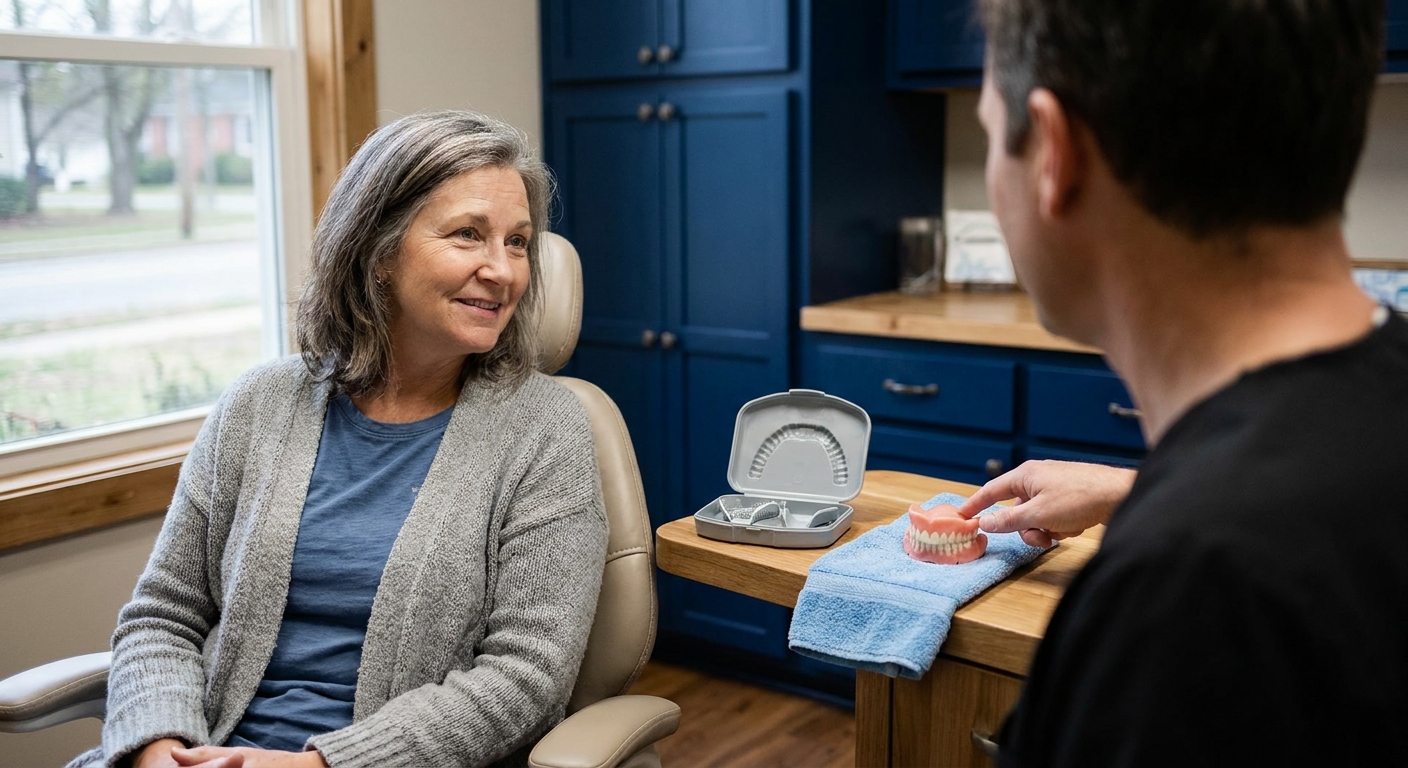
Your first step is a consultation where the dentist examines your mouth, listens to your goals, and builds a plan around your situation. At Belmont Dental, that visit is with Dr. Cook.
Belmont Dental lists dentures as part of its general dentistry care and has served families in Belmont, NC since 2005. Because the practice also cares for children and adults with cleanings, fillings, crowns, and gum care, many households choose to keep the whole family under one roof instead of juggling several offices.
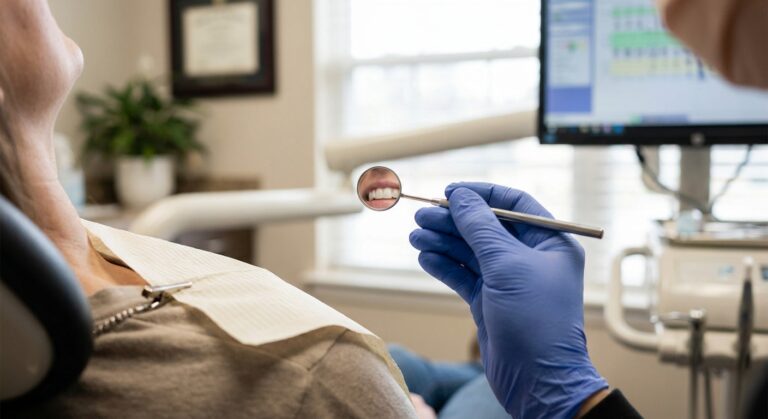
At the visit, expect an exam of your teeth, gums, and bite, along with imaging as needed. Belmont Dental uses digital imaging and 3D scanning as part of its care. After the exam comes a conversation about what bothers you most, whether that is chewing, appearance, a loose tooth, or pain.
Ask your questions out loud. Good ones include: Do I need a full or partial denture? Which teeth can be saved? What happens between removing teeth and wearing my final denture? You can read more about custom dentures at Belmont Dental before you go, so you arrive knowing what to ask.
Step 2: How Do You Weigh Dentures Against Other Ways to Replace Teeth?
You weigh your options by matching each one to your situation, your goals, and your budget. For missing teeth, Belmont Dental discusses a single-tooth implant, a bridge, or a removable option, and in the practice’s own words, “our goal isn’t to recommend the most expensive treatment.”
Here are the denture types you may hear about:
| Type | What it is | Who it may suit |
|---|---|---|
| Full denture | Replaces all the teeth on the upper or lower arch | People who have lost, or need to lose, every tooth on that arch |
| Partial denture | Fills gaps and attaches to your remaining natural teeth | People who still have healthy teeth they want to keep |
| Immediate denture | A denture placed the same day teeth are removed, often adjusted or relined as the gums heal | People who do not want to go without teeth during healing; ask your dentist whether it fits your plan |
A partial denture rests on your gums and grips nearby natural teeth, usually with small clasps, which helps it stay in place while you talk and chew. Because it fills the empty space, your remaining teeth may have less room to drift, and you can take it out to clean it.
If a removable partial is not what you want, alternatives include:
- Single-tooth implant: a post placed in the jawbone, later topped with a crown
- Bridge: a fixed replacement anchored to the teeth on either side of the gap
- Another removable option: chosen to fit your mouth and budget
Belmont Dental places straightforward single-tooth implants in-house. The process starts with a clinical exam, a CBCT scan, digital planning in Sidexis, and an intraoral scan. After placement, the practice allows about 3 to 4 months for the implant to bond with the bone before the final crown, and that timing varies with the site and how you heal. More complex cases are coordinated with a specialist.
Step 3: Plan Extractions and Care Order Together
If some teeth need to come out, you can plan removal and replacement with the same practice. Belmont Dental lists tooth extractions and pain management under emergency dentistry, alongside dentures under general dentistry.
The order of care matters. Belmont Dental helps patients address disease, pain, and function first. That might mean treating gum disease, removing a tooth that cannot be saved, or addressing an infection before any denture work starts. A denture made over sore or infected gums may not sit well, so this step is meant to support the fit you are investing in.
Planning everything in one place can also reduce coordination. When the same team that examined your mouth also removes the teeth and plans the replacement, your history, X-rays, and goals stay in one chart. For a busy parent who books care for the whole household, that consistency can be a real convenience.
Ask directly how you will manage the time between extractions and your final denture, including what you will eat and how you will look at work. Then ask which teeth can safely wait and which need attention now.
Step 4: How Do You Get Cost Clarity Before Treatment?
You can seek cost clarity by asking for a written estimate and an insurance benefits check at your consultation, before any treatment begins.
It is normal to worry about being pushed into more than you need. Belmont Dental’s approach is to explain the ideal treatment, the appropriate alternatives, and what needs to be addressed now versus what can safely wait, and then to build a plan you can realistically complete. If you have several needs, care can be phased so the most urgent teeth are treated first.
Belmont Dental does not quote specific denture prices up front. The cost of any denture depends on how many teeth are involved, whether extractions are needed, and which type of replacement you choose. Financing is available, so ask the office which options apply to you. If you have no insurance, ask how the Belmont Dental Membership Plan tiers might fit your preventive care needs.
Before you agree to anything, make sure your estimate shows each phase, what your plan is expected to pay, and what you will owe.
Step 5: Go Through Impressions, Try-In, and Delivery
During impressions, try-in, and delivery, your main job is to speak up and keep every visit. Your feedback at each stage helps your dentist refine the denture for you.
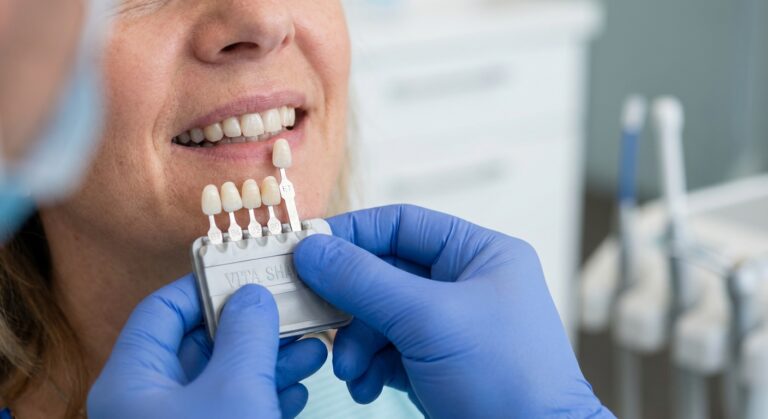
At impressions, hold still and let your dentist know if anything feels off. At the try-in, look closely at tooth shape, color, and how your lips rest. Say a few sentences out loud, then bite down gently and notice whether one side touches first. Changes are generally easier to make at this stage.
At delivery, expect some adjustment. New dentures often feel bulky, and your cheeks and tongue need time to get used to them. Point out any spot that presses, any looseness, or a bite that feels uneven, because small tweaks early on may help prevent sores later.
Many people are able to eat more comfortably with dentures after a period of practice, though experiences differ. Start with soft foods cut into small pieces, and chew slowly on both sides at once to help keep the denture balanced. As your confidence grows, you can try firmer foods. Very sticky or hard foods may stay tricky, and that is worth discussing at your follow-up.
Step 6: What Should You Do About Sore Spots, Slipping, and Changes Over Time?
Call the office whenever a sore spot lasts more than a few days, the denture slips while you eat or talk, or your bite starts to feel different. These are common adjustment needs.
Sore spots often come from pressure points that an adjustment may relieve. Avoid filing or bending a denture at home, since you can damage it. Slipping often means your gums have changed shape, which is expected after extractions. Over months and years, that reshaping can loosen any denture, and your dentist may recommend an adjustment or a reline.
Daily care supports your denture’s longevity. Rinse after meals, brush the denture gently with a soft brush, and clean your gums and any remaining teeth. Many dentists advise taking dentures out overnight to rest your gums and keeping them moist while they are out. Follow the specific directions you receive at delivery.
Routine checkups at Belmont Dental give the team a chance to look for fit changes, gum problems, and oral cancer warning signs.
The Questions Belmont Patients Ask Before Committing to Dentures
These are the short answers patients most often need before they book.
Do private dentures fit better than NHS dentures? Fit depends on impressions, bite records, and adjustments, not on the payer label. The NHS is a UK system that does not apply in Belmont, NC.
Does Belmont Dental accept dental insurance for dentures? Belmont Dental accepts Aetna, Assurant, Blue Cross Blue Shield, Cigna, Delta Dental, GEHA, Guardian, and MetLife, and it offers a membership plan for patients without insurance. Ask for a benefits check on your plan.
Can Belmont Dental remove my teeth and make my dentures? Yes. Both tooth extractions and dentures are part of the practice’s care, so removal and replacement can be planned with one team.
Why does my denture feel loose after a few months? Gums and bone change after extractions, so the fit shifts and may need adjustment or relining.
What can I get instead of a removable denture for one missing tooth? A single-tooth implant, a bridge, or another removable option, chosen based on your situation, goals, and budget.
Can dentures be whitened? No, denture teeth do not lighten with whitening products the way natural teeth do. If you still have natural teeth and want them brighter, ask about whitening before your partial’s shade is chosen so everything can be matched.
How do I find out what dentures will cost? Ask for a written estimate and an insurance benefits check at your consultation, so you know the numbers before treatment starts.
The Outcome: What a Well-Fitting Denture Can Look Like
For many people, a well-fitting denture can make eating, speaking, and smiling more comfortable after a period of adjustment, and ongoing checks as your mouth changes are part of keeping it that way. So, do private dentures fit better than NHS ones? Fit is shaped by the process, not the label.
That ongoing care is where a local relationship can matter. Belmont Dental has cared for Belmont families since 2005, and its focus on personalized care and building lasting relationships means your dentist has your history when you come back for an adjustment. You are not starting over with a stranger each time something feels different.
Request a denture consultation with Dr. Cook at Belmont Dental through the booking path on this page, and ask for a written estimate and an insurance benefits check at your visit. One concrete tip before you call: write down the moments your teeth bother you most, such as biting into an apple or smiling in photos. Sharing those specifics at your first visit can help Dr. Cook plan a denture around how you live.
A Denture That Fits Starts With a Conversation
If you have been wondering whether a better fit is something you have to pay more for, or whether your current dentures can simply be made to feel right, you do not have to figure that out alone. The team at Belmont Dental in Belmont, NC can talk through how your mouth, your gums, and your expectations shape the fit you are after. Call the office and take the first step toward a denture that feels steady and comfortable when you eat, speak, and smile.
Individual results vary, and denture fit and comfort depend on each person’s mouth.