New Patient Guide: What to Expect at Your First Visit to Belmont Dental, a Dentist Accepting New Patients in Belmont, NC
Maybe you’ve put off calling because you aren’t sure what happens at a first visit. You might be wondering how long it takes, whether anyone will lecture you, or what you’ll owe before you leave. At Belmont Dental in Belmont, NC, the first visit follows a predictable structure, and this guide walks you through each step so you know what’s coming. If you’ve been searching for a dentist accepting new patients, Belmont Dental is welcoming new patients now. That includes people who are new to the city, people switching practices, parents booking for the whole family, and people who haven’t sat in a dental chair in years.
By the end of the visit, you’ll know the condition of your teeth and gums because you’ll have seen your own X-rays. You’ll leave with a plan that separates what needs attention from what can wait, plus a cost estimate based on your insurance or membership plan before any treatment begins. How long your visit takes depends on how much there is to see and talk through. The team would rather answer your questions than rush you out the door.
Belmont Dental is proud to care for Belmont families, and our mission for that first appointment has never changed: to get to know the person behind the smile, not just to count teeth and move you along.
Prerequisites: What Should You Prepare Before Your First Appointment?
Before you arrive, complete your health history forms online, have your insurance card ready (or decide whether the membership plan makes sense for you), and bring a list of any medications you take. Doing this ahead of time lets the front desk review your benefits before you sit in the chair, so cost questions don’t hang over the exam.
Your health history matters more than most people realize. Conditions like diabetes, heart problems, and pregnancy can affect your gums and your care, and so can medications like blood thinners. Your dentist needs to know about them before recommending anything. Write down the names and doses of your prescriptions and supplements, and note any allergies, especially to medications or latex. If a past dental visit went badly, a short note on the form helps too. Something like “I gag easily” or “numbing wore off too fast last time” gives the team a head start on keeping you comfortable.
Belmont Dental accepts Cigna, Blue Cross Blue Shield, Delta Dental, GEHA Connection Dental Network, MetLife, and Guardian insurance. Accepting a plan isn’t the same as knowing what your specific policy pays, so the team looks at your benefits ahead of time and explains what they mean for you.
If you don’t carry dental insurance, ask about the Belmont Dental Membership Plan. It has three tiers, each matched to different care needs. Adult Care suits adults who need routine exams and cleanings. Perio Plus is built for patients whose gums need ongoing periodontal maintenance. Child Plus covers kids. Every tier includes preventive services, and members also receive savings on additional treatment according to the plan terms, though your actual costs will depend on the services you need. The front desk can walk you through what each tier includes and help you select the one that fits best.
If you’re booking for children covered through Medicaid or CHIP instead of private insurance, use the federal InsureKidsNow.gov dentist finder. It’s the most direct way to confirm which providers take your child’s specific coverage. The Belmont Dental front desk can also talk you through your options when you call.
Step 1: Arrival and Paperwork: Will You Know Your Costs Before the Exam?
Once your paperwork is ready, the visit itself begins at the front desk. When you walk in, the team greets you, confirms your forms, and reviews your insurance or membership options before you head back. If you’re uninsured, they explain which membership tier might fit you, so you understand potential savings before the exam starts instead of finding out at checkout.
Belmont Dental has been part of this community since 2005, and the office reflects the town it serves. Many patients have been coming for years, and the team knows people by name. For a new patient, this first stop is where building relationships begins, rather than a moment where you’re handed a clipboard and left in a waiting room to wonder what happens next.
If you didn’t fill out the forms online, you’ll complete them here. Expect a health history, a consent form, and an acknowledgment of the office’s privacy practices. That’s the main reason this guide suggests doing your forms from home: paperwork finished ahead of time gives you more of your appointment with the people who are actually looking at your teeth.
This is also the right moment to share anything you want the clinical team to know. Maybe it’s been a long time since your last visit, a tooth has been bothering you, or you’re simply nervous. Telling the front desk lets them pass it along before your hygienist ever calls your name. If you’re a parent booking for several family members, ask how the team can coordinate visits. Because Belmont Dental offers comprehensive services under one roof, you aren’t juggling separate offices for your family’s everyday care.
Step 2: Digital X-Rays and Imaging: Why Do You Need X-Rays at All?
You need X-rays because many dental problems can’t be seen with the naked eye. Decay between teeth, infections at the root, and bone loss from gum disease often stay hidden until they cause symptoms. At Belmont Dental, the team uses digital imaging and, when appropriate, 3D scanning to find these problems while they may be more manageable.
This is the standard of care, not an extra. The American Dental Association’s Code on Dental Procedures and Nomenclature (CDT) describes a comprehensive oral evaluation that includes reviewing your dental and medical history and checking for decay, existing restorations, bite issues, and gum health. X-rays are how a dentist sees the parts of that picture hidden below the surface. Guidance on selecting patients for dental X-rays, developed by the ADA with the FDA, also calls for X-rays to be chosen for each patient based on their history and exam rather than taken on a one-size-fits-all schedule. That’s why your hygienist may ask about your last set of X-rays before taking new ones.
Digital imaging has advantages over old film. Images appear on a screen within seconds, and your dentist can enlarge a single tooth to look closely at a suspicious shadow. Digital sensors also typically require less radiation than traditional film. The 3D scanning Belmont Dental uses captures a detailed digital view of your teeth and bite, which helps with planning restorations, tracking changes over time, and showing you clearly what the dentist is seeing.
Here’s why this matters in practice. Say a small cavity forms between two back molars where the teeth touch. You won’t see it in the mirror, and it may not cause discomfort for a time, but on a digital X-ray it shows up as a darker area. Caught at that stage, decay like this may require less involved treatment. Left alone, the same tooth may need more complex care.
Step 3: Professional Cleaning and Oral Cancer Screening: Are They Included or Added On?
With your images ready, your hygienist cleans your teeth, checks the health of your gums, and performs an oral cancer screening. Depending on your risk factors, they may also apply a fluoride treatment. These are part of a comprehensive preventive visit at Belmont Dental, included rather than added on.
A professional cleaning removes plaque and hardened tartar that brushing and flossing can’t reach, especially along and just below the gumline. Your hygienist then polishes your teeth. While they work, they’re also gathering information, looking for bleeding gums, tartar buildup, worn spots, and areas you might be missing when you brush. They’ll share what they see and offer practical tips for your routine at home.
If there are signs of gum disease, the visit shifts toward a periodontal assessment. Your hygienist uses a small measuring tool to check the depth of the space between each tooth and the gum around it. Healthy gums fit snugly, while deeper pockets can mean infection has started to affect the tissue and bone that hold your teeth in place. These measurements go into your chart so the dentist can review them with you. If you’re uninsured and need ongoing gum care, this is where the Perio Plus tier may be relevant, since it’s structured around periodontal maintenance rather than routine cleanings.
The oral cancer screening takes only a few minutes and is painless. Your hygienist looks at and gently feels your tongue, cheeks, the floor and roof of your mouth, your throat, and the sides of your neck, checking for sores, color changes, or lumps that need a closer look. Most of the time nothing unusual turns up, but when something does, finding it at an earlier stage is exactly why this screening is part of a comprehensive visit. Fluoride may follow for patients at higher risk of cavities, which often includes children and adults with a history of decay or dry mouth.
Step 4: Dentist Exam and Diagnosis: Will You Actually Understand What the Dentist Finds?
Your dentist reviews your X-rays with you on the screen, examines your teeth and gums, and explains what they find in plain language instead of dental jargon. You’ll see what they see, and you’ll have time to ask questions before any decisions are made.
Many people have had the opposite experience: a dentist rattles off tooth numbers and terms to an assistant, says “we’ll get you scheduled,” and walks away. Belmont Dental’s approach emphasizes personalized care, so the exam works more like a conversation. Instead of “incipient caries on number 30,” you’ll hear something like “there’s a small soft spot starting on this lower back tooth, and here it is on the X-ray.” When you can see the problem, you can make an informed decision about it.
Your dentist will look at your bite, any existing fillings or crowns, the gum measurements your hygienist recorded, and any areas flagged on your X-rays. If they find cavities, tooth decay, gum disease, or missing teeth that are affecting your bite, they’ll explain what it is, how it may progress, and what tends to happen if it goes untreated. Just as importantly, they’ll tell you what looks healthy. Hearing “your gums look good” after years of worry is part of building confidence in your own care.
Parents often ask whether “gentle with kids” is real or just marketing. That’s a fair question, and one way to judge is to watch how the dentist talks to your child during this step. They should speak to your child directly, show them the tools, and move at a pace your child can handle. This is the person your family may see for years, so the exam should never feel rushed.
Step 5: Treatment Planning and Cost Discussion: Will They Push Treatment You Don’t Need?
It’s natural to worry about being upsold, and the team expects that question. The approach at Belmont Dental is to lay out the treatment options: what needs addressing, what alternatives exist, and what has to be addressed sooner versus what can wait. Then you build a plan together that you can realistically complete. The order of priority remains consistent for every patient: disease, pain, and function come first, and elective or cosmetic work follows when your budget allows.
If you have several treatment needs, you don’t have to finish everything at once. The team phases your care so the most urgent teeth are treated first. An infected tooth or active decay, for example, gets handled before anyone talks about whitening or reshaping a front tooth. Phasing care this way addresses pressing problems while spreading costs out in a way that fits your life.
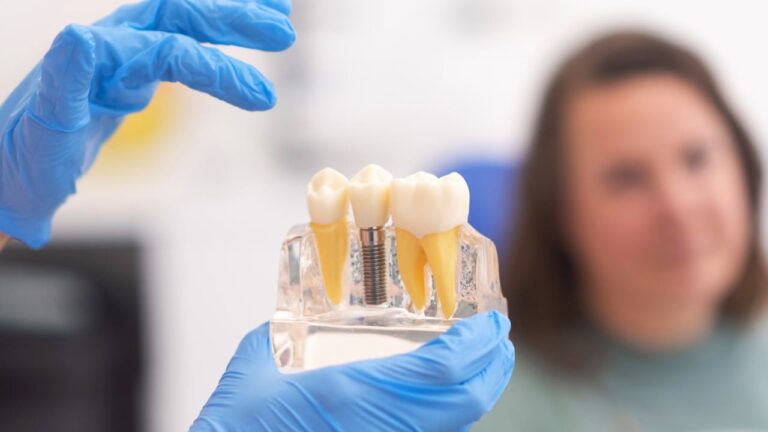
When more than one approach is clinically appropriate, your dentist will walk you through each one so you can decide what works best for you. If a front tooth bothers you cosmetically, composite bonding may improve it conservatively before you ever need to consider a porcelain veneer. For missing teeth, the conversation may cover a single-tooth implant, a bridge, or a removable option, depending on your situation, goals, and budget. Belmont Dental focuses on straightforward single-tooth implants in the office. More complex cases, such as full-arch implant work, are coordinated with a specialist, so you still have a team helping guide the plan.
Before you leave this conversation, you’ll get a cost estimate that reflects your insurance benefits or your membership plan savings. Because every patient’s needs are different, the estimate is based on your actual treatment and coverage rather than a generic price list. You can take it home, think it over, and call with questions. Nothing starts until you understand what it costs and agree to it.
Can You Get Same-Day Treatment at Your First Visit?
Sometimes. If you need a simple filling or have an urgent problem, the dentist may be able to address it the same day, depending on time in the schedule and whether you agree after the diagnosis discussion. When same-day care isn’t possible or isn’t appropriate, you’ll schedule a follow-up before you leave.
Belmont Dental’s technology helps here. Your digital X-rays and scans are ready during the visit, so your dentist doesn’t need to wait on results before talking through options. And because the practice offers fillings, crowns, bridges, root canals, dentures, and single-tooth implants under one roof, your follow-up usually happens in the same office with the same team who already knows your mouth.
There are good reasons a treatment might wait for another day. A root canal or crown takes more chair time than a first visit usually allows, and some patients simply want time to think, check their budget, or talk it over with a spouse, which the team fully respects. If you’re in pain, though, tell the team right away. Pain and infection move to the top of the priority list, and the focus will be on getting you comfortable as soon as possible.
Picture two new patients. One patient has a small cavity, no other concerns, and an opening on the schedule, so if they agree, that filling might be done before they leave. The other patient has a cracked molar that needs a crown, and they’ll leave with a clear plan, a cost estimate, and a booked appointment rather than a rushed procedure squeezed into a first visit. Both are appropriate approaches.
Haven’t Been to a Dentist in Years? How Does Belmont Dental Handle Anxiety and Long Gaps in Care?
If it’s been a while, the team adjusts the pace, explains each tool before using it, and won’t lecture you about how long it’s been. The focus is on your health moving forward, not on the years you missed. You’re welcome here exactly as you are.
Long gaps in dental care are far more common than most people think, and health planners know it. One national health service, for example, built part of its 2024 dental recovery plan around helping people who hadn’t seen a dentist in two years get back into care. Life gets in the way. Money gets tight, a bad experience keeps you away, or the longer you wait, the more difficult it feels to call. None of that makes you a bad patient. It makes you someone who’s ready to start again.
Cost is often the real reason behind a long gap, and phased treatment exists for exactly that. If years of skipped visits have left several teeth needing work, the team starts with whatever is causing disease or discomfort and schedules the rest in stages, so getting back on track doesn’t require one overwhelming bill.
Here’s what compassionate care looks like in practice. When you book, tell the front desk you’re nervous or that it’s been a while, and that note follows you to the chair. Your hygienist will show you each instrument and explain what it does before it goes in your mouth. You can agree on a simple way to pause, such as raising your hand, and use it whenever you need to. If your cleaning needs to be split into more than one visit because of tartar buildup or tender gums, that’s a normal clinical decision, not a judgment. The whole team’s aim is to help you feel at home and leave with more confidence than you walked in with.
What Will You Leave With After Your First Visit?
By the time you head home, you’ll have a treatment plan in writing, a sense of how care can be phased, a cost estimate before any work begins, and a scheduled follow-up appointment if you need treatment.
Your treatment plan lists recommended care in order of priority, with disease, pain, and function first and anything elective marked as something that can wait. If your needs are spread across several teeth, the plan shows how treatment can be phased across visits so it lines up with your insurance year or budget. Your cost estimate reflects your specific coverage, whether that’s one of the six insurance plans the practice accepts or your Adult Care, Perio Plus, or Child Plus membership. Take it home, look it over, and call with questions, because clear answers are part of the service.
If treatment is needed, the front desk will book your next appointment before you leave. If your mouth is healthy, you’ll schedule your next routine checkup and cleaning instead. Regular preventive visits may help keep small problems small, and they’re the core of every membership tier for uninsured patients. If you’re curious about cosmetic work down the road, such as bonding, veneers, teeth whitening, or Invisalign, ask your dentist which options might fit your smile and timeline, keeping in mind that your experience will depend on your individual situation.
The less obvious thing you take home is a relationship. Your information is now on record with a team that has your history, your X-rays, your concerns, and your goals. The next time something feels off or changes, you’ll know exactly who to call, and they’ll already know you.
Questions People Ask Before Booking With a Dentist Accepting New Patients in Belmont, NC
Yes, Belmont Dental is accepting new patients in Belmont, NC, and the fastest way to find the next open new-patient appointment is to call the front desk during office hours. Here are direct answers to the other questions people ask most before they book.
Is Belmont Dental accepting new patients right now?
Yes. Call the office for the next available first-visit opening. If you have pain or an urgent problem, say so when you call so the team can work to see you sooner.
How long does the first visit take?
It depends on your needs. A first visit includes paperwork, imaging, a cleaning and oral cancer screening, a dentist exam, and treatment planning. Finishing your forms online can shorten your time at the front desk, and the team will give you a better estimate when you book.
What if I don’t have dental insurance?
Ask about the Belmont Dental Membership Plan. Adult Care covers routine preventive needs, Perio Plus supports ongoing periodontal maintenance, and Child Plus is for kids. Each tier includes preventive services and provides savings on additional treatment according to the plan, though actual savings depend on what services you need.
Will the dentist fix cavities during my first visit?
Sometimes. A simple filling may be done the same day if time permits and you agree after the diagnosis discussion. Otherwise, you’ll book a follow-up.
What happens if I haven’t been to a dentist in years?
The team slows down, explains every step, and never lectures you about the gap. If you need several treatments, care can be phased so the most urgent teeth come first.
What insurance plans does Belmont Dental accept?
Belmont Dental accepts Cigna, Blue Cross Blue Shield, Delta Dental, GEHA Connection Dental Network, MetLife, and Guardian. The team reviews your specific benefits so you know what to expect.
Can Belmont Dental handle everything my family needs?
Many needs, yes. Preventive care, fillings, crowns, bridges, root canals, dentures, single-tooth implants, cosmetic work, and Invisalign are all offered under one roof. More complex cases, such as full-arch implants, are coordinated with a specialist.
How Do You Schedule Your First Visit?
Call Belmont Dental in Belmont, NC today to schedule your first visit, or complete the new patient forms online so you can skip the clipboard and get straight to the exam when you arrive. When you call, mention three things up front: whether you have insurance and which plan (or whether you’d like to hear about the membership tiers), roughly how long it’s been since your last cleaning, and whether you or anyone in your family gets nervous at the dentist. Those details let the team review your benefits, set aside the right amount of time, and plan the pace of your visit before you ever walk through the door.
Choosing a dentist accepting new patients is really about finding a dental home, one that tells you what needs care, what can wait, and how to make the plan fit your budget. Starting that conversation on your very first call is what turns a first appointment into compassionate care that feels personal for years to come.
Ready to Join Our Belmont Dental Family?
If you’ve been putting off finding a dentist in Belmont, NC, we understand that taking that first step can feel like a big decision. Our team is here to make your first visit comfortable and straightforward, with no pressure and no judgment about how long it’s been since your last appointment. Give us a call and we’ll answer any questions you have before scheduling.
Individual dental needs vary, and treatment outcomes depend on factors unique to each patient, including the extent of disease, overall health, and adherence to recommended care.