Professional Teeth Whitening Cost: In-Office vs At-Home Options
You’ve stood in the whitening aisle at the Belmont Walgreens, read the back of three different boxes, and still have no idea whether the $45 strips will actually work or whether you’re about to waste money on something that leaves your teeth sensitive and no brighter. The gap between a $30 box and a several-hundred-dollar professional treatment feels enormous, and nobody explains what you are actually paying for at each level. This guide from Belmont Dental breaks down real teeth whitening cost ranges, what each option delivers, and how to pick the one that fits your timeline, your budget, and your teeth.
What Professional Teeth Whitening Actually Costs
Here is the honest math before you call anyone. Nationally, in-office professional whitening runs roughly $300 to $800 per treatment. Custom take-home trays fitted by a dentist usually land between $200 and $400. Over-the-counter strips and trays from the drugstore cost about $20 to $60. Those ranges are wide for a reason, and the reason is not that dentists mark up a simple product. Each price tier buys a different combination of speed, safety, predictability, and supervision.
The cheapest option is not the best value for everyone, and the most expensive option is not automatically the right call either. A parent getting ready for a wedding in ten days has a very different math problem than a college student who just wants a slightly brighter smile over the next month and has time to spare. The teeth whitening cost that makes sense depends entirely on your deadline, your sensitivity history, and the kind of staining you are dealing with.
One detail most cost articles skip is that professional whitening does not have to mean full sticker price. At Belmont Dental, our in-house membership plan includes Adult Care and Perio Plus tiers, and members may have access to reduced fees on elective services like whitening, depending on the benefits in their plan. That single fact reshapes the decision for a lot of Belmont residents who assumed professional whitening was permanently out of reach. Because pricing and membership benefits can change, we at Belmont Dental give you the current whitening fee and any discount that applies before treatment starts, so there are no surprises.
Why In-Office Whitening Costs More and What the Hour Actually Looks Like
In-office whitening costs more because you are paying for professional-grade materials, controlled application, and a finished result in a single visit instead of two weeks of guessing. At Belmont Dental, our professional whitening system is GLO, and knowing exactly what happens during the appointment helps explain the price.
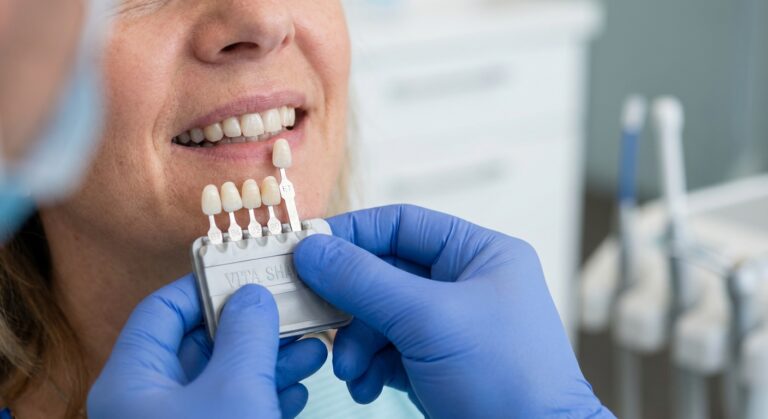
We at Belmont Dental begin by documenting your starting shade, so there is a clear before-and-after record rather than a vague sense that things look brighter. Then we prepare and protect the soft tissues of your gums and lips, which is the step drugstore products cannot do for you and the step that prevents most of the burning and irritation people complain about with strips. Once you are isolated and protected, we apply the GLO whitening gel and use the light-activated mouthpiece in a series of cycles. A typical session runs four eight-minute applications, which adds up to about 32 minutes of active whitening time. After the final cycle we remove the material, rinse, and evaluate your new shade against the starting record.
From setup to final evaluation, we at Belmont Dental generally schedule about an hour, covering the setup, the isolation, the whitening cycles, and the post-treatment evaluation. Patients commonly see a noticeable improvement in that single visit, often in the range of three to four shades. We do not promise a specific number, because your exact result depends on your starting shade and the type of staining you have. That honesty matters more than a marketing claim. Belmont Dental has served the community since 2005, and the approach is to match the method to the patient’s goals, starting shade, sensitivity, and how quickly they want results rather than sell the priciest option to everyone who walks in. When you pay for in-office whitening, you are paying for that judgment, the higher peroxide concentration only a dental office can safely use, and the fact that you leave with the result already done.
Custom Take-Home Trays: Professional Results on a Flexible Timeline
Custom take-home trays sit in the middle of the price range and are the smart choice for anyone who values savings and flexibility over speed. Instead of whitening in the chair, you take home trays molded to the exact shape of your teeth along with professional-strength gel, and you wear them at home over a set number of nights.
The reason custom trays outperform drugstore kits comes down to fit. A tray made from an impression of your own teeth holds the gel evenly against every surface and seals it away from saliva, which would otherwise dilute the product and stall your progress. The American Dental Association’s guidance on tooth whitening notes that dentist-provided, custom-fitted trays give more consistent contact than one-size products, and that consistency is what produces even color instead of blotchy patches. Most tray protocols call for seven to fourteen consecutive nights of wear to reach a shade improvement similar to a single in-office visit.
That two-week window is the trade-off. If your calendar is open, it works in your favor. Custom trays are also the gentler path for anyone with a history of sensitive teeth, because you control the exposure. Whitening a little each night with lower peroxide contact per session tends to cause less zinging than a concentrated in-office treatment. And once you own the trays, touch-ups down the road cost only the price of a new syringe of gel, which makes them the most economical long-term option for maintaining your results. For a busy Belmont parent who wants a brighter smile without carving out a chair appointment, custom trays often deliver the best cost-to-comfort balance.
Where Drugstore Whitening Falls Short
The $20 to $60 you spend on drugstore strips buys the least predictable result of any option, and understanding why saves you from repeating a common and expensive mistake: buying kit after kit that never quite works. The core issue is regulation and fit.
Over-the-counter whitening products are limited to lower peroxide concentrations than a dental office can use, because the U.S. Food and Drug Administration regulates them as consumer goods rather than professional treatments. Weaker gel means slower results, which is why the box tells you to keep going for weeks and why many people give up before they finish. On top of the strength problem, strips and boil-and-bite trays are made to fit an average mouth, not yours. They do not curve around the edges of individual teeth, so the gel touches some spots and misses others. The result is uneven, streaky color, with the front teeth sometimes brightening while the corners stay dull.
The same poor fit that causes streaking also pushes gel onto your gums, which is the number one source of the sensitivity and irritation people blame on whitening in general. So the frustrating pattern goes like this: you spend real money, endure the discomfort, and still do not get the shade change you were picturing. For someone with light surface staining who simply wants to test the waters, a drugstore product used carefully can be a reasonable first step. But if you have tried strips before and been disappointed, that disappointment is not a personal failure. It is the predictable ceiling of a one-size product, and it is exactly why patients come to us at Belmont Dental for a more predictable result.
What Actually Drives the Price Difference Between Methods
The jump from a $40 box to a professional treatment is not arbitrary. Four specific factors explain nearly all of it, and once you see them the pricing stops feeling like a mystery.
The first is peroxide concentration. Professional systems like GLO use stronger active gel than any product you can buy off a shelf, and strength directly controls how fast and how far your teeth lighten. The second is soft-tissue protection and supervision. In a dental setting, your gums and lips are prepared and protected before any gel touches them, and a trained provider watches for sensitivity in real time and adjusts if needed. That protection is the difference between a comfortable session and a painful weekend. The third factor is material and fit quality. Custom trays are made from a precise model of your teeth, so the gel goes exactly where it should and nowhere it shouldn’t, which eliminates the trial-and-error that wastes both money and product with generic kits.
The fourth factor is speed, and it is the one people underrate. In-office GLO whitening compresses what would take two weeks of home use into about 32 minutes of active whitening across four eight-minute cycles, because the concentration and controlled application do the work all at once. You are essentially paying a premium to buy back your time and to skip the uncertainty of wondering whether the home kit is working. When you weigh teeth whitening cost across methods, you are really weighing money against time, comfort, and how confident you want to be in the outcome. Belmont Dental’s job is to help you make that trade honestly rather than steer you toward the highest number.
Insurance, Membership Plans, and Financing: Making Whitening Affordable
Dental insurance almost never covers teeth whitening, and it helps to know that going in so the denial does not catch you off guard. Insurers classify whitening as an elective cosmetic procedure, and elective cosmetic work sits outside standard plan coverage the same way it does with most policies. That is true whether you carry Cigna, Blue Cross Blue Shield, Delta Dental, MetLife, Guardian, GEHA Connection Dental Network, or another common plan we at Belmont Dental accept.
The affordability answer, then, is not insurance but the practice’s own membership plan. Belmont Dental’s in-house Adult Care and Perio Plus tiers may include reduced fees on elective services such as whitening, depending on the benefits in your specific plan. For patients without dental insurance, or for anyone who wants predictable pricing without the paperwork, membership turns a premium cosmetic treatment into a far more reachable one. This is exactly the piece most cost guides leave out, and it is the reason professional whitening is more accessible for many Belmont residents than they assume.
Because plan benefits and whitening fees can change over time, we at Belmont Dental do not post a fixed price that might mislead you. Instead, when you come in, you receive the current fee and any membership discount that applies before you commit to anything. That transparency is deliberate. You should never sit in the chair wondering what the bill will be, and you should never feel pressured into the most expensive path. The goal is a brighter smile that fits your budget, arrived at with your full understanding of the teeth whitening cost.
How to Choose the Right Whitening Method for Your Situation
The right method comes down to four questions: your deadline, your budget, your sensitivity history, and the kind of staining you have. Match those honestly and the choice usually makes itself.
If you have an event in two weeks or less, such as a wedding, a reunion, or a graduation photo, in-office GLO whitening is the option that reliably gets you there, because it delivers visible results in a single appointment of about an hour. If you are whitening for general confidence over the next month and your schedule is open, custom take-home trays give you comparable results for less money, at the pace that suits you. If you are on a tight budget and simply testing whether whitening does anything noticeable for your smile, a carefully used drugstore product is a fair starting point, with the understanding that you may upgrade later if the result disappoints.
Stain type matters just as much as timeline. The ADA’s patient education resources distinguish between surface staining from coffee, tea, wine, and tobacco, which whitening treats well, and deeper intrinsic discoloration from certain medications, injury, or aging, which responds far less predictably to peroxide. This is precisely why a consultation is worth the visit before you spend anything. When you sit down with our Belmont Dental team, we evaluate your starting shade, your sensitivity, and your goals, and we tell you plainly which method is most likely to deliver the change you want. That conversation prevents the most common waste of money in whitening: paying for an approach that was never going to work on your particular stains.
What to Expect in Terms of Results and How Long They Last
Set your expectations on real numbers. In-office GLO treatment commonly produces about three to four shades of improvement in a single visit, and custom trays reach a similar range over roughly two weeks of nightly use. Your actual result depends on where you start and what caused your discoloration, which is why we at Belmont Dental never guarantee a specific shade. Surface stains lift more dramatically than deep intrinsic ones, and two people with the same coffee habit can still land in slightly different places.
Longevity is mostly in your hands after treatment. Most people hold their brighter shade somewhere between six months and two years. The variables are the ones you would expect. Coffee, black tea, red wine, and dark sodas re-stain teeth faster, and a strong daily brushing and flossing routine slows fading. This is where custom trays quietly pay off long after the initial treatment, because keeping your trays lets you do a short touch-up a night or two before a big occasion, or a couple of times a year, at the low cost of replacement gel rather than a whole new treatment.
Think of whitening as maintenance rather than a one-time purchase, and the long-term cost picture gets clearer. A single professional treatment plus occasional touch-ups almost always beats buying repeated drugstore kits that never fully deliver. Belmont Dental documents your starting shade before treatment and evaluates the final shade against it, so you can see your real progress instead of relying on memory, and so future touch-ups start from an accurate baseline.
Frequently Asked Questions
Does dental insurance cover teeth whitening?
No. Almost all dental insurance plans exclude teeth whitening because it is classified as an elective cosmetic procedure. Belmont Dental’s membership plans, including the Adult Care and Perio Plus tiers, may offer reduced fees on elective services such as whitening, which makes professional treatment more affordable than insurance ever would.
How long do professional whitening results last?
Results typically last between six months and two years. The range depends on your diet, oral hygiene, and whether you do occasional touch-ups. Coffee, red wine, black tea, and tobacco speed up fading, while consistent brushing and flossing help your brighter shade hold longer.
Is in-office whitening worth the extra cost compared to at-home trays?
It is worth it when you need results fast, for example an event within two weeks, because in-office GLO whitening delivers visible change in a single hour-long appointment with about 32 minutes of active whitening. Custom take-home trays cost less and reach a similar shade, but they require one to two weeks of nightly wear.
Can I whiten my teeth if I have sensitive teeth?
Yes, and custom take-home trays are usually the gentler route. Because you whiten gradually with controlled peroxide exposure each night, sensitivity tends to be lower than with a concentrated in-office session. A consultation lets us at Belmont Dental tailor the approach to your sensitivity history and goals.
Why do drugstore whitening strips cost so much less than professional whitening?
The FDA limits over-the-counter products to lower peroxide concentrations, so they work slower. Their one-size design also does not fit individual teeth, which leads to uneven results, gum irritation, and longer treatment times. You pay less up front but often get less, or nothing, in return.
How do I know which whitening method will work on my stains?
A consultation determines whether your discoloration is surface staining (extrinsic) or deep (intrinsic). Surface stains respond well to whitening, while intrinsic discoloration responds far less predictably. Evaluating your stain type first prevents you from paying for a method that will not deliver the result you want.
Your Next Step Toward a Brighter Smile
The single most useful thing you can do before spending any money on whitening is to learn your starting shade and stain type, because that one piece of information decides which method is worth your dollars and which would be a waste. Schedule a whitening consultation at Belmont Dental. We will document your starting shade, talk through your timeline and budget, check your sensitivity history, and give you current pricing on both in-office GLO and custom take-home options, including any Adult Care or Perio Plus membership discount that applies to you. You will leave knowing exactly what your teeth whitening cost will be and which path gets you to the smile you want.