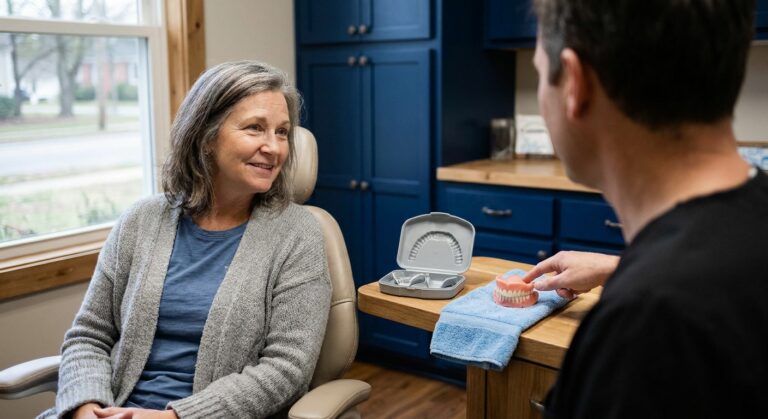
Dentures can’t be whitened the way natural teeth can, because the acrylic and porcelain they’re made from don’t respond to peroxide-based whitening products. What usually helps is a professional cleaning, an evaluation of the denture’s condition, or, when staining has set in, a replacement made to match the shade you want. This guide explains why, and what Belmont Dental in Belmont, NC can do when your denture or partial no longer looks the way you’d like beside your natural teeth.
Can dentures be whitened?
Generally no. Denture teeth are made of acrylic or porcelain, not living enamel, so whitening products are not designed to change their color.
Whitening gels work on the enamel and the layer beneath it in a natural tooth. Denture teeth are made in a set shade, and that color is part of the material. Proper cleaning may remove surface buildup from coffee, tea, or food, but the color underneath will not lighten. The American Dental Association’s guidance on whitening focuses on natural teeth and encourages you to talk with a dentist before you whiten.
Belmont Dental’s own whitening process shows the difference. The practice uses the GLO professional whitening system, which is designed for natural enamel. The team records your starting shade, protects your gums, and then applies the GLO gel with a light-activated mouthpiece in four 8-minute cycles, about 32 minutes of active whitening. The full visit generally takes about an hour, including a final shade check. One patient’s natural teeth may lighten by a few shades, while another’s may change less, depending on starting shade and type of staining, so no specific change can be predicted. Every step assumes there is enamel to work on, which is why this process is not designed for denture teeth.
What types of dentures are available, and who needs each?
Now that you know whitening is not designed for dentures, it helps to know which kind of denture you have or may need. Here are the common types. Dr. Cook can discuss which one may suit you after an exam.
| Denture type | What it is | Who it usually suits |
|---|---|---|
| Full denture | Replaces all the teeth on the upper or lower arch | People missing all the teeth on an arch |
| Partial denture | Replaces some teeth and attaches to the natural teeth that remain | People who still have some healthy teeth |
| Immediate denture | Placed on the same day remaining teeth are removed, so you are not without teeth while you heal | People who need teeth removed and want teeth right away, often followed by adjustments as the gums heal |
How do partial dentures work?
A partial denture is a removable appliance with replacement teeth set into a gum-colored base. Small clasps or attachments grip your remaining natural teeth to hold it in place, and you take it out to clean it and usually at night. Because a partial sits beside your own teeth, its shade is chosen to blend with them when it is made, and that shade does not change afterward.
That matters if you want whiter teeth. The FDI World Dental Federation’s policy statement on bleaching materials notes that restorative materials do not lighten during bleaching and recommends an exam first. If you whiten the natural teeth around an older partial, the partial may look darker by comparison. One common approach is to whiten first, let the shade settle, and then match any new denture teeth to your new color. Belmont Dental records your shade at whitening visits and also provides dentures, bridges, and crowns, so the shade record and the new teeth come from the same office.
Can I eat normally with dentures?
Many people return to eating a range of foods, but it takes practice, and experiences differ from person to person. New dentures can feel bulky at first, and chewing works differently than it did with natural teeth. Many people start with soft foods cut into small pieces and chew slowly on both sides of the mouth at once, which may help keep the denture steady. As your mouth adjusts over the first weeks, you may be able to add firmer foods back in. Very sticky or very hard foods may stay tricky for some people. If a sore spot or a loose fit makes eating hard, that is a reason to come back for an adjustment rather than putting up with it.
What should I use to clean stained dentures safely?
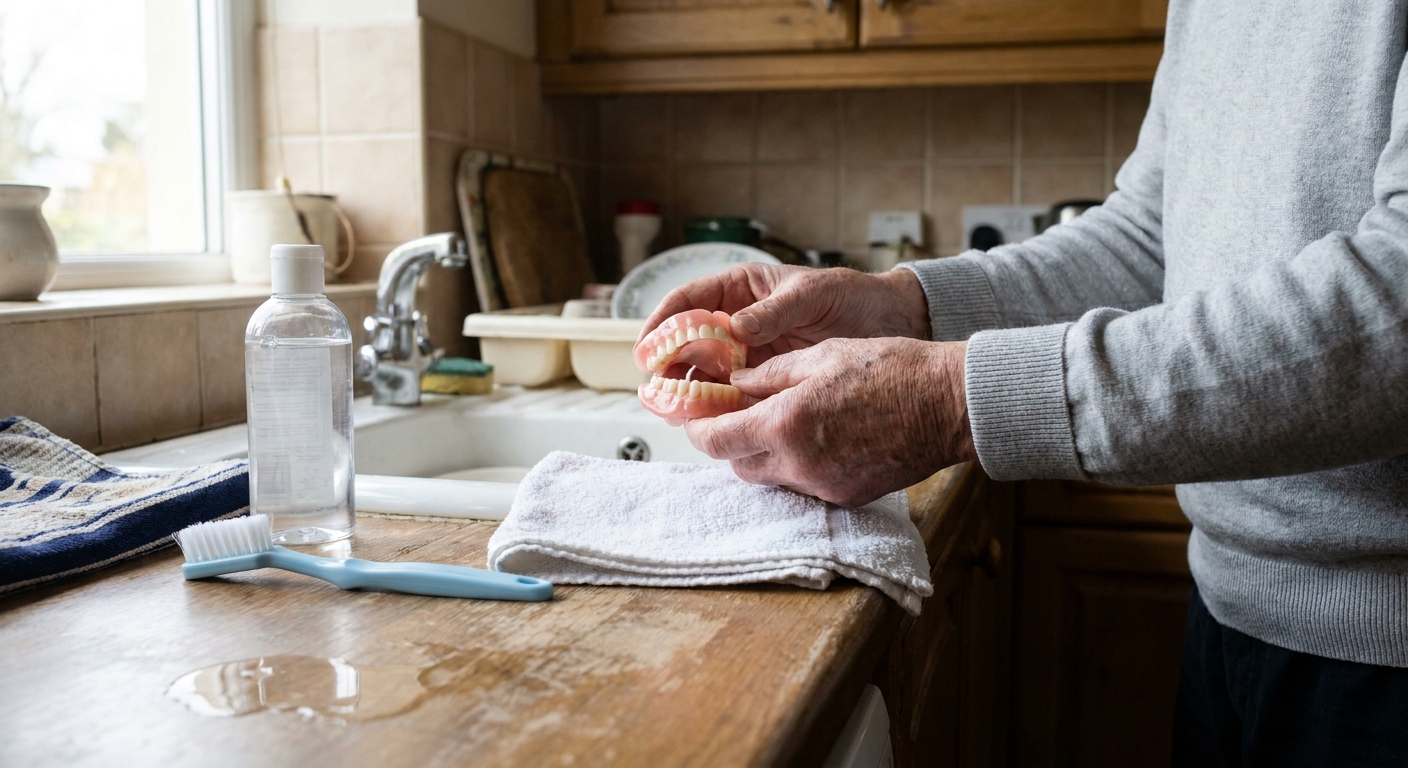
Brush your dentures every day with a soft brush and a cleanser made for dentures, and soak them only as the label directs. Skip whitening strips, bleach, and abrasive household cleaners.
Rinse after meals when you can, and handle your dentures over a folded towel or a sink with some water in it so a slip does not crack them. Regular toothpaste can be too gritty for acrylic, and tiny scratches may trap stain over time. Whitening strips are made for enamel, and bleach can change the color of the pink base or damage the surface. Even denture products need care: researchers have studied how denture cleansers can cause a whitening color change in denture acrylic, so follow directions exactly. Avoid very hot water too, since heat can warp acrylic. If a stain stays after gentle cleaning, the color may be in the material itself, and it is time for a dentist to look.
What can I get instead of a partial denture?
When dentures look stained or worn, an evaluation comes first, because the cause helps decide the next step. Sometimes better daily care may be enough. Sometimes wear or fit has changed enough that replacement may be worth considering, or you may want a different way to replace teeth altogether.
If you are weighing alternatives to a partial denture, Belmont Dental talks through these options based on your situation, goals, and budget:
- A single-tooth implant, planned in house for straightforward cases using CBCT 3D imaging and Sidexis software to study the bone and nearby anatomy before surgery
- A bridge, a fixed restoration that fills a gap using the teeth on either side
- A removable option, such as a new partial or full denture, depending on how many teeth need replacing
More complex surgical cases are referred to a trusted specialist, so you get a candid assessment of what may fit your mouth. You might be wondering whether you will be pushed toward the priciest choice. The practice states that its goal is not to recommend the most expensive treatment. Instead, the team explains the ideal treatment, the reasonable alternatives, and what needs attention now versus what may be able to wait, then builds a plan you can realistically complete.
How do I get dentures in Belmont, NC?
Belmont Dental provides dentures as part of its general dentistry care. The exact steps depend on your mouth and the type of denture, but the path from first visit to final fit typically looks like this:
- Consultation and exam. Dr. Cook checks your teeth, gums, and any current denture, and uses digital imaging as needed.
- Options and planning. You talk through the denture types and alternatives, what needs to happen first, and how care can be phased.
- Cost and coverage review. The team gives you the current fee and reviews how your insurance or membership plan may apply before treatment starts.
- Records and shade selection. Impressions or scans are taken, and the tooth shade is chosen. If you plan to whiten, this is the point to say so.
- Fit and delivery. Your denture is placed and checked for comfort, bite, and appearance.
- Follow-up adjustments. You return so the team can ease sore spots and fine-tune the fit as you adjust.
To learn more, visit the custom denture service at Belmont Dental.
Why families choose one dental home
Belmont Dental has served Belmont since 2005 and keeps the whole family under one roof. The office that handles your partial can also see your spouse for a checkup and your kids for cleanings, so you are not juggling separate offices. Dr. Cook leads a tenured staff, so many patients see familiar faces from visit to visit, and the team knows your history when you come back with a question about stains, fit, or a broken tooth. The practice pairs technology, including digital imaging and 3D scanning, with personalized care that starts with the person behind the smile.
How do cost and insurance work?
Belmont Dental does not publish set prices, because fees and plan benefits change. Instead, you get the current fee and any discount you qualify for before treatment begins, so the number you see applies to your actual plan. Costs vary widely: a denture that only needs a professional check and better home care is a very different expense from a full replacement, and whitening before a new partial adds its own fee.
Belmont Dental accepts Aetna, Assurant, Blue Cross Blue Shield, Cigna, Delta Dental, GEHA, Guardian, and MetLife. Benefits for dentures, partials, and whitening vary by plan, and the team can review yours first. Without insurance, the Belmont Dental Membership Plan offers Adult Care, Perio Plus, and Child Plus tiers, and members may get reduced fees on elective services such as whitening depending on their tier. Along with phased care, that may let you handle fit and function first, then whitening, then shade matching, without paying for everything at once.
Quick answers before you book
Can dentures be whitened with strips? No. Strips and bleach are made for enamel, not acrylic or porcelain. Use cleaners made for dentures instead.
Will whitening my natural teeth make my partial look mismatched? It can, because natural teeth lighten and denture teeth do not. Plan whitening before new teeth are shade matched.
How often should I have my dentures checked? Stubborn stains, visible wear, or a change in fit are all reasons to come in. Dr. Cook can suggest a schedule based on your mouth.
Book an evaluation at Belmont Dental through this page’s booking option. Dr. Cook will look at your dentures or partial, explain cleaning and replacement options, and give you the current fee and insurance details before any treatment. One practical tip: if you are thinking about whitening and also expect to need a new partial or denture, mention both at the start of the visit, because the order of those two steps can affect whether your smile ends up matching.
Curious About a Brighter Denture Smile?
If your dentures have started to look dull or stained, you may be wondering whether anything safe can be done, or if you just have to live with it. The team at Belmont Dental in Belmont, NC can look at your dentures and talk through what is realistic for your situation. Give the office a call and we will help you figure out the right next step.
Individual results vary. This article is general education and does not replace an exam by a dentist.