A partial denture works like a small bridge of replacement teeth set on a gum-colored base. The base rests on your gums and clips onto the natural teeth you keep, so you may be able to fill gaps while keeping the teeth you still have. That is the short answer to “How do partial dentures work?”, and it matters if you searched “dentures near me” while you still have most of your own smile. The word “dentures” can feel bigger than your situation. For some adults in Belmont, NC, a partial is one option for replacing missing teeth while keeping the teeth that remain. This guide from Belmont Dental explains how a partial stays in place, who it may suit, what daily life can feel like, and which alternatives are worth weighing before you decide.
How do partial dentures work, and what keeps one in place?
A partial denture gets its support from two places: the gum ridge under its base and the natural teeth beside the gaps. Small clasps or connectors fit around nearby teeth, and the base is designed to spread chewing pressure across your gums.
MedlinePlus explains that dentures come in two forms. Complete dentures replace every tooth in an arch, while partials replace one tooth or a few. Each partial has a few working parts. The replacement teeth are shaded to resemble your own. The base holds those teeth and is tinted to look like gum tissue. The clasps and connecting framework link everything to the teeth you keep. Clinical reviews of partial denture design describe these parts and why a precise fit matters. A partial that rocks or presses in the wrong spot can irritate your gums and stress the teeth holding it.
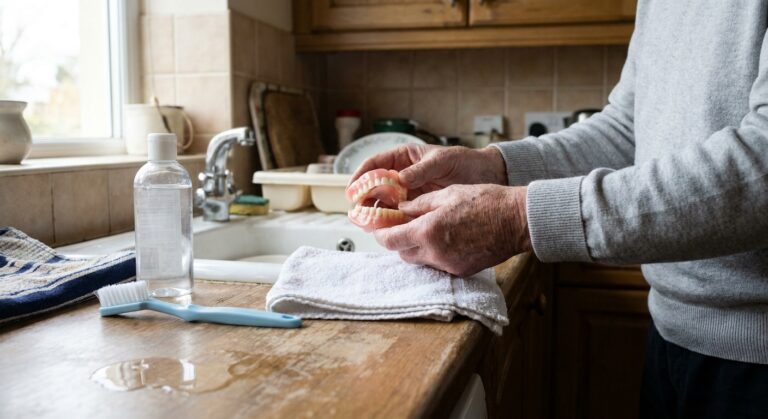
A useful comparison is a retainer that carries teeth. It clicks into place and comes out each day so you can clean both the partial and your mouth.
Because a partial depends on your natural teeth, those teeth need to be healthy. If an anchor tooth has a cavity or the gum around it is inflamed, the partial may not have a stable base. That is why Belmont Dental addresses disease, pain, and function first. Any cavity or gum problem is treated before your partial is designed. You should also plan on small adjustments during the first few weeks, since fine-tuning is a common part of getting a comfortable fit.
Who needs a partial denture, and when does a full or immediate denture fit better?
A partial denture is often considered when you are missing several teeth in one arch and still have healthy natural teeth to anchor it. A full denture is for an arch with no teeth left. An immediate denture is placed on the same day teeth are removed, so you are not without teeth while you heal.
| Denture type | What it replaces | Who it usually suits | What to ask about |
|---|---|---|---|
| Partial denture | Some missing teeth in an arch | Adults with gaps and healthy teeth left to anchor it | How the clasps will look and which teeth will carry it |
| Full denture | Every tooth in the upper or lower arch | People with no remaining teeth in that arch, or teeth that cannot be saved | How the fit will be checked as your gums change |
| Immediate denture | Teeth removed the same day | People who need extractions and do not want a gap while healing | Whether it makes sense for your case, and what happens after healing |
Many people fall somewhere between two of these categories. You might have a few healthy front teeth and several failing back teeth, or one tooth that is hard to judge without imaging. Belmont Dental provides dentures and tooth extractions in the same Belmont office, so a tooth that cannot be saved does not require a visit to a second practice before your partial is planned.
When you have more than one need, Belmont Dental can phase your care instead of requiring everything at once. The most urgent teeth are treated first, with disease, pain, and function ahead of elective or cosmetic work. That way your partial can be planned around a mouth that is already stable, and you know which steps come now and which can wait.
Some details depend on your mouth, so bring them to your consultation rather than relying on a general article. Ask how many visits your case may take, whether an immediate option applies to you, and how repairs and relines are handled later. Information based on your own exam is more useful than any average figure you find online.
Can you eat and speak with a partial denture?
Many people eat and speak comfortably with a partial denture after an adjustment period, although the first few weeks can feel different and experiences vary. Your tongue, cheeks, and bite need time to get used to something new in your mouth.
Research on the oral functions of removable partial dentures describes their main jobs as restoring chewing, speech, and appearance, while helping the remaining teeth share the work. In everyday terms, you may be able to return to foods you have been avoiding, if you build up to them. Start with softer foods cut into small pieces, and chew on both sides at once so the partial stays balanced. From there, you can add firmer foods over time. Very sticky or very hard foods deserve the most caution, because they can pull on the clasps or strain the base.
Speech may take a few days to adjust. A few sounds may come out lisped or slurred at first, and reading aloud at home can give your tongue useful practice. If a spot rubs or a clasp feels tight, don’t simply wait it out. Belmont Dental can check the fit and adjust it.
Can dentures be whitened?
No, denture teeth cannot be whitened the way natural teeth can. Whitening gels work on natural enamel, while the replacement teeth in a partial keep the shade they were made in. If you would like brighter natural teeth, talk with Belmont Dental about professional whitening before your partial is made. That way the replacement teeth can be matched to your new shade instead of your old one. After your fitting, careful daily cleaning is an important part of caring for your partial.
What can you get instead of a partial denture?
Knowing how partial dentures work makes it easier to compare them with other choices. For a missing tooth, Belmont Dental discusses a single-tooth implant, a bridge, or a removable option, depending on your situation, your goals, and your budget.
- Single-tooth implant: A post placed in the jawbone that supports a crown. Belmont Dental places straightforward single-tooth implants in its own office. Planning starts with a clinical exam, a CBCT 3D scan, and an intraoral digital scan, and the implant is positioned digitally in Sidexis software before surgery. The practice then allows about 3 to 4 months for the implant to integrate before the final implant-supported crown, though timing varies with the site, bone quality, and how you heal.
- Bridge: A fixed replacement tooth held by crowns on the neighboring teeth. It stays in your mouth and does not come out for cleaning.
- Another removable option: A different removable design that may suit your budget or timing, or serve as one step in a phased plan.
The 3D planning can matter in practice. In one recent lower molar case, the CBCT showed the available bone and the distance to the nerve were different than two-dimensional imaging suggested, so the planned implant length and position were adjusted in Sidexis before surgery. In another case on tooth #30, a 5.0 x 10 mm implant was planned with about 3 mm of clearance from the nerve canal.
Belmont Dental explains the ideal treatment, the appropriate alternatives, and what needs to be addressed now versus what can wait, then builds a plan you can realistically complete. In the practice’s own words, the goal “isn’t to recommend the most expensive treatment.” If you are missing one back tooth with healthy neighbors, an implant may be worth a close look. If you are missing several teeth in different spots, a partial may be able to replace them with one appliance. Many straightforward single-tooth implants can be done with local anesthesia, and more complex cases are coordinated with a trusted specialist.
How do you get partial dentures in Belmont, NC, and how do you pay for them?
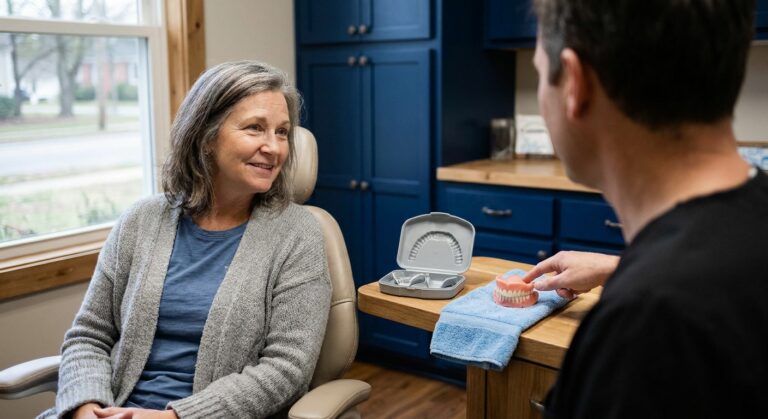
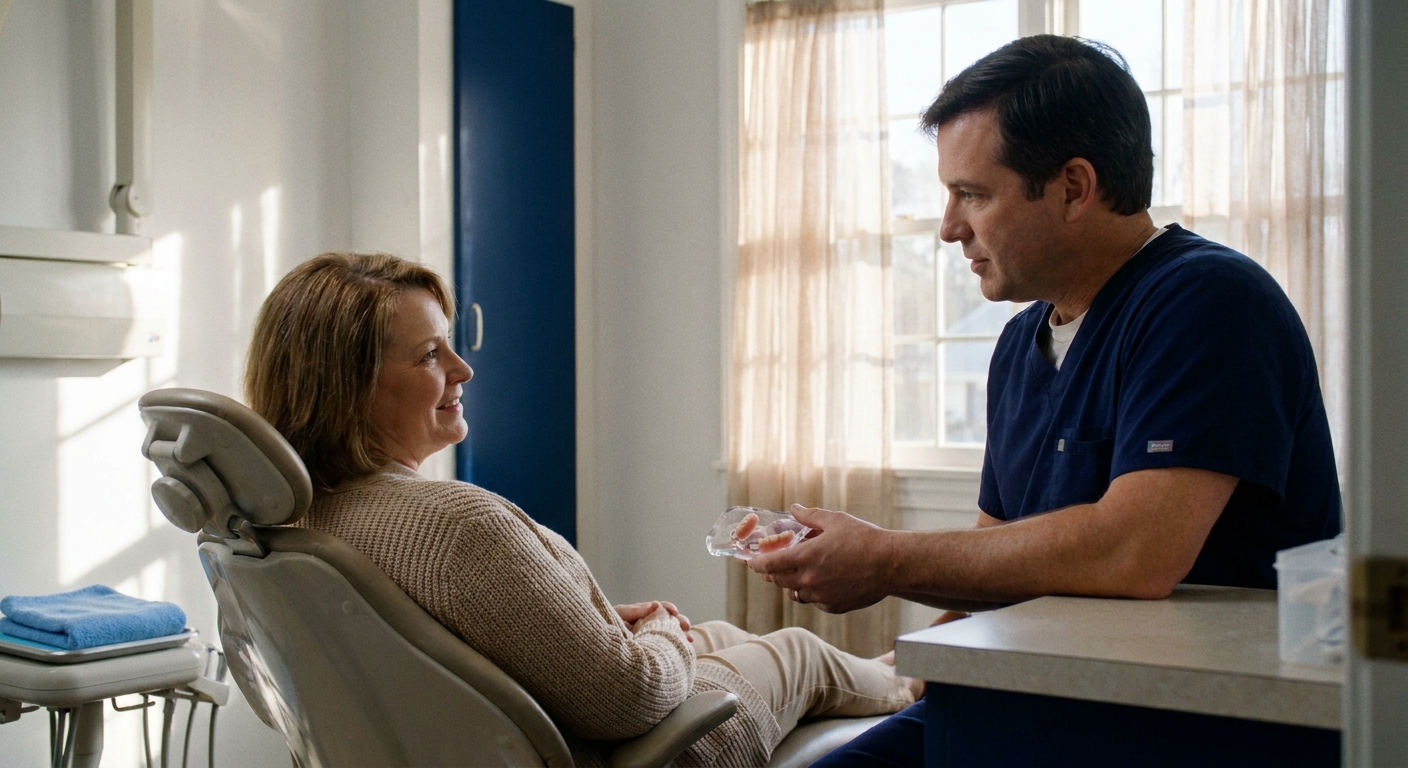
You start with a consultation at Belmont Dental in Belmont, NC, where Dr. Cook reviews your teeth and gums and walks you through your options. You can use accepted insurance, the in-house membership plan, or financing, and a phased plan can spread treatment over time.
- Consultation and exam. Your remaining teeth, gums, and bite are evaluated with digital imaging, because a partial depends on the teeth that hold it.
- Side-by-side options. You compare a partial with a single-tooth implant, a bridge, or another removable option, and you learn what needs to happen now and what can wait.
- Urgent care first. Any cavities, gum disease, or teeth that need extraction are treated first, so your partial can rest on a healthy foundation.
- Records for your partial. The team records the shape of your mouth so your partial is made for you. Ask how many visits your case may need.
- Fitting and adjustment. Your partial is placed and adjusted, and you learn how to put it in, take it out, and clean it.
- Follow-up fit checks. Sore spots and pressure points are refined as your mouth adapts.
Belmont Dental accepts Aetna, Assurant, Blue Cross Blue Shield, Cigna, Delta Dental, GEHA, Guardian, and MetLife. Because denture benefits vary from plan to plan, ask the team to review what yours includes before treatment begins. If you do not have dental insurance, the Belmont Dental Membership Plan has Adult Care, Perio Plus, and Child Plus tiers matched to the preventive or periodontal care you need. It supports regular exams, cleanings or periodontal maintenance, which are part of caring for the natural teeth your partial depends on, and it provides savings on additional treatment according to the plan. Financing is also available. The practice prefers to give you the current fee for your case directly rather than publish prices. You can read more about custom dentures at Belmont Dental before your visit.
Belmont Dental has cared for families in Belmont, NC since 2005. With a tenured team, you may see familiar faces at your fit checks over the years, which is part of building lasting relationships.
The five questions you will want answered before you commit
Do partial dentures affect the teeth they clip onto?
A partial is designed to rest gently on your natural teeth, but clasps can place stress on them if the fit is poor. Keeping those teeth and gums clean, and having the fit checked over time, are important parts of protecting them.
Can I sleep with a partial denture in?
Your dentist will advise you at the fitting. Many people are told to remove the partial at night so it can be cleaned and the gums can rest, and Belmont Dental tailors that advice to your mouth.
How long does it take to get a partial denture at Belmont Dental?
The timeline depends on your case and whether any extractions are needed. The team confirms it at your consultation instead of quoting a number in advance.
Is a partial denture or a bridge better for a few missing teeth?
It depends on which teeth are missing, the health of the neighboring teeth, your goals, and your budget. Belmont Dental explains both options so you can compare them clearly.
Does dental insurance cover partial dentures?
Coverage varies by plan. Belmont Dental accepts several major insurers and can review your benefits, and the membership plan is an option if you have no insurance.
If you are still wondering how partial dentures work for your own smile, call Belmont Dental to book a denture consultation, and bring your insurance card if you have one. Ask the team to compare a partial denture with a single-tooth implant or a bridge for your situation and budget. As you decide, keep one thing in mind: a partial depends on the health of the teeth it clips onto, so the cleanings and fit checks after your fitting matter alongside the fitting itself.
Wondering if a partial denture fits your smile?
It’s normal to feel unsure about replacing missing teeth, especially when you’re not certain what a partial denture would feel like or whether it suits your mouth. The team at Belmont Dental in Belmont, NC can look at your teeth and gums, explain how a partial would work for you, and talk through your options at a pace that feels comfortable. Call the office to take the first step toward a more confident bite.
Individual results vary. This article is for general education and does not replace an exam with a dentist.