
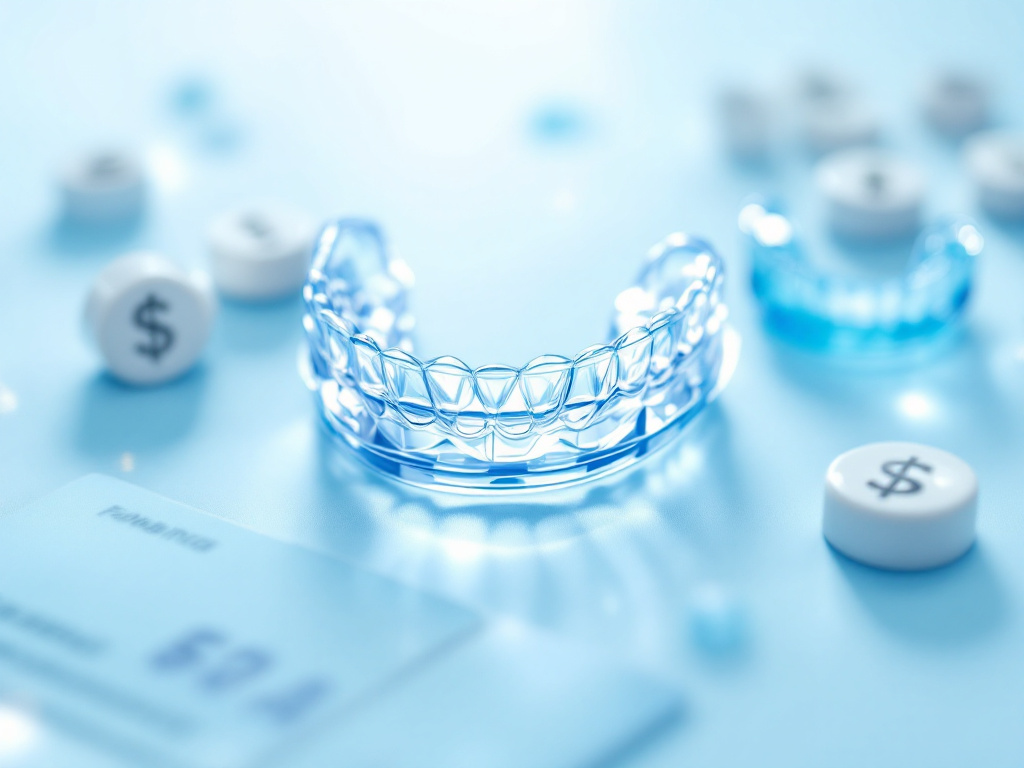
Choosing the right orthodontic solution means balancing discreet alignment with a payment plan you can actually stick to. As you explore clear aligners, understanding your invisalign payment options early on will help you budget confidently. With digital scanning, custom aligners, and flexible financing all in one package, Invisalign clear aligner treatment offers a modern approach to straightening teeth without surprises.
Invisalign payment overview
Your total Invisalign investment hinges on several key factors: the complexity of your alignment issues, the number of aligners required, and any additional treatments like attachments or interproximal reduction. Every patient’s mouth is unique, and that uniqueness shows up in the final cost estimate.
On average, Invisalign treatment runs between $2,500 and $8,000 in the United States, comparable to traditional braces once case difficulty and refinements are factored in ([withcherry.com]). Simple mild crowding or spacing cases often land toward the lower end of the spectrum, while multi-phase treatments requiring extra refinement can approach the top range.
Your orthodontist will provide a detailed breakdown after an initial assessment that includes a 3D scan and treatment planning session. That scan captures the precise shape of your teeth and gives you a clear roadmap for both your smile and your payments.
Age-specific payment considerations
Invisalign has tailored programs that address the differing needs of teens and adults, so your payment plan should reflect the package you choose. If you’re under 18, your provider may enroll you in the invisalign teen program, which includes compliance indicators, periodic replacement aligners, and eruption tabs to accommodate new molars. The teen program sometimes carries a slightly higher base fee, but it can prevent extra charges when you need replacement trays.
Adults, on the other hand, often opt for invisalign adult aligners, which focus on refined aesthetics and finishing touches. Adult plans may include optional midcourse scans or remote monitoring features that streamline in-office visits. While the sticker price for adult aligners can be similar to teen packages, factoring in fewer surprise costs often makes budgeting easier.
If you’re comparing teen versus adult pricing, ask your orthodontist to lay out both full fee schedules side by side. That transparency lets you negotiate the down payment and monthly installments that feel most comfortable for your household budget.
In-office payment plans
Many practices bundle your Invisalign course into an in-office payment plan that covers everything from digital scans to monthly checkups. During your orthodontic consultation appointment, you can discuss a schedule that integrates treatment fees, imaging costs, and any refinements.
Digital scan and cost estimate
Your treatment kicks off with a digital model of your teeth, replacing goopy impressions with a quick, painless scan. Using an orthodontic digital scan service, your provider captures data for both planning and cost estimation. Within minutes, you’ll see a 3D simulation of your tooth movements along with a projected treatment timeline and budget.
That scan fee is typically rolled into your overall Invisalign estimate so you won’t face separate charges for imaging or cone-beam X-rays. It’s a convenient way to get all the upfront data you need without surprise line items later on.
Flexible plan structures
Once you have your cost estimate, in-office plans usually let you adjust down payment size and monthly term length. Many doctors offer low-to-no down payment options—sometimes as little as $0 up front—then spread the balance over 12 to 24 months at zero interest. These flexible in-house arrangements help you align your payments with your cash flow rather than committing a lump sum.
If you prefer a longer term, some practices extend their plans beyond two years for a modest fee. Always ask how early payoff affects your total: in most cases, you can settle the balance at any point without penalty.
Third-party financing options
If in-office plans don’t match your preferences, third-party lenders can bridge the gap between your ideal treatment and monthly budget. These options let you keep treatment and financing separate while still enjoying competitive rates.
Healthcare Finance Direct
Healthcare Finance Direct (HFD) specializes in dental and orthodontic financing, offering near-universal approval for loans of $7,000 or more. Depending on your credit grade, you may start with a down payment of $0, $199, or $499. Once approved, you can select a term up to 72 months, often with a 0% interest option for qualified applicants [1]. HFD accepts credit cards, debit cards, FSA/HSA funds, and ACH bank transfers for both down payments and monthly installments.
BNPL and credit lines
Buy now, pay later (BNPL) services have become popular in orthodontics thanks to fast approval, no hard credit checks, and 0% interest promotions. BNPL plans usually span 3 to 12 months with equal payments due each month. For longer terms, healthcare credit lines such as CareCredit let you finance up to $25,000 for orthodontic treatments at rates from 0% to 29.99%, depending on your credit and promotional offers. Many BNPL providers let you apply directly in the office and see instant decisions ([withcherry.com]).
Here is a comparison of common financing options:
| Provider | Down payment | Interest rate | Term length |
|---|---|---|---|
| In-office plan | Varies by practice | 0% | Up to 24 months |
| Healthcare Finance Direct | $0, $199, or $499 | 0%* | Up to 72 months |
| Buy now, pay later (BNPL) | $0 | 0%† | 3–12 months |
| CareCredit | As low as $0 | 0–29.99% | 6–60 months |
*Subject to credit approval ([Invisalign])
†Promotional terms vary by provider ([withcherry.com])
Insurance and tax-free savings
If you have dental coverage, orthodontic benefits often extend to Invisalign, with many plans covering up to $3,000 in treatment costs [2]. You can explore and verify your coverage through the My Invisalign™ app or speak directly with your insurer to understand the exact reimbursement schedule. For a deeper look at plans that accept Invisalign aligners, see insurance covered orthodontic care.
In addition to insurance, you may have access to Flexible Spending Accounts (FSAs) or Health Savings Accounts (HSAs). These tax-advantaged funds let you pay for your treatment with pre-tax dollars, effectively reducing your out-of-pocket expense. Check your employer guidelines for annual contribution limits and eligible expenses to maximize this benefit [2].
Combining insurance reimbursements with an FSA or HSA can cut your overall cost by thousands, making clear aligners far more affordable in real dollars.
Budget planning tips
Once you settle on a payment path, keeping things on schedule ensures you finish treatment without late fees or interruptions. Treat your Invisalign plan like any other monthly obligation and you’ll avoid stress during checkup visits.
- Set a consistent due date reminder on your calendar or phone
- Automate payments through your bank or financing portal
- Log each aligner delivery date to track remaining payments
- Communicate early with your orthodontist if you need temporary payment adjustments
- Review your final statement when treatment ends to confirm there are no unexpected charges
By automating your installments and staying in touch with your provider, you’ll maintain momentum in both your payments and your treatment. That way you can focus on wearing your aligners faithfully and enjoying the transformation.
Your ideal smile deserves a clear, predictable payment plan that fits your life. Talk to your orthodontist about how you can combine digital scans, tiered financing, and tax-advantaged dollars into a seamless path toward straighter teeth.
References
- (Invisalign)
- (Invisalign)