How to Find the Best Dentist in Belmont: 8 Essential Factors
You’ve scrolled through ten “best dentist in Belmont” lists that all feature the same names. You’ve read ninety-seven five-star Google reviews that say “friendly staff.” Yet you still can’t answer the one question that matters about Belmont Dental or any other office: what will actually happen when you walk into that office for the first time, and how do you know they’re qualified at the procedure you need?
Most guides offer the same checklist: read reviews, check insurance, and find something close to home. Those steps matter, but none of them tell you how a dental office works once you are in the chair. Belmont Dental has cared for Belmont, NC families since 2005. The eight factors below are the questions we would want you to ask any practice, including ours. Each one comes with what a strong answer sounds like and what should make you pause.
1. What Imaging Will the Practice Use to Plan Your Care?
Ask whether the practice uses CBCT 3D imaging and digital planning software for implants, and digital imaging for routine care. A dentist can only plan around what they can see, and a flat X-ray cannot show depth.
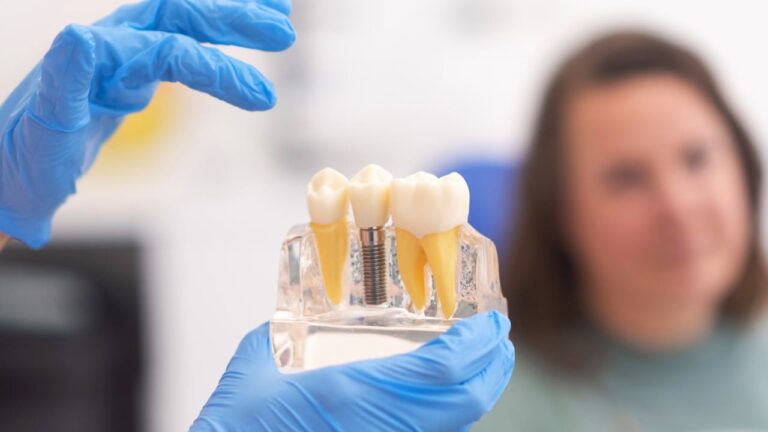
Traditional 2D X-rays still have a place in routine checkups. The trouble starts when a procedure depends on exact measurements, such as placing an implant near a nerve or in a narrow ridge of bone. A cone beam CT (CBCT) scan captures the jaw in three dimensions, so the dentist can measure bone volume, anatomy, and the distance to nearby nerves before treatment begins. At Belmont Dental, that CBCT data feeds into Sidexis imaging software, where the implant is positioned virtually before anyone picks up an instrument.
Here is one patient’s experience from our office. A patient needed a single implant to replace a lower molar (tooth #30). The 2D imaging suggested one picture of the site, but the CBCT scan told a different story: both the available bone and the position of the inferior alveolar nerve differed from what the flat image implied. This nerve runs through the lower jaw and supplies feeling to the lip and chin. Working in Sidexis, the Belmont Dental team adjusted the plan and placed a 5.0 x 10 mm implant while keeping approximately 3 mm of clearance from the nerve canal. The final implant-supported crown delivered function, appearance, and a tissue response that this particular patient found satisfactory. The 2D image alone would not have revealed what the 3D scan did.
For you, the practical step is simple. When you call a practice about implants, a wisdom tooth concern, or anything involving the jaw, ask: “Do you take a 3D scan before you plan this, which software do you plan in, and do you do it here?” A confident, specific answer is a good sign. A vague answer, or “we just use regular X-rays,” tells you something too.
2. Will the Dentist Push the Most Expensive Treatment First?
Imaging technology shows what is going on in your mouth. The next question is what the practice does with that information.
Look for practices that treat disease, pain, and function first, then build a phased plan around your budget. You should hear the clinically appropriate options, reasonable alternatives, and which problems are urgent and which can wait.
You may worry that a new dentist will find a long list of problems and hand you one large bill on day one. That fear is reasonable, and how a practice responds to it can help you tell an office built on relationships from one built on sales. Our approach at Belmont Dental is to explain the available treatment options, lay out the clinically appropriate alternatives, and separate what needs attention now from what can safely wait. Then you build a plan together that you can realistically complete.
This matters because some problems can progress with time. MedlinePlus lists tooth decay and gum disease among the most common problems affecting teeth and gums, and both may be easier to manage when caught early. At our Belmont Dental office, an active cavity, gum disease, or a painful tooth comes before anything elective. If you have several needs, the more urgent teeth are treated first, and cosmetic work waits until your budget allows, instead of everything being crammed into one costly round.
Alternatives matter just as much. For a chipped or uneven front tooth, Belmont Dental often discusses composite bonding before porcelain veneers, because bonding is the more conservative option and may be all you need. For missing teeth, you might hear about a single-tooth implant, a bridge, or a removable option, depending on your situation, goals, and budget. If a practice offers only one option and pressures you to decide that day, treat it as a red flag and get a second opinion before you commit.
3. Is There a Real Membership Plan if You Don’t Have Insurance?
A phased plan only works if you can keep coming back. For families without dental coverage, that is where a membership plan comes in.
Look for an in-house membership plan with defined tiers, not a generic discount card. A structured plan shows the practice wants to keep you on a regular preventive schedule, whether or not you have insurance.
Many Belmont residents are self-employed, between jobs, or work for employers that do not offer dental coverage. Without insurance, routine visits are often the first thing to slip, and skipped cleanings are how small problems turn into large ones. The National Institute of Dental and Craniofacial Research recommends regular dental checkups alongside daily brushing and flossing, because a dentist can spot problems you cannot see or feel yet.
The Belmont Dental Membership Plan has three tiers, matched to the kind of preventive or periodontal care each person actually needs. Adult Care helps adults stay current on exams, cleanings, and included preventive services. Perio Plus is built for adults who need periodontal maintenance, the more frequent and thorough cleanings used to manage gum disease. Child Plus helps keep kids on a consistent preventive schedule. Every Belmont Dental tier makes routine care more predictable and provides savings on additional treatment according to the plan, which can make a phased treatment plan easier to finish.
For a family, this means you are not choosing between a parent’s gum care and a child’s checkup. Everyone in the house can stay in one dental home, on the tier that fits them. Belmont Dental also offers fluoride treatments, and the CDC recognizes fluoride as a way to help prevent cavities. A plan that keeps your kids coming in on schedule helps preventive care like this work the way it should.
4. Why a Qualified Dentist Knows When to Refer You Out
Once you know you can afford regular care, the next question is whether one office can handle what your family needs.
A general dentist who refers complex cases to specialists is protecting you, not admitting weakness. A qualified practice is clear about which cases it handles in-house and which it coordinates with a specialist.
It is fair to wonder whether a family practice can handle everything your household needs, or whether you will end up driving all over town. At Belmont Dental, most family needs stay under one roof: cleanings, fillings, crowns, bridges, root canals, dentures, Invisalign, whitening, bonding, and veneers. Straightforward single-tooth implants are also placed in-house, planned with the CBCT and Sidexis workflow described above.
The Belmont Dental practice is just as clear about what it does not do. Full-arch implant cases (such as All-on-4), extensive bone grafting, and sinus lifts are referred to a trusted specialist, and Belmont Dental helps coordinate that care. When a CBCT scan shows that a site needs more than a straightforward implant, that is the point where the case is handed to someone who performs those procedures regularly.
Be cautious of any office that claims to do every procedure in-house, especially complex surgery. Ask: “Which cases do you refer, and how do you coordinate that care?” An office that gives you a clear answer knows its limits. If you want to confirm that any dentist is licensed, the North Carolina State Board of Dental Examiners offers a public license lookup. It takes about two minutes and is worth doing before your first visit anywhere.
5. Can the Office Tell You Exactly What Happens at Your First Visit?
Knowing what a practice can do is one thing. Knowing what will happen when you show up is another, and it shapes how calm you feel walking in.
A quality practice can tell you, before you book, what your first appointment includes and how long it will take. If the scheduler cannot say whether you will get a cleaning, X-rays, or only an exam, you will walk in guessing.
Uncertainty feeds anxiety, especially for children and for adults who have had a rough experience in the past. Most people relax when they know what is coming next, and that calm should start on the phone, well before you reach the exam room.
When you call any Belmont office, ask these questions:
- Will this visit include a cleaning, or is it an exam and imaging first?
- Roughly how long should I plan to be there?
- What paperwork or insurance information should I bring?
- If my child is nervous, how will you introduce them to the chair and the tools?
- Who explains the findings, and will I leave with a written plan?
Clear, unhurried answers show how the team will treat you in person. If you are worried that “gentle with kids” is just a marketing line, the way the office answers that fourth question will tell you a lot.
For bigger procedures, you should be able to get the full timeline in advance. Here is how a single-tooth implant typically runs at Belmont Dental, though individual experiences vary. It starts with a clinical exam, a CBCT scan to evaluate bone and anatomy in three dimensions, and an intraoral scan for planning and the eventual restoration. In Sidexis, the Belmont Dental team sets the implant’s diameter, length, depth, and angulation with the final crown in mind. After the implant is placed in-house, osseointegration (the implant bonding with the bone) often takes roughly three to four months before the final implant-supported crown goes on, though this timeline varies based on the site, bone quality, whether grafting is needed, and how you heal. If a case calls for extensive grafting, that portion goes to a specialist. Knowing the general timeline upfront lets you plan your work schedule, your budget, and your family calendar.
6. How Long Has the Practice Been Part of Belmont?
A clear first visit builds trust in the short term. Over the long term, trust comes from years of showing up for the same families.
Time in the community is one of the few trust signals that cannot be faked. A practice that has served the same town for decades has a reputation built on years of patient relationships, not one recent ad campaign.
Belmont Dental has served Belmont, NC since 2005, two decades of caring for local families. That history matters in practical ways. A long-standing practice knows your health history over time and can notice when something changes. The team gets to know the person behind the smile, not just the chart. For parents, it means your child can grow up with the same dental home and feel at home there, instead of starting over with a stranger every few years.
Longevity also changes the incentives. A practice that depends on returning families and word-of-mouth referrals in a close-knit town like Belmont has reason to explain what can wait rather than oversell. Neither a small practice nor a large one guarantees quality, but you should know which model you are walking into.
When you read reviews, look past “friendly staff” and look for specifics: a parent describing how a nervous child was handled, a patient who was told a treatment could wait, or someone who has been coming for ten years. Those details show how a practice behaves when no one is selling anything. You can also ask the office directly how long its dentists and team members have been there.
7. Will Your Insurance Work Here, and What If It Doesn’t?
Even the most trusted practice has to fit your budget, so insurance is the next practical check.
Confirm that the practice accepts your plan, then ask what it offers if you are out of network or uninsured. Qualified practices have a clear answer for both situations.
Belmont Dental accepts Cigna, Blue Cross Blue Shield, Delta Dental, GEHA Connection Dental Network, MetLife, and Guardian. Keep in mind that acceptance is not the same as knowing exactly what your plan will pay. Coverage depends on your employer’s specific policy, your deductible, annual maximums, and waiting periods. Before any treatment beyond a routine visit, call your carrier or ask the office to help you understand your benefits so the cost does not surprise you.
If your plan is not on the list, or you do not have dental insurance, the Adult Care, Perio Plus, and Child Plus tiers described in Factor 3 are Belmont Dental’s alternative. They give Belmont residents without coverage a predictable way to stay current on exams and cleanings or periodontal maintenance, with savings on additional treatment. This also helps many older family members. The National Institute on Aging notes that Original Medicare generally does not cover routine dental care, which leaves many grandparents in Belmont households without a plan for checkups.
The red flag here is vagueness. If an office cannot tell you whether it accepts your plan, or offers nothing beyond “you’ll pay full price,” you may be on your own whenever your coverage changes. A true dental home should have a plan for you no matter what happens with your insurance.
8. Does the Practice Invest in Its Clinical Workflow or Just Its Website?
The last factor ties the others together: whether the practice’s tools and process match what it promises.
Named technology and a clearly described process show real investment in your care. The phrase “state-of-the-art technology” only means something when a practice can tell you which tools it uses and what each one does for you.
A polished website is easy to buy, but a modern clinical workflow takes years of investment and training. At Belmont Dental, each tool has a defined job. CBCT 3D imaging shows bone and nerve position in three dimensions. Sidexis software lets the Belmont Dental team place an implant virtually, checking diameter, length, depth, and angulation before surgery. Intraoral scanning captures digital records used for planning and for the final restoration. The #30 molar case in Factor 1 is what this looks like in practice: the 3D data changed the plan before surgery, not after.
Cosmetic care follows the same pattern. For GLO professional whitening at Belmont Dental, the team documents your starting shade, prepares and protects your soft tissues, and applies GLO gel with a light-activated mouthpiece in four 8-minute cycles. That is about 32 minutes of active whitening within an appointment of roughly an hour. Your final shade is checked at the end so you can compare it with where you started. One patient experienced results around 3 to 4 shades whiter, though individual results vary and no specific shade can be promised. That kind of plain, step-by-step description is what you should expect from any practice about any procedure.
When you compare offices, ask them to walk you through one procedure from start to finish. If they can name the tools, explain why each step happens, and describe what may occur while being clear about variation, you are talking to a team that delivers care, not just markets it.
Choosing a qualified dentist for your family comes down to how a practice works when you are in the chair, not how it looks online. If you are ready to see that for yourself, call Belmont Dental at the number on this page or book online to schedule a comprehensive exam. You will experience firsthand how CBCT imaging, Sidexis planning, phased treatment plans, and two decades of care in Belmont come together for the whole family.
Before you call any office, including ours at Belmont Dental, pick the two or three factors on this list that matter most to your family and ask about them on the phone. How clearly and patiently the person answering responds will tell you more than a hundred five-star reviews.
Individual results vary based on each person’s unique situation, health, anatomy, and response to treatment. No specific outcome, timeframe, or cosmetic result can be guaranteed for any patient.