You’ve been staring at one chipped front tooth in every photo for three years, and you finally decided to do something about it. But when you called around Belmont, one office said “veneer” and another said “crown.” Now you’re wondering whether they even looked at the same tooth, or whether one of them is trying to upsell you. That suspicion is completely reasonable. The answer to the dental crowns vs veneers question doesn’t come from a phone call or a price list. It comes from looking closely at how much healthy tooth you still have, and that takes an exam.
This guide explains how that decision gets made at Belmont Dental, a Belmont, NC practice that has cared for local families since 2005. You’ll learn what each restoration does, how your insurance is likely to treat each one, and how to tell when a recommendation is about your tooth and not about a bigger bill.
What Actually Decides Whether You Need a Crown or a Veneer?
The deciding factor is how much sound, healthy tooth structure remains once your dentist examines you. A veneer needs strong front enamel to bond to. A crown may be recommended when decay, a crack, or a large old filling has weakened the tooth so much that it may need protection on every side.
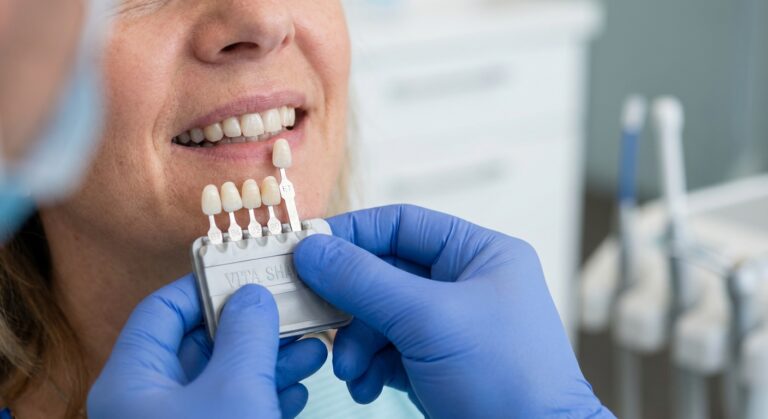
Think of a veneer as a thin porcelain face bonded to the front of a tooth that is already healthy underneath. It changes color, shape, and small chips, but it doesn’t hold the tooth together. Veneers are thin coverings placed over the front surface of your teeth, usually made from porcelain or composite resin. A crown is a full cap that wraps the whole visible tooth down to the gumline. It can protect a tooth that may be unable to protect itself.
The amount of tooth removed tells the story. A porcelain veneer typically requires about 0.5 to 0.7 millimeters of enamel removed from the front surface, roughly the thickness of a credit card or less. A crown usually requires around 1.5 to 2 millimeters of reduction on all sides so the restoration has room to be strong. If your tooth is healthy, a veneer may save more of it. If your tooth is already compromised, a veneer may not work well, because there may not be enough solid enamel left for it to grip.
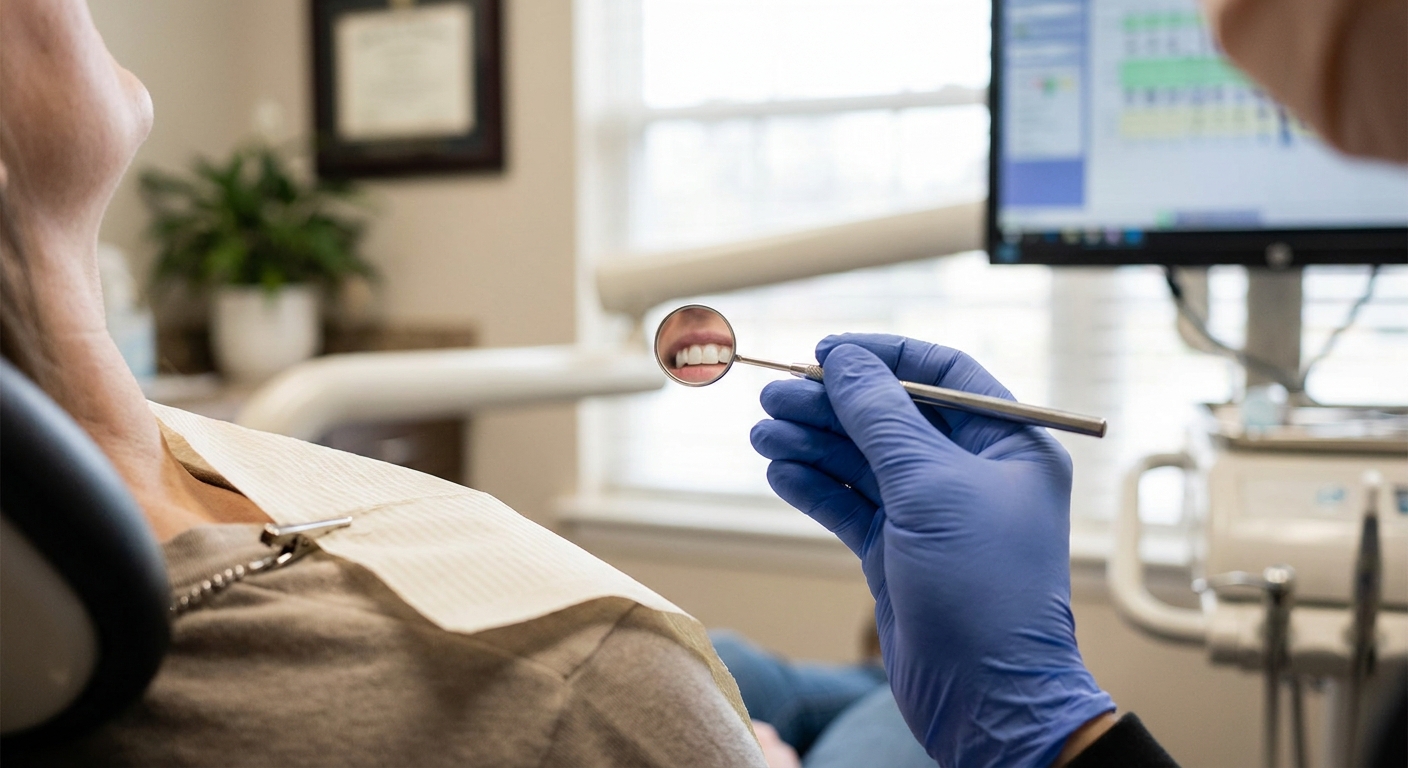
At Belmont Dental, that judgment isn’t made from a quick glance. Instead of goopy impression trays, the team captures your teeth with an intraoral digital scanner and uses that model for digital treatment planning. Your dentist can rotate and enlarge the tooth on screen to see where enamel is thick, where it has worn, and where old restorations sit. Two offices can give you different answers if one looked closely and one didn’t, and the scan is how you make sure your answer reflects your actual tooth.
Dental Crowns vs Veneers: Which Clinical Differences Actually Matter?
The clinical difference between dental crowns vs veneers comes down to coverage and purpose. Veneers cover only the front surface and are mainly cosmetic. Crowns encase the entire tooth and may restore both strength and appearance when the tooth is damaged.
Here is the side-by-side view:
| Restoration | Coverage Area | Tooth Reduction | Primary Purpose | Durability | Typical Lifespan |
|---|---|---|---|---|---|
| Porcelain veneer | Front (visible) surface only | About 0.5 to 0.7 mm of enamel | Cosmetic: color, shape, small chips, minor gaps | Can be strong when bonded to healthy enamel; may perform better under light biting force | Often 10 to 15 years with good care in some patients |
| Crown | Entire tooth above the gumline | About 1.5 to 2 mm on all sides | Restorative and cosmetic: can rebuild teeth weakened by decay, fracture, or large fillings | Built to handle heavy chewing and grinding | Often 10 to 15 years, sometimes longer with good care in some patients |
The table is a helpful starting point, but it can’t show the condition of your specific tooth. A veneer depends entirely on its bond to enamel. When that enamel is healthy and covers most of the front surface, the bond may be strong and the veneer may look natural for many years in some patients. When enamel has worn thin, or a large filling takes up much of the tooth, the veneer has less to hold onto and may have a higher chance of debonding or fracturing.
A crown works differently. Because it surrounds the tooth, it may hold cracked or weakened walls together and spread biting force across the whole restoration. That’s why crowns are often recommended after a root canal on a back tooth, after a large cavity, or when a cusp breaks off. Belmont Dental offers veneers, crowns, fillings, bonding, bridges, and root canals under one roof, so the recommendation can follow your tooth instead of following whatever a single office happens to do.
What Really Happens During Your Exam at Belmont Dental?
Your dentist examines the tooth, takes an intraoral scan, checks your bite, and explains which option your tooth may qualify for and why. You see the same images the dentist sees, so you never have to take the recommendation on faith.
The exam starts with a conversation about what bothers you, whether that’s the chip, a dark tooth, or uneven edges. Next, the dentist looks at the tooth directly and pairs digital imaging with the 3D scan to build a model of your mouth. On screen, the dentist looks for three things that can change the answer:
- Cracks, including fine lines that run toward the gumline
- Existing fillings, and how much of the tooth they take up
- Your bite, including how your teeth meet and whether there are signs of grinding or clenching, which put extra stress on any restoration
Picture this. You come in wanting veneers on your two front teeth. The scan shows that one tooth has healthy enamel and may be a veneer candidate, while the other has a crack that extends toward the gumline. A veneer bonded over that crack would only hide the problem from the front while the tooth keeps flexing underneath, so the crack could grow and the veneer could fail. In that case, one recommendation might be a crown on the cracked tooth (sometimes after further evaluation) and a veneer on the healthy one, with both matched in color so your smile still looks even.
That conversation is where personalized care shows up. You’ll hear the reasoning in plain language, you can ask questions, and you’ll know your options before anything is scheduled. Belmont Dental’s mission centers on the person behind the smile and on building lasting relationships, and that means telling you the truth about your tooth even when it isn’t the answer you hoped to hear.
What Will You Actually Pay for a Crown or Veneer in Belmont, NC?
Veneers placed for appearance are usually paid out of pocket, because most dental plans treat them as cosmetic. A crown that restores a cracked, decayed, or heavily filled tooth may qualify for partial coverage under your plan’s major services benefit, because it restores function.
National price ranges won’t tell you what you’ll pay, because your fee depends on details only an exam reveals: how many teeth are involved, which material suits the case, and whether the tooth needs extra work first, such as a core buildup or a root canal before a crown. Belmont Dental doesn’t quote fees over the phone for this reason. Instead, you receive the actual fee for your treatment plan before you commit, so you’re comparing your real number instead of an average from somewhere else.
Insurance is where crowns and veneers split most clearly. Dental offices submit claims using standard procedure codes from the ADA’s Code on Dental Procedures and Nomenclature (CDT). A porcelain or ceramic crown is billed under a restorative crown code (D2740), while a porcelain laminate veneer has its own code (D2962). Many plans list the veneer code as cosmetic and exclude it unless there’s a documented functional reason. Belmont Dental accepts Cigna, Blue Cross Blue Shield, Delta Dental, GEHA Connection Dental Network, MetLife, and Guardian, and the team can help you review your specific benefits before treatment.
Here’s how the math may work for one patient with a crown. If your plan covers major services at 50 percent, you might pay any remaining deductible plus the other half of the allowed fee, as long as you haven’t used up your annual maximum. If you’ve already reached your maximum this year, you’d pay more, which is one reason timing matters. For a veneer, plan on covering the full fee yourself. If you don’t have insurance, ask about Belmont Dental’s in-house membership plan, which has two tiers, Adult Care and Perio Plus. Depending on your tier’s benefits, members may have access to reduced fees on elective services, and the team will tell you exactly what applies to your plan before you decide.
Why Your Dentist Might Say No to the Veneer You Asked For
If a tooth doesn’t have enough healthy structure, a veneer may be more likely to fail, so your dentist may recommend a crown instead. The reverse also happens: a healthy tooth with only cosmetic concerns may not need a crown, and a veneer or even bonding can preserve more of it.
Here’s a common scenario. You want veneers because they’re thinner and keep more natural tooth. But the exam shows a cracked cusp, or a filling that takes up half the tooth. A veneer bonds best to enamel, and old filling material doesn’t give it the same grip. Under normal chewing, the weakened tooth flexes, the bond weakens, and the veneer can chip, pop off, or allow tooth decay to form underneath. You’d pay for a cosmetic result that may not last, and the tooth could end up needing a crown anyway, with even less structure left to work with.
Now consider the other side. If someone told you a healthy front tooth needs a crown just to fix a small chip or discoloration, that’s worth questioning. Removing 1.5 to 2 millimeters of tooth on every side is a big step when a veneer or dental bonding might do the job. Keep in mind that veneers are generally not reversible because enamel is removed, so either choice deserves a careful decision. A recommendation should aim to save as much of your natural tooth as your situation allows.
You might be worried that any switch from veneer to crown is just a sales move. That worry makes sense, and there’s a simple way to test it: ask to see the crack, the filling, or the worn area on your scan, and ask what would happen if you chose the other option. At Belmont Dental, your dentist walks you through those tradeoffs with compassionate care and no pressure. You can take time to think, and you’ll leave knowing exactly why one option may fit your tooth better.
What Will Each Treatment Feel Like, Visit by Visit?
Once you and your dentist agree on a plan, the process is fairly straightforward. At Belmont Dental, both treatments begin with an intraoral digital scan rather than a tray of impression material. The main differences are how much the tooth is shaped and what has to happen before the final restoration goes on. Your dentist will tell you how many visits your specific case needs and how the tooth will be protected in between.
For a veneer, the work focuses on the front of the tooth. Your dentist selects a shade and gently shapes a thin layer of front enamel, then scans the prepared tooth. Because the shaping is minimal, many patients find it more comfortable than expected, and local anesthetic keeps you numb if you need it. When the veneer is ready, the dentist checks fit and color before bonding it and polishing the edges.
If you’re thinking about whitening, do it before your veneer shade is chosen, because porcelain won’t lighten later. Belmont Dental offers in-office whitening, and the shade change you can expect depends on your starting tooth color, staining patterns, and other factors we review during your personalized care consultation, so results vary. Matching your veneer to your brightened natural teeth may keep your smile even.
For a crown, the shaping goes all the way around the tooth so the crown has room. If decay or an old filling is present, the dentist removes it and may build up the core first. The prepared tooth is then scanned, and the final crown is checked for fit, bite, and color before it’s cemented. If the tooth also needs a root canal, that adds a step, and Belmont Dental handles root canals in the same office so you aren’t coordinating with another location.
Throughout both treatments, Belmont Dental’s state-of-the-art technology, including digital imaging and 3D scanning, may support a precise fit. A more accurate scan may mean fewer adjustments and a restoration that may feel like your own tooth when you bite. Your dentist will explain the material options for your case, since the choice depends on where the tooth sits, how you bite, and how natural it needs to look next to your other teeth.
Which Lasts Longer, and Why Does the Tooth’s Location Matter?
Crowns may handle more force, which can make them a stronger choice for back teeth that do heavy chewing. Veneers may perform better on front teeth, where biting stress is lighter and appearance matters most.
Commonly cited ranges suggest that porcelain veneers and well-made ceramic crowns often last 10 to 15 years in some patients, and crowns sometimes last longer. These are possible outcomes, not guarantees, and results vary from person to person. How long yours lasts depends on the health of the tooth underneath, your bite, whether you grind your teeth, and how well you keep up with brushing, flossing, and professional cleanings.
Location matters because force matters. Your molars do most of the grinding work when you chew, and a thin veneer bonded only to the front of a molar may not hold up under that load. That’s why veneers are rarely used on back teeth. A crown on a molar wraps the entire tooth and may spread that pressure evenly. On front teeth, a porcelain veneer bonded to healthy enamel may resist staining and hold its color well, which is exactly what you want on the teeth that show when you smile.
If you grind or clench, mention it during your exam, since grinding is one of the common reasons veneers chip and crowns wear down. Your dentist may suggest a night guard to protect your investment, or may lean toward a crown on a tooth that takes heavy pressure. Protecting the restoration also protects the tooth beneath it, and keeping your natural teeth healthy for the long run is the real goal.
How Do You Choose? A Decision Framework Based on Your Tooth’s Condition
The choice usually comes down to one question: is your tooth strong enough on its own? A veneer may be a fit when your tooth is structurally sound and your goals are mainly cosmetic. A crown may be recommended when decay, a fracture, a root canal, or a large filling has weakened the tooth enough that it may need full protection.
A veneer may be a better fit if:
- Your front tooth has healthy enamel covering most of its surface
- Your concern is color, shape, a small chip, or minor gaps
- Your scan shows no significant cracks or large fillings
- You’re comfortable paying out of pocket, since most plans treat veneers as cosmetic
A crown may be a better fit if:
- The tooth has a crack, a broken cusp, or a filling that takes up a large part of it
- The tooth has had a root canal, especially a back tooth
- The tooth does heavy chewing work or shows wear from grinding
- You want to use your insurance benefits, since crowns on damaged teeth are often billed as restorative
Sometimes the answer is neither. A tiny chip may only need bonding. A tooth that’s simply dull may respond to whitening alone. Crooked front teeth may look better after Invisalign, which may reduce how much tooth needs to be shaped for veneers or remove the need for them altogether. And if you have cavities or gum disease, those need treatment first, because cosmetic work may only last on a healthy foundation. Since Belmont Dental offers preventive, restorative, cosmetic, and orthodontic care in one office, all of these options are on the table in a single conversation.
The point of the exam is to remove the guesswork. You’ll know which option your tooth may qualify for and the reason behind it before any work is scheduled.
Find Out What Your Tooth Actually Needs
Schedule a consultation at Belmont Dental in Belmont, NC to learn whether your tooth may qualify for a veneer or might need a crown, review your intraoral scan with your dentist, and get a treatment plan with your actual fee and insurance estimate before you commit. You may feel at home with a team that has served Belmont since 2005 and cares about your confidence as much as your teeth.
One thing to do before you call: check your dental plan’s annual maximum and how much of it you’ve used this year. If your tooth turns out to need a crown, that one number can tell you whether scheduling now or early next year may leave more money in your pocket. If you’re uninsured, ask whether the Adult Care or Perio Plus membership tier might make more sense for your situation.
Ready to Find Your Best Smile Solution?
If you’re weighing crowns against veneers and want guidance that fits your specific needs, the team at Belmont Dental is here to help. We’ll walk you through both options during a consultation, answer your questions honestly, and help you make the choice that supports your long-term dental health. A conversation with our Belmont team can bring the clarity you’re looking for.
Treatment outcomes depend on individual tooth condition, oral health, habits, and other factors that vary from patient to patient.