Expertise provided by Dr. Greg Cook, Owner
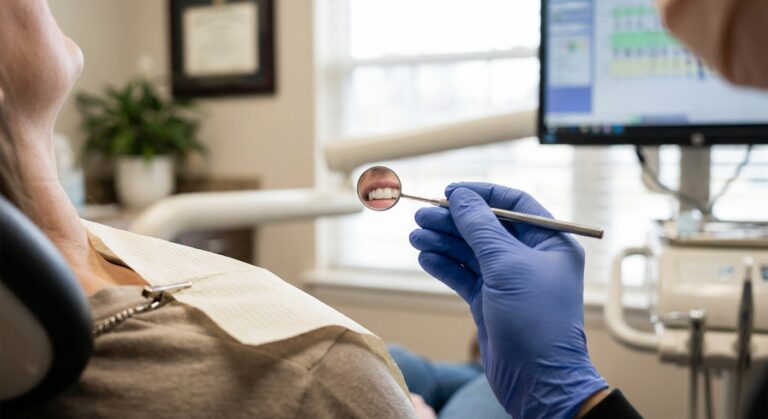
You call and ask whether the office does veneers, and the front desk says yes. Then you arrive for a consult, and the dentist says you need two fillings and a cleaning first. Suddenly you’re wondering whether you were upsold, whether everyone else got to skip this step, or whether your teeth are worse than you thought. If you’re looking for a cosmetic dentist in Belmont, NC like Belmont Dental, that moment is worth understanding before you book, because it tells you more about a practice than any smile gallery can.
It may feel like you came in for one thing and left with a to-do list. That reaction is fair, and you’re not the first person to feel it. This guide covers:
- What cosmetic dentistry actually includes
- Why healthy teeth come first
- How bonding, GLO professional whitening, and porcelain veneers compare on cost and lifespan
- Who may not be a good candidate for veneers, and what to do instead
It reflects how Belmont Dental, a Belmont practice since 2005, handles cosmetic cases. The approach is: function first, then cosmetic.
What Is Cosmetic Dentistry, and Why Won’t Insurance Pay for It?
Cosmetic dentistry is elective dental care that improves how your teeth look rather than how they work. At Belmont Dental, that means veneers, bonding, whitening, and smile makeovers. Because it is not medically necessary, most dental insurance plans exclude it. Patients usually pay out of pocket or lower their costs through an in-house membership plan.
Think of your mouth like a house. General and restorative dentistry is the foundation, the roof, and the plumbing: cleanings, fillings, crowns, implants, root canals, and gum care. Cosmetic dentistry is the paint and trim. Both matter, and both affect how you feel when you walk through the front door. But nobody sensible paints over a water stain without fixing the leak first. Insurance follows the same logic, since it is built to pay toward the leak, not the paint.
There is a gray zone, and it helps to know about it. A chipped front tooth repaired with bonding can be partly a repair and partly a cosmetic choice. How your plan treats it depends on your specific policy and on why the work is being done. Belmont Dental accepts plans from Cigna, Blue Cross Blue Shield, Delta Dental, GEHA Connection Dental Network, MetLife, and Guardian. Dental plans are designed around the health-focused work that often comes before cosmetic treatment, such as exams, cleanings, and fillings. The elective part is where most of your out-of-pocket cost sits.
Some patients have no insurance, and some have a plan that stops at the cosmetic line. For both groups, Belmont Dental offers an in-house membership plan with two tiers, Adult Care and Perio Plus. Depending on which tier you’re enrolled in, you may have access to reduced fees on elective services such as whitening.
Here’s a practical example. Say you have no dental insurance, and you want to brighten your smile and fix one chipped tooth. An Adult Care or Perio Plus membership can keep your routine care predictable while trimming the cost of the cosmetic piece. Ask the Belmont Dental team which tier fits you during your consultation, before any treatment is scheduled.
Why Does the Dentist Want to Fix Your Cavity Before Placing a Veneer?
A veneer bonded over decay or inflamed gums is set up for possible failure. That is why Belmont Dental puts function before cosmetics. Cavities, gum disease, and other structural problems are treated before any cosmetic work begins. This isn’t upselling. It protects what can easily become a multi-thousand-dollar investment.
So what actually happens beneath the surface if that step gets skipped?
Hidden decay keeps spreading. A veneer is a thin shell bonded to the front of a tooth. If decay is active underneath or beside it, the decay keeps going. Now it is hidden behind porcelain, where it is harder to see and harder to treat. By the time you notice, you may need to remove the veneer you just paid for.
Inflamed gums undermine the bond and the look. Gum disease brings its own problems. Inflamed gums bleed easily, and that moisture interferes with bonding. Swollen tissue also sits in a different position than healthy tissue. Once the inflammation calms down, the gumline can shift and expose the edge of a brand-new veneer.
It’s also fair to wonder about ethics in this field. A systematic review of marketing practices in aesthetic dentistry raised concerns about promotion that can steer patients toward treatment they may not need. A practice that tells you to fix a cavity before buying veneers is doing the opposite. It is slowing you down to protect your money.
What does this look like for you? Function first usually means phasing treatment across several appointments. You might have two fillings and a cleaning this month and come back for bonding or GLO whitening next month. Or you might stabilize your gums over a few visits before a veneer case begins. The timeline stretches a little, but every dollar you spend afterward goes onto a foundation that can hold it.
Your Three Main Options in Belmont: Bonding, Whitening, and Veneers, and What Each Really Costs
Once your teeth and gums are healthy, the real choice begins. The three main options each do a different job:
- GLO whitening changes the color of your natural teeth.
- Composite bonding fixes chips, small gaps, and minor shape issues in a single visit.
- Porcelain veneers cover the front surface of teeth for the biggest and longest-lasting change.
On cost, bonding runs well below veneers. Whitening takes a single appointment and changes shade only.
Many people searching for a cosmetic dentist in Belmont, NC assume veneers are the default answer. Often they aren’t. At Belmont Dental, a tooth with a cosmetic concern can frequently be improved conservatively with composite bonding before anyone talks about a porcelain veneer. Here is how the three options compare:
| Composite Bonding | GLO In-Office Whitening | Porcelain Veneers | |
|---|---|---|---|
| What it fixes | Chips, small gaps, minor shape issues | Color of natural teeth | Shape, size, color, and alignment appearance |
| Visits | One, chair-side | One visit, about an hour | Two or more, with lab work |
| Lab fabrication | None | None | Yes |
| Enamel removal | Usually minimal | None | Some, to make room for the shell |
| Typical lifespan | Touch-ups often every 3 to 5 years | Fades over roughly 1 to 2 years | Can last 10 to 15 years with good care |
| Relative cost | Lower | Lowest per visit | Highest |
About pricing: Belmont Dental does not publish a price list. You receive the current fee, along with any Adult Care or Perio Plus membership discount that applies, before treatment begins. A cosmetic quote is only accurate once someone has looked at your teeth. The number of teeth involved, the material, and whether health work must come first all change the total. At your consultation, ask for a side-by-side breakdown of bonding versus veneers for your own teeth.
Composite Bonding: The Single-Visit, Budget-Friendly Fix for Chips and Small Gaps
Bonding uses tooth-colored composite resin. Your dentist shapes it directly on the tooth, hardens it with a curing light, and polishes it to blend with the teeth around it. Everything happens chair-side in one appointment, with no lab and no waiting. Bonding suits a chipped edge, a small gap, or a tooth that is slightly shorter than its neighbor. It is often the most conservative and affordable fix, and it tends to preserve more of your natural tooth than a veneer. That conservative streak is why the Belmont Dental team often considers it first.
The trade-off is durability. Composite is softer than porcelain and stains more easily from coffee, tea, and red wine, so plan on occasional polishing or touch-ups.
GLO In-Office Whitening: Brighter Teeth in About an Hour
Belmont Dental’s in-office whitening system is GLO. A session takes about an hour. Your teeth receive four applications of 8 minutes each at Belmont Dental, which adds up to roughly 32 minutes of active whitening. In one documented case, a patient left 3 to 4 shades whiter after that single appointment, though results vary from person to person and are not guaranteed.
Two practical notes:
- Whitening only works on natural enamel. It does not change the color of existing bonding, fillings, or crowns.
- Order matters. In a Belmont Dental smile makeover, it may make sense to whiten with GLO first. Any bonding or veneers can then be matched to your new, brighter shade.
Some people feel temporary sensitivity after whitening. If you already have sensitive teeth, mention it at your visit.
Porcelain Veneers: The Permanent Solution That Requires Healthy Teeth and a Bigger Budget
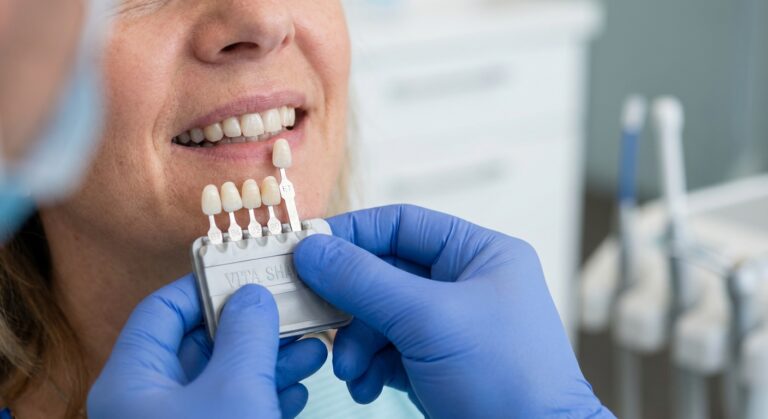
Veneers are thin, custom porcelain shells bonded to the front of your teeth. They can change color, shape, and the appearance of minor misalignment all at once. They resist stains well and last the longest of the three options.
Veneers are also the most expensive option, and the decision is permanent. Some enamel is removed to make room for the shell, so those teeth will always need some kind of covering. Belmont Dental plans each case with state-of-the-art technology, including digital imaging and 3D scanning.
Veneers also have the strictest requirements of any option here: adequate enamel, healthy gums, and no uncontrolled grinding.
Who Might Not Qualify for Veneers, and What Happens If You’re One of Them?
Untreated gum disease, active decay, severe grinding without protection, or too little healthy enamel can each rule out veneers, at least for now. You still have options. You either treat the underlying problem first, or you choose bonding, whitening, or another restoration that suits your teeth better.
Being told “not yet” can sting, especially if you have been saving for this. But a candid “no” can be one of the most valuable things a dentist can give you.
Enamel is the reason. Veneers depend on a strong bond to enamel. Restorative dentistry research consistently ties veneer longevity to three conditions:
- Enough healthy enamel to bond to
- Healthy gum tissue
- No uncontrolled grinding or clenching
Researchers studying cosmetic dentistry from a public health perspective have also raised concerns about irreversible treatment on healthy teeth. That is one more reason to choose the least invasive option that meets your goal.
Each disqualifier has a different path forward:
- Gum disease: Belmont Dental treats and stabilizes it first. Cosmetic options come back on the table once your gums are healthy.
- Heavy grinding: You will need a plan to protect any restoration. Bonding may be the smarter first step, since it is easier and less costly to repair.
- Worn, heavily filled, or weakened teeth: A crown may be more appropriate, because it protects the whole tooth rather than just the front.
- Crowding or gaps from tooth position: Invisalign clear aligners can sometimes move teeth into better alignment. That may mean fewer veneers or none at all.
- A missing tooth in the smile zone: It needs its own solution first, such as a bridge or a single dental implant. Cosmetic work around it comes after.
Picture someone who grinds at night, has early gum inflammation, and wants six veneers. One possible plan might look like this: settle the gums, brighten with GLO, bond the two most worn edges, and reassess in a year. That person may get a brighter, more even smile, just in an order that protects their teeth.
How Long Does Cosmetic Work Last, and What Will It Cost You Later?
Choosing an option is only half the decision, because most cosmetic work needs some upkeep:
- Bonding often needs polishing or touch-ups every 3 to 5 years as the composite wears or stains.
- Veneers can last 10 to 15 years. They require careful daily hygiene and usually a nightguard if you grind.
- Whitening fades over roughly 1 to 2 years, depending on diet and habits.
Lifespans vary with your habits and your bite.
These ongoing costs rarely come up in “dream smile” marketing, but they belong in your budget. The upfront fee is only part of what you pay.
A simple way to compare options fairly is to think in cost per year. When you get your quotes, write down three numbers for each option:
- The upfront fee
- How many years it typically lasts
- Any ongoing costs, such as touch-ups, a nightguard, or eventual replacement
Divide the total by the years of use. A lower-cost option that needs refreshing every few years can still be the better value. So can a higher-cost option that lasts a decade. The answer depends on your own teeth and habits, which is exactly why a personalized estimate beats a price you read online.
Maintenance also has an oral health side. Veneers themselves do not decay, but the tooth underneath can, especially along the edge near the gumline. Regular cleanings and exams are part of protecting the investment. A GLO touch-up fits into about an hour. If you hold an Adult Care or Perio Plus membership at Belmont Dental, ask whether your tier’s reduced elective fees apply to repeat whitening.
A small daily habit helps too. Rinsing with water after coffee or red wine slows staining on natural teeth and on composite, which can stretch the time between touch-ups.
Why Your Cosmetic Dentist in Belmont, NC Should Also Be Your General Dentist
When one practice handles both your dental health and your cosmetic goals, the cavity blocking your veneer case and the smile makeover itself can be handled in the same location. You avoid referrals, repeated records, and mixed messages. Belmont Dental provides preventive, general, restorative, and cosmetic dentistry under one roof, along with orthodontics through Invisalign.
Think back to the opening scene. Imagine the office does cosmetic work only, and it finds two cavities. You get sent to another location for fillings, maybe with a referral to Charlotte, and then you wait to come back. You repeat your history, take new X-rays, and hope both offices agree on the plan.
At a comprehensive practice, the team that finds the cavity fills it. That same team then tracks how your gums respond and plans your bonding or veneers with your full history in view. Phasing gets easier too: the filling this visit, the GLO whitening next month, the bonding after that.
There’s also a relationship benefit you only notice over time. Suppose the team that cleans your teeth twice a year also placed your veneers. Then the people checking those veneers already know where every edge sits and how your bite has changed. That continuity is what building lasting relationships looks like in dentistry. Belmont Dental has served Belmont, Mt Holly, McAdenville, and the surrounding area since 2005. The practice offers compassionate care in a place where you feel at home and the person behind the smile is known, not processed.
Before you commit to any treatment, ask to see Belmont Dental’s before-and-after gallery of real patient results. Look closely at the cases that resemble yours, whether that’s a single chipped tooth, overall discoloration, or a full smile makeover.
Quick Answers to the Questions Belmont Patients Ask Most
In short, most cosmetic work is paid out of pocket, veneers require healthy teeth and gums, and you get the fee before treatment starts. Here are the details behind the questions that come up most often.
How much do veneers cost in Belmont, NC?
It depends on how many teeth are involved, the material, and whether any health work is needed first. Belmont Dental gives you the fee for your specific case before treatment. Adult Care and Perio Plus members may have access to reduced fees on elective services depending on their tier.
What’s the difference between cosmetic bonding and veneers?
Bonding uses tooth-colored composite resin applied chair-side in one visit. It costs less and often needs touch-ups every 3 to 5 years. Veneers are custom porcelain shells made in a lab. They take two or more visits, can last 10 to 15 years, and cost significantly more.
Can I get veneers if I have cavities or gum disease?
Not until those problems are treated. A veneer placed over decay or inflamed gums is set up for possible failure, so Belmont Dental addresses the health problem first to protect your investment.
How long does professional teeth whitening last?
GLO in-office whitening at Belmont Dental brightened one patient’s teeth 3 to 4 shades in about an hour, though individual results vary. Results typically last about 1 to 2 years, depending on diet, smoking, and hygiene. Periodic touch-ups extend the brightness.
Does insurance cover cosmetic dentistry?
Rarely. Veneers, bonding, and whitening are elective, so most plans exclude them. Belmont Dental’s Adult Care and Perio Plus membership tiers offer an alternative way to manage costs.
What disqualifies someone from getting veneers?
Too little healthy enamel, untreated gum disease, active decay, or severe grinding without protection. In those cases, the underlying issue is treated first. Bonding, whitening, a crown, or Invisalign may also be the better path.
Where Should You Start If You Want a Different Smile?
Start with a cosmetic consultation, not a procedure. The right first step is an honest look at your teeth and gums. From there, you get a plan that puts health work and cosmetic goals in a sensible order, with real fees attached.
Schedule a cosmetic consultation at Belmont Dental today. You’ll get:
- An honest assessment of whether you’re a candidate
- A side-by-side cost breakdown of bonding versus veneers for your specific teeth
- A treatment plan that handles your dental health and your cosmetic goals in the same practice
You’ll know what’s possible now, what needs to come first, and what each step costs before you agree to anything. If the answer includes a filling or a cleaning first, you’ll understand why. A good cosmetic dentist in Belmont, NC protects your health before polishing your smile.
Before your visit, take a photo of your smile in natural daylight, or ask a friend or family member to take it for you. Note the one thing that bothers you most, whether it’s a chip, a gap, a dark tooth, or overall color, and bring the photo to your consultation. Starting from the one change you care about most is the fastest way to find out whether bonding, GLO whitening, or veneers fits your teeth and your budget. It also keeps the plan focused on the confidence you came in for.
Ready to See What’s Possible for Your Smile?
If you’ve been wondering whether cosmetic dentistry is right for you, or if your teeth need some attention before moving forward, a conversation with our team at Belmont Dental can bring clarity. We’ll walk you through what’s realistic for your situation and help you understand the path to the smile you’re hoping for. Getting answers starts with a simple phone call.
Outcomes from cosmetic dentistry vary by individual. Results depend on the condition of your teeth, your habits, and your compliance with aftercare. Longevity estimates reflect clinical averages, not guarantees.