Expertise provided by Dr. Greg Cook, Owner
For two years you have been cropping yourself out of family photos because of the gap between your front teeth. Now you are ready to fix it, but every article you find talks about Hollywood smiles and life-changing transformations. None of them explain what porcelain veneers actually are, how they are made, or whether your teeth even qualify. This guide from Belmont Dental, a Belmont practice with local roots going back to 2005, gives you the plain version of veneers in Belmont, NC: what they are, what happens at each visit, who is and is not a good candidate, how long they may last, and how cost and insurance work. That way, you can decide whether veneers fit your situation before you ever sit in the chair.
What Are Porcelain Veneers, and How Much of Your Tooth Do They Change?
Porcelain veneers are thin, custom-made ceramic shells bonded to the front surface of your teeth. They change the color, shape, size, or spacing that people see when you smile. A typical porcelain veneer is about 0.5 to 0.7 millimeters thick, roughly the thickness of a fingernail. Placing one usually means removing a thin layer of outer enamel, and that change is permanent.
Think of a veneer like a new face on a watch. The working parts underneath stay the same, but the surface everyone sees is replaced with something cleaner and more even. Your natural tooth still does the work of biting and chewing, while the veneer covers the front so a chip, a gap, a stubborn stain, or a slightly uneven edge no longer shows.
You may be worried that “reshaping” means grinding your teeth down to small stubs. It does not. The dentist removes only a thin layer of enamel, just enough to give the porcelain room to sit flush with your other teeth. Without that step, the veneer would sit on top of your tooth and look bulky, the way a sticker looks on a window instead of being part of the glass. The tradeoff is real, though: once that enamel is gone, the tooth will always need some kind of covering. That is why a good dentist treats veneers as a serious decision rather than an impulse purchase.
After the tooth is prepared, the dentist treats the back of the veneer and the front of your tooth so a resin cement can lock them together. A curing light hardens the cement, and the veneer becomes firmly bonded to the enamel. Porcelain also resists everyday staining from coffee and tea, which is one reason some people choose it over composite resin.
It also helps to know how veneers differ from crowns. A veneer covers only the front of the tooth, while a crown covers the whole tooth and may be the better fit when a tooth is weakened by a large filling or a crack. Belmont Dental offers veneers, crowns, dental bonding, Invisalign, and professional whitening under one roof, so the recommendation you get is based on your teeth rather than on the one service an office happens to provide.
What Actually Happens at Each Visit, From Consultation to Final Bonding?
Once you understand what a veneer is, the next question is usually how long the whole process takes. At Belmont Dental, porcelain veneers usually take three visits: a consultation, a preparation appointment, and a bonding appointment about two to three weeks later, once the dental lab finishes your custom veneers. If your teeth and gums are healthy at the start, most patients can expect about two to four weeks from preparation to finished veneers, depending on lab turnaround, and in one documented case a patient finished in about three weeks.
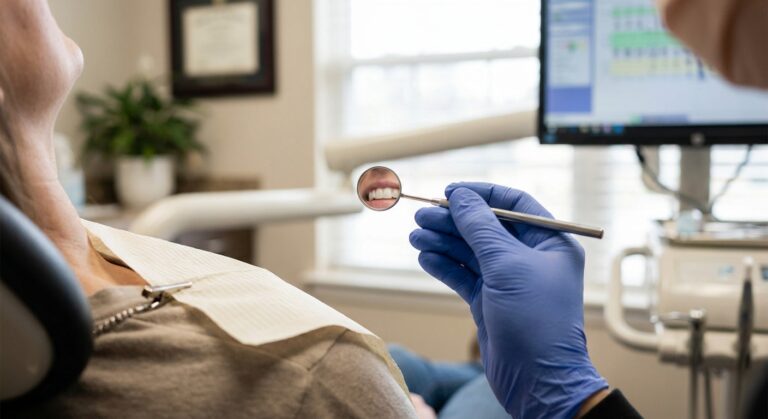
Visit one: the consultation. This is where you talk about what bothers you, in your own words. Maybe it is the gap, a front tooth that chipped years ago, or stains that whitening never touched. The dentist examines your teeth and gums, looks at your bite, and checks for signs of grinding. Belmont Dental uses digital imaging and 3D scanning to record your teeth precisely and plan the shape, length, and shade with you. This visit is also your chance to look through before-and-after photos of veneer cases and ask how similar situations were handled. Before you commit to anything, you get the fee for your specific case and learn whether any membership discount applies.
Visit two: preparation. Your dentist numbs the area with local anesthetic, so some patients report feeling pressure rather than pain, though experiences vary. A thin layer of enamel is removed from each tooth getting a veneer. Then your teeth are scanned or impressions are taken, and the final shade is confirmed. That record goes to the dental lab, where your veneers are made to your measurements. Your dentist will explain how your prepared teeth will be protected while you wait, which often means wearing temporary veneers.
The wait: two to three weeks. The lab shapes and layers the porcelain to match the plan from your consultation. Sensitivity to cold during this stretch varies widely; some patients notice none, while others feel mild discomfort that fades within days to weeks, and your dentist will review what to expect for your case.
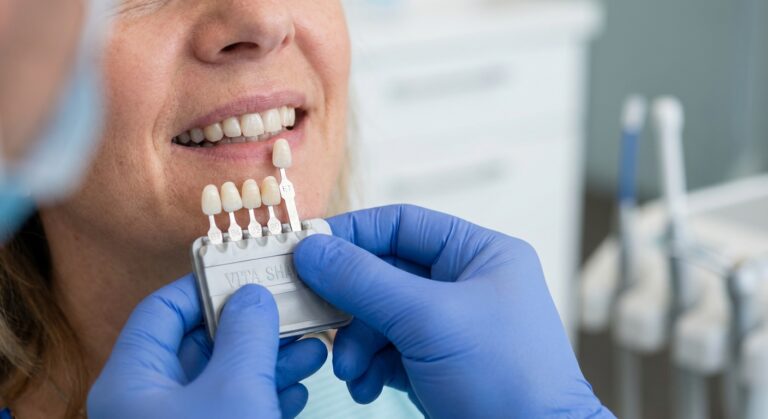
Visit three: bonding. Before anything is cemented, the dentist places each veneer to check its fit, its color, and how it looks against your lips and face. Small adjustments happen here. Once you and your dentist are both satisfied, your teeth are cleaned and treated, each veneer is bonded and cured with a light, and your bite is checked so nothing feels high when you close.
If the consultation finds a cavity or gum inflammation, that work comes first and the timeline grows. That extra step is not a detour, because it gives your veneers a healthy base to hold onto.
Do Your Teeth Qualify, or Will You Need to Fix Something First?
That brings up the most important question: whether your teeth are ready for veneers right now. You may be a candidate if you have healthy enamel, healthy gums, and a cosmetic concern like chips, gaps, worn edges, or stains that whitening cannot fix. You may not qualify yet if you have active tooth decay, gum disease, heavy grinding, or teeth that need to be straightened first. The good news is that many of these issues can be treated before veneers.
Here is why each one matters. A veneer bonds to enamel, so the strength of the result depends on the health of the tooth underneath. If a cavity sits under a veneer, decay can keep spreading where neither you nor your dentist can see it. If your gums are inflamed or bleeding from gum disease, the gumline can shift or recede, and the edge of the veneer may start to show. Heavy grinding, also called bruxism, puts strong forces on porcelain at night, which can chip or crack a veneer or loosen the bond. That is why Belmont Dental treats cavities, tooth decay, and gum disease before any veneer work and talks with you about how to protect your teeth if you grind.
Other factors can change the plan. Teeth that are noticeably crooked may benefit if they are straightened first with Invisalign. A tooth with a very large old filling may do better with a crown. Very thin enamel, whether from erosion or wear, can also limit how well a veneer bonds.
You may also be wondering whether the dentist will push you toward expensive work you do not need. That is a fair worry. Veneers remove healthy tooth structure, and specialist dental societies in the UK issued a joint statement cautioning against destructive tooth preparation for purely cosmetic reasons when a more conservative option can meet the patient’s goals. Sometimes the honest answer is whitening, bonding a single chipped tooth, or veneering two teeth instead of eight. For surface discoloration, professional whitening may be worth trying first, and how much it helps depends on your starting shade and the type of staining. Belmont Dental builds personalized care around the person behind the smile, and that includes telling you when a smaller step might get you where you want to be.
How Long Will Porcelain Veneers Last Before You Need New Ones?
If your teeth qualify, it makes sense to think about the long run before you commit. Published research reports a range of outcomes for porcelain veneers, with many remaining in service for 10 to 15 years when patients keep up good daily care, regular dental visits, and protection from grinding, though individual results vary based on oral health, habits, and other factors. When veneers need replacing, it can be because the bond weakens, the edges wear, the gumline changes, or new decay forms where the veneer meets the tooth. The porcelain itself rarely just wears out.
A recent review of the research on the clinical survival rate and laboratory failure of dental veneers describes ceramic veneers as a durable option. The failures that do happen tend to fall into a few groups: fractures and chipping, debonding, and problems at the margins where the veneer meets the tooth. Most of those risks connect to things you and your dentist can manage, such as grinding, biting hard objects, gum health, and decay at the edges.
Your daily habits matter more than most people expect. Brush twice a day and floss along the gumline, because that is where decay and inflammation start. Avoid using your front teeth to open packages, bite pens, or chew ice. If you grind, a night guard can help protect the porcelain while you sleep. Keep up with professional cleanings so your dentist can catch a worn edge or a small gap before it turns into a bigger problem. At Belmont Dental, your veneer checkups happen at the same office that handles your routine cleanings and exams, so the team knows your history every time you come in and you can feel at home rather than starting over with someone new.
One planning tip: whitening does not change the color of porcelain. If you want your natural teeth brighter, consider a professional whitening session at Belmont Dental before your veneers are made, so the lab can match the new, lighter shade instead of your old one.
When a veneer does need to be replaced, the dentist removes the old one, checks the tooth underneath, and bonds a new veneer. If the tooth has changed a lot over the years, a crown may be the better choice at that point. Veneers do not always wear out at the same time, so you may replace one tooth rather than the whole set.
What Will Veneers in Belmont, NC Cost You, and Can Insurance or a Membership Plan Help?
Longevity is one part of the value question, and cost is the other. Veneers are priced per tooth, so your total depends mostly on how many teeth you treat and whether you need foundational care first. Belmont Dental does not publish a single price online; instead, the team shares the current fee for your specific case, plus any membership discount that applies, before treatment begins.
Several things shape the final cost. The first is the number of teeth, since one veneer to match a chipped front tooth costs far less than six or eight across your upper smile. The second is foundational work, such as fillings or gum treatment that has to happen first. The third is custom lab fabrication, because each veneer is made individually for you. A good consultation separates what you need from what would be nice to have, so you can see exactly where your money goes.
Belmont Dental accepts Cigna, Blue Cross Blue Shield, Delta Dental, GEHA Connection Dental Network, MetLife, and Guardian. It is worth knowing up front that most dental plans classify veneers as cosmetic and do not pay toward them. Some plans may contribute when a veneer or crown restores a damaged tooth instead of simply improving its appearance, and your plan will often help with the cleanings, exams, and fillings that come before veneers. The team can check your benefits before treatment so you are not left guessing.
If you do not have insurance, or your plan will not help, Belmont Dental’s in-house membership plan has two tiers: Adult Care and Perio Plus. Depending on the benefits of your tier, members may see reduced fees on elective services, including pre-veneer whitening. Perio Plus, as its name suggests, is built for patients who need ongoing gum care, which matters because healthy gums come before veneers.
Phasing is another way to make a larger case manageable. You can handle the foundational care first, then schedule veneers when the timing works for your budget. Some patients start with the two or four teeth that bother them most and decide later whether to add more.
Questions Belmont Patients Ask Before Booking a Veneer Consult
How much do porcelain veneers cost in Belmont, NC?
Porcelain veneers are priced per tooth, so your total depends on how many teeth you treat and whether you need fillings or gum care first. Belmont Dental gives you your exact fee, along with any Adult Care or Perio Plus membership discount, before treatment. You can also phase a larger case over time.
How many appointments does it take to get veneers at Belmont Dental?
It usually takes three visits. The first is a consultation with digital imaging and 3D scanning. The second is a preparation appointment, where the teeth are shaped and then scanned or impressions are taken. The third is a bonding appointment about two to three weeks later, after the lab finishes your custom veneers.
Can I get veneers if I have cavities or gum disease?
Not until those problems are treated. Veneers bond to healthy enamel, and decay or inflamed gums underneath can cause the veneer to fail or leave its edges exposed. Belmont Dental treats cavities, tooth decay, and gum disease first, then moves forward with veneers once your foundation is healthy.
What happens when porcelain veneers wear out?
The dentist removes the worn veneer, checks the tooth underneath, and bonds a new one. Replacement can happen because the bond weakens, the edges wear, or new decay forms at the margin. If the tooth has changed a lot over the years, a crown may be the better choice at that point. The timing varies from person to person.
Are there cheaper alternatives to porcelain veneers for fixing gaps or stains?
Yes. Dental bonding costs less and can fix small chips or gaps, though how long it lasts depends on the size and location of the repair and on daily habits, and bonded material can stain or chip over time, so periodic touch-ups or replacement are a normal part of maintenance that your dentist will review for your case. Professional in-office whitening can brighten stained teeth for some people, but it cannot close gaps or reshape teeth. Invisalign can straighten mildly crooked teeth without removing enamel. Belmont Dental offers all three, so you can compare them side by side.
Does dental insurance cover veneers in Belmont, NC?
Most plans treat veneers as cosmetic and do not cover them, although some may contribute when a veneer restores a damaged tooth. Belmont Dental accepts Cigna, Blue Cross Blue Shield, Delta Dental, GEHA Connection Dental Network, MetLife, and Guardian, and the team can check your benefits before treatment begins.
Your Next Step Toward a Smile You Want to Photograph
Call Belmont Dental at the number on this page to schedule a veneer consultation. At that visit, you can look through before-and-after cases, ask every question on your list, and leave with a personalized treatment plan that includes exact pricing and an insurance breakdown, all before you commit to a single treatment appointment.
Before you come in, take three photos on your phone: a full smile, a relaxed face, and a side profile. Then write down the one thing you notice first every time you see yourself in a picture. Bringing that note to your consult helps the team focus on what matters most to you, and it often shows that fewer teeth need work than you expected. Belmont Dental has been providing compassionate care to families in Belmont, Mt Holly, McAdenville, and Charlotte since 2005, and the goal is the same now as it was then: a smile you feel confident sharing, built on teeth that stay healthy.
Ready to See If Veneers Are Right for You?
If you’ve been wondering whether porcelain veneers could give you the smile you’ve always wanted, the best next step is simply to ask. The team at Belmont Dental can walk you through what the process would look like for your specific situation and answer the questions that matter most to you. A conversation costs nothing, and it might be exactly what you need to move forward with confidence.
Individual results with porcelain veneers vary based on oral health, habits, and other factors; longevity, sensitivity, and outcomes differ from person to person.