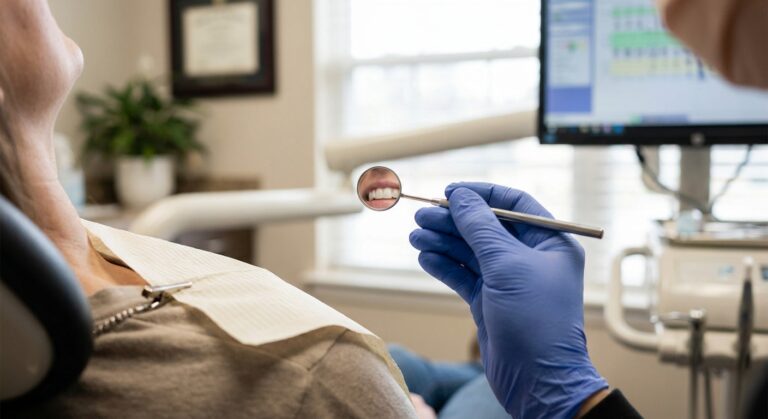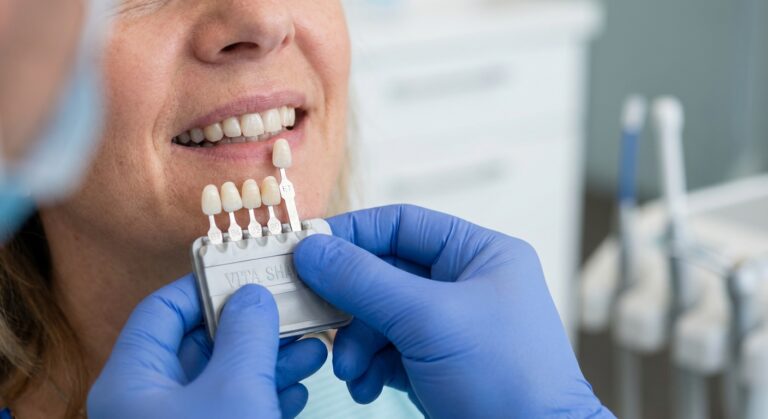
Many people with well-fitted dentures are able to eat a wide variety of foods, though it tends to happen in stages, and your first dinner out may feel easier when you know what each stage can look like. If you have been asking yourself “Can I eat normally with dentures?”, you may be picturing a specific moment: you are at a table with people you love, reading a menu, and wondering whether the steak, the corn on the cob, or the barbecue sandwich is worth the risk. The worry is rarely about the food. It is about a denture shifting mid-bite in front of everyone. The seven stages below walk through the path from first soft meals toward the kind of Sunday supper where you may think less about your teeth.
1. Can I Eat Normally with Dentures? Why Eating Is a Skill, Not Just a Fit
Eating with dentures is a skill that develops over time, and a good fit alone does not provide it on day one. A denture rests on your gum tissue instead of anchoring in your jaw the way natural tooth roots do. Your cheek and tongue muscles have to learn to help hold it steady while you chew.
That is why the first few meals can feel clumsy even when the denture is well made. Natural teeth send constant feedback through their roots, so you know how hard to bite without thinking. With a denture, the chewing force travels into your gums, and your mouth has to relearn how much pressure to use. The American Dental Association’s patient guidance on new dentures describes this as a period of practice, with eating often becoming easier as your muscles adapt. Researchers have also reviewed how wearing dentures affects dietary intake, nutrition, and eating, a useful reminder that fit and practice both shape what ends up on your plate.
Early awkwardness does not necessarily mean something went wrong, and it does not mean you will be limited to soft food for good. People move through these stages at different paces, and your dentist’s instructions for your own denture always come first.
Belmont Dental has cared for families in Belmont, NC since 2005, with a focus on personalized care and building lasting relationships. That matters here, because getting used to dentures takes more than one appointment. It can go more smoothly when your team knows your mouth, remembers what bothered you last time, and sees the person behind the smile, not just the appliance.
2. Start Soft and Cut Everything Small
In the first weeks, choose soft foods, cut them into small pieces, and chew slowly on both sides of your mouth at once. When chewing force is spread evenly, the denture may be less likely to tip.
The National Institute on Aging gives the same advice: start with soft food, cut it small, and chew slowly using both sides of your mouth. If you chew only on the left, the right edge of the denture can lift. Chewing on both sides can help keep it seated against your gums.
Good first-stage foods include scrambled eggs, yogurt, oatmeal, mashed potatoes, fork-tender squash or carrots, and fish that flakes apart. Keep bites small enough to chew with your back teeth, because tearing with your front teeth tends to pry a new denture loose. As these meals start to feel routine, you may try adding shredded chicken, pasta, cooked beans, and bread without a hard crust. Going slowly also helps you notice where the denture rubs, which leads to the next stage.
3. What Should You Do About Sore Spots?
Call Belmont Dental and ask to have the denture checked and adjusted. Try not to put up with the rubbing, and try not to quietly cut foods from your diet to avoid it. Sore spots are common while a new denture settles, and they are often addressed with a small change to the denture rather than by eating less.
Your gums are not perfectly even, so a denture can press harder in one spot than another once you start chewing real meals. That spot gets tender, you start favoring the other side, and one-sided chewing can make the denture less stable. The National Institute on Aging advises seeing your dentist when dentures hurt or do not fit well. The ADA’s patient advice also cautions against adjusting a denture yourself, since filing or bending it can make the fit worse.
Before you call, note where it hurts, which foods set it off, and how long the soreness lasts. Those details can help the team look for the pressure point.
4. Which Foods Can Stay Tricky, and How to Handle Them
Even after adjustments, sticky, very hard, and very tough foods may need extra care. Many people find a simple workaround for each:
- Caramel and taffy: Sticky candy can break a denture’s seal. Banana pudding or soft cake may be easier alternatives.
- Whole nuts: Hard pieces can slip under the denture. Smooth nut butters or finely chopped nuts baked into a dish offer the flavor with less risk.
- Tough steak: Consider tender cuts, cooking them low and slow, or slicing them thin across the grain. Pulled pork is often easier than ribs.
- Whole apples and corn on the cob: Biting with your front teeth levers the denture forward. Slicing the apple thin and cutting the kernels off the cob can help.
Much of the trouble comes from biting hard with your front teeth and from textures that grab. Working around both may widen what you can comfortably eat. Bring your food questions to follow-up visits so your dentist can guide you based on your own fit.
5. Can Eating Out Feel Comfortable with Dentures, Like at a Restaurant or Church Supper?
For many people, eating out can feel more comfortable after practice at home and a few simple habits. You may be worried that your denture will slip or click while friends are watching, and that worry can lead you to turn down invitations you would otherwise enjoy. That is a common concern, and preparation can help ease it.
If you have a lunch or church supper coming up in Belmont, try similar foods in your own kitchen first. When you order, consider starting with softer items, taking small bites, chewing on both sides, and sipping water between bites. You can ask for corn off the cob or a steak sliced in the kitchen; servers hear those requests often.
If something feels loose while you are out, treat it as useful information and bring it to your next visit. Belmont Dental is built on compassionate care, and that includes listening to what happened at Sunday dinner and adjusting from there.
6. Which Type of Denture, or Alternative, Fits Your Situation?
The right choice depends on how many teeth you are missing and how healthy the rest are. Here is how the common denture types compare:
| Denture type | What it is | Who it usually suits |
|---|---|---|
| Full denture | Replaces every tooth in the upper or lower arch and rests on the gums | People who are missing all of their teeth in an arch |
| Partial denture | Replaces some teeth and attaches to your remaining natural teeth | People who still have healthy teeth that can help support it |
| Immediate denture | Placed the same day teeth are removed, so you are not without teeth while you heal | People who need remaining teeth removed and want teeth right away; it often needs refitting as the gums settle |
Ask Belmont Dental which of these options may fit your mouth.
How do partial dentures work?
A partial denture holds replacement teeth on a gum-colored base that fills the gaps in your smile. Small clasps or rests hook onto your remaining natural teeth, which hold the partial in place, and you take it out to clean it. Because your own teeth help steady it, some people find chewing with a partial easier to learn than with a full denture. The teeth that support the partial need careful daily cleaning, since keeping them healthy supports the stability of the partial.
What can I get instead of a partial denture?
Belmont Dental discusses each choice based on your situation, goals, and budget. The practice explains the ideal treatment, the reasonable alternatives, and what can safely wait, and its goal is not to recommend the most expensive treatment. Options include:
- A single-tooth implant: Fixed in place, so there is nothing removable to steady while you chew. For straightforward cases, Belmont Dental places implants in-house after a clinical exam, CBCT 3D imaging, and digital planning in Sidexis software, then allows about 3 to 4 months of healing before the final crown. Timing varies with the site, the bone, and how you heal.
- A bridge: Attached to neighboring teeth, though it depends on those teeth being healthy.
- A removable option: Rests on the gums and supporting teeth and can be a practical, budget-friendly choice.
More complex cases are coordinated with a trusted specialist, so you can still receive an honest recommendation even when the answer is not in-house care.
Can dentures be whitened?
Not in the way natural teeth can. Denture teeth are made from materials that whitening gels do not lighten, so the usual goal is to keep them clean rather than bleach them.
Daily brushing with a denture cleaner can help remove surface staining from coffee, tea, and food. Avoid household bleach, which can damage the denture. If you have natural teeth and want them brighter, Belmont Dental offers professional teeth whitening for natural teeth. Ask whether to whiten before your new denture’s shade is chosen so everything can be matched.
7. How Do You Get Dentures in Belmont, NC, and Plan for the Cost?
The path from first visit to final fit usually follows a clear sequence. Belmont Dental will tell you which steps apply to you:
- Consultation and exam: You talk through your goals and the foods you miss, and the team evaluates your teeth and gums using digital imaging.
- Treatment plan: You hear the ideal option, the alternatives, what is urgent, and what can wait, along with how insurance or membership applies.
- Preparing your mouth: Any needed treatment, such as fillings, care for gum disease, or extractions, is handled first.
- Records and design: Your mouth and bite are measured, and you choose the shade and shape of your new teeth.
- Fitting: You receive your denture and practice wearing and eating with it, starting with the soft-food stage.
- Follow-up adjustments: You return so sore spots can be addressed and the fit fine-tuned as your mouth adapts.
Cost does not have to stop you from starting that conversation. Belmont Dental treats disease, pain, and function first and phases the rest when your budget allows, so the most urgent needs come first and you can see each step before you commit. The aim is a plan you can realistically complete.
Belmont Dental accepts Aetna, Assurant, Blue Cross Blue Shield, Cigna, Delta Dental, GEHA, Guardian, and MetLife. Accepting a plan is not the same as being in-network with it, so bring your card and ask how your plan applies to denture care. Financing is also available. If you do not have dental insurance, the Belmont Dental Membership Plan offers Adult Care, Perio Plus, and Child Plus tiers. Ask how membership applies to your treatment. You can read more on the practice’s custom denture service page.
Schedule a denture consultation with Dr. Cook at Belmont Dental and bring your questions about eating, fit, and cost. Before you go, write down the three foods you would miss most, whether that is corn on the cob, a good steak, or a pulled pork plate. Those three foods give your dentist a clear target for your fit and follow-up visits, and they can help turn “Can I eat normally?” into a plan built around your own Sunday supper.
Ready to Get Back to Sunday Supper?
If you’re worried that dentures mean giving up the foods you love, you’re not alone, and the answer is usually more hopeful than you’d expect. The team at Belmont Dental in Belmont, NC can talk through where you are in the stages of eating with dentures and how to keep your mouth healthy along the way. Give the office a call, and let’s work on getting you back to the table with confidence.
This article is general information and not a substitute for an exam. Individual experiences vary, and your dentist’s instructions for your own dentures come first.