Roughly 36% of American adults experience significant dental anxiety, and about 12% avoid the dentist entirely because of it, according to a 2022 survey published by the American Dental Association. If you’re reading this, you’ve probably already lived that statistic. This guide covers dental anxiety how to overcome it in practical, evidence-based terms: what it is, what drives it, and exactly what to do before, during, and after your next appointment.
How Common Is Dental Anxiety and Why It Matters
The ADA survey didn’t just count avoidant patients. It traced the downstream effects: people who delayed care for a year or more were significantly more likely to present with advanced decay, gum disease, and conditions that required complex, costly treatment. Anxiety, in other words, doesn’t protect you from dental work. It just guarantees you’ll need more of it.
This is worth naming plainly: dental anxiety is not a character flaw or a sign of low pain tolerance. It’s a documented physiological and psychological response, measurable in cortisol levels and heart rate. The fact that it’s common doesn’t make your version of it less real. It does mean that dentists who take their work seriously have developed specific, tested strategies to address it.
What Dental Anxiety Actually Looks Like
Dental anxiety sits on a spectrum. On one end, there’s the manageable dread most people feel before an appointment. On the other end is dental phobia, a diagnosable condition where fear is so intense it triggers panic attacks and complete avoidance. Understanding the difference between anxiety and phobia matters because the two warrant different responses.
A 2019 study published in the British Dental Journal surveyed 11,000 adults across the UK and found that 25% reported moderate anxiety and 12% reported severe dental fear. Physical signs included elevated heart rate, sweating, nausea, and muscle tension before and during appointments. Behavioral signs were just as consistent: canceling at the last minute, white-knuckling the waiting room, or showing up only when pain became intolerable.
The practical takeaway here is straightforward. Don’t try to manage “dental anxiety” as a single, undifferentiated thing. Name your specific trigger, because that’s what you’re actually addressing.
The Most Common Triggers
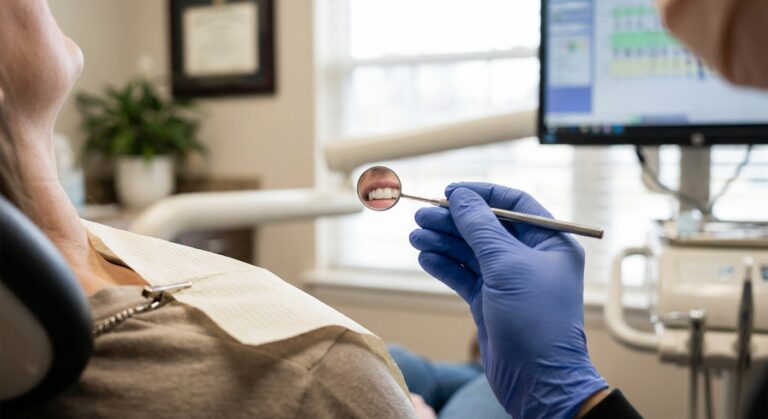
Fear of pain is the most cited trigger, but it’s rarely the whole story. Most patients who fear pain are actually responding to a memory of unexpected pain, not an accurate prediction of what modern anesthesia can do. Loss of control runs a close second: lying flat in a chair, mouth open, unable to speak, while someone works inside your body is genuinely disorienting, especially if you weren’t told what was coming next.
Embarrassment about the current state of your teeth is a trigger many people don’t say out loud. Years of avoidance create a feedback loop: the more you’ve skipped, the more you assume judgment is waiting. And prior bad experiences, particularly those involving a provider who dismissed pain or moved too quickly, leave a template that subsequent visits get measured against. Understanding what fuels dental fear in adults in more depth can help you isolate which trigger is doing the most work for you specifically.
Why Avoiding the Dentist Makes Anxiety Worse
A 2020 review in the Journal of Anxiety Disorders examined avoidance behavior across multiple clinical anxiety domains and found a consistent pattern: avoidance reduces short-term distress but increases long-term fear intensity. The mechanism is straightforward. Every time you cancel an appointment, your brain records the relief as confirmation that the threat was real and that avoidance was the correct response. The next booking feels harder, not easier.
For dental patients specifically, avoidance also compounds the clinical reality. A small cavity becomes a larger one. Gum inflammation progresses. By the time the pain forces the visit, the procedure is more involved, which reinforces the original fear. It’s a self-fulfilling cycle, and the only exit is interrupting it before the stakes get higher.
The most accessible way to do that: book a consultation-only appointment with no treatment scheduled. Just a conversation. No drills, no instruments, no surprises. Breaking the pattern of avoiding dental care starts with a visit where nothing is expected of you except showing up.
How to Choose the Right Dentist for Anxious Patients
A 2017 study in the Journal of Dental Research found that patients who felt their provider communicated clearly and responded to discomfort cues reported significantly lower anxiety scores at follow-up visits. The dentist’s technical skill matters, but for anxious patients, communication style is often the deciding factor in whether they return.
What to look for specifically: a practice that explains each step before performing it, offers sedation options, and doesn’t pressure you into completing treatment faster than you’re ready to. When calling to book, ask three questions directly: What sedation options do you offer? Do you use a stop signal during procedures? And can appointments be paced to stop and restart if needed? A practice worth trusting will answer all three without hesitation. Finding a provider who specializes in anxious patients in your area removes much of the uncertainty before you even walk through the door.
Relaxation Techniques That Work Before and During the Appointment
A 2018 randomized controlled trial published in the European Journal of Oral Sciences assigned 60 adult dental patients to either a controlled breathing protocol or standard care before a routine extraction. The breathing group reported 34% lower pre-procedural anxiety scores and required less chair time due to fewer pause requests.
The most evidence-backed method is diaphragmatic breathing, and the 4-7-8 pattern specifically: inhale through the nose for four counts, hold for seven, exhale through the mouth for eight. The extended exhale activates the parasympathetic nervous system and lowers heart rate measurably. Practice it the night before the appointment, not just in the chair. Familiarity with the technique makes it accessible under stress.
Distraction Tools That Reduce Chair-Time Stress
A 2021 study in the Journal of Clinical and Experimental Dentistry tested auditory distraction during dental procedures in 80 patients. Those who listened to self-selected music through noise-canceling headphones reported 28% lower perceived pain intensity and significantly lower anxiety scores compared to the control group.
The noise-canceling component matters as much as the audio. The sounds of dental equipment, the suction, the drill, are consistent triggers for anxious patients even when there’s no physical discomfort. A pre-loaded playlist with music or a familiar podcast, queued before you sit down, removes a major sensory input that feeds the anxiety response. Build that playlist before the appointment, not in the waiting room.
Sedation Options: What’s Available and Who It’s For
Sedation dentistry isn’t a last resort for extreme cases. It’s a spectrum of options matched to the severity of anxiety.
Nitrous oxide, commonly called laughing gas, is the entry point. It’s inhaled through a small mask, takes effect within minutes, and wears off completely within 5 to 10 minutes of removal. A 2020 Cochrane review of 34 trials found nitrous oxide to be safe and effective for reducing anxiety across adult and pediatric populations, with no serious adverse events reported in any included study. Oral anxiolytic medication, typically a low-dose benzodiazepine taken an hour before the appointment, is appropriate for moderate anxiety when nitrous alone isn’t sufficient. Conscious sedation and general anesthesia exist for severe phobia or complex surgical cases, and both require a different clinical setting.
For most patients who have been avoiding the dentist due to anxiety, nitrous oxide is the right starting point. When calling to schedule, ask specifically about its availability before you commit to an appointment.
What to Do the Day of Your Appointment
Morning appointments work better for anxious patients for a documented physiological reason: cortisol, the stress hormone, peaks in the first hour after waking and declines through the day. Scheduling early means you spend less time building dread through a full afternoon of anticipation. A 2016 study in the journal Chronobiology International found that patients scheduled for morning procedures reported lower pre-procedural anxiety than those scheduled in the afternoon, controlling for procedure type.
Skip caffeine beforehand. Caffeine increases heart rate and amplifies anxiety symptoms. Arrive 15 minutes early, not to sit longer in the waiting room, but to acclimate to the environment before your name is called. Bringing a trusted person is useful not just for emotional support but because having someone present activates social buffering, a measurable reduction in the cortisol response during stressful situations. For a detailed walkthrough of preparing for your appointment as an anxious patient, there’s more to cover than a single section allows.
How to Communicate With Your Dentist During Treatment
A 2019 study in Patient Education and Counseling analyzed 300 dental visits and found that patients who established explicit communication protocols with their provider before treatment began reported 41% lower anxiety scores and rated their pain as significantly more manageable than those who did not.
The stop signal is the most important tool here. A raised hand means stop immediately, no questions asked, no pushing through. Establishing this before the procedure starts, not during it, is what makes it effective. It restores a sense of control over the experience, which addresses the most common underlying trigger directly. If you’re unsure how to have that conversation without it feeling awkward, guidance on telling your dentist you’re anxious covers exactly how to do it without overpreparing or minimizing what you actually feel.
Building Long-Term Confidence Through Consistent Care
A 2014 study in the European Journal of Oral Sciences followed 165 adults with moderate to severe dental anxiety over three years. Patients who attended regular, low-complexity appointments at six-month intervals showed measurable reductions in self-reported fear by the end of year one. The mechanism is graduated exposure: each completed visit, even a routine cleaning, builds a new reference point that competes with the fear-based memories driving avoidance.
Consistency is the actual treatment plan for dental anxiety, not a milestone you reach after the anxiety is gone. The anxiety decreases because of the visits, not before them.
The most effective thing to do this week: before you leave your next appointment, book the one after it. That single act removes the barrier of re-initiating contact when anxiety is loudest, and it keeps the momentum of a completed visit working in your favor.